.png)




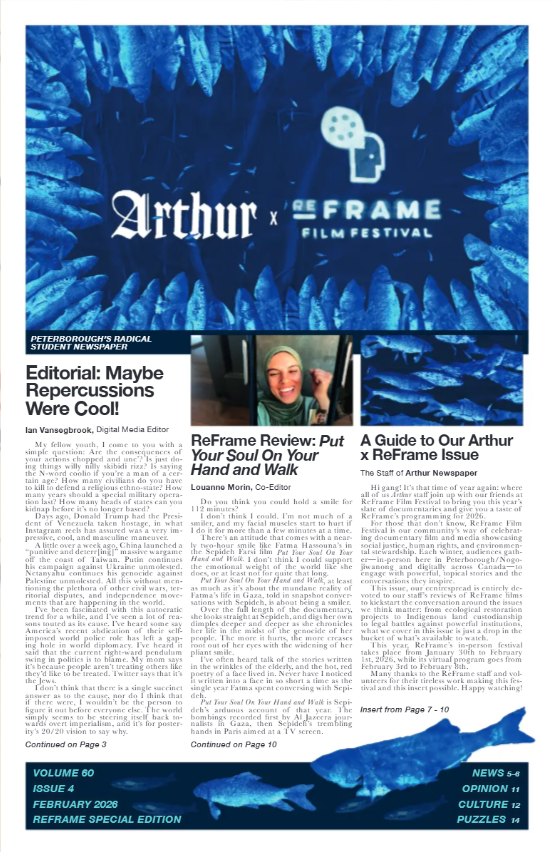
We were deeply disappointed and stunned by Integrity Commissioner Guy Giorno’s conclusion that the Mayor’s use of the N-word during a lecture at Trent University did not violate Peterborough’s Code of Conduct. From a lens of dismantling anti-Black racism, this finding is profoundly troubling.
In his own report, the Commissioner acknowledged the violent history of the N-word. It originates in slavery and was used to dehumanize enslaved people by stripping them of identity and worth. Today, it continues to evoke deep pain, anger, and trauma. As Giorno himself stated, it is “a virulent and egregious racial slur aimed at dehumanizing Black people.”
He also cited alarming local and national data. Peterborough’s hate-crime rate is nearly twice the national rate and 34% higher than Ontario’s. Over the past five years, hate crimes in the city were three times more frequent than in the previous five. Nationally, Black people have faced the highest levels of hate crime targeting from 2020 to 2024. These facts make clear that anti-Black racism is real, persistent, and growing in our community.
The nine complainants described the Mayor’s conduct as alarming, egregious, deeply offensive, shameful, and unacceptable. Their responses reflect the lived experiences of Black community members who continue to endure the harms of anti-Black racism.
Yet despite acknowledging the history of the N-word, the city’s hate-crime crisis, and the harm caused, the Commissioner’s findings heavily favoured the Mayor’s explanation. He suggested that because the Mayor is 70 years old, he was unaware that using the N-word was unacceptable, and that its use was merely historical. From an anti-Black racism lens, this framing minimizes harm and excuses racial violence rather than confronting it. Even more troubling was the claim that the Mayor was “genuinely sorry, apologetic and regretful” and that the behaviour would not recur.
The Commissioner further concluded that the Mayor did not violate the Code of Conduct because it applies only when the word is directed at a specific individual. This narrow interpretation ignores the collective and structural nature of anti-Black racism. A racial slur does not have to be aimed at one person to harm an entire community. While Giorno suggested amending the Code to explicitly prohibit use of the N-word, this does not excuse the Mayor’s conduct.
The claim that the Mayor’s apology was sincere is deeply disturbing. The Mayor attempted to justify his use of the word by referencing a quote attributed to former U.S. President Lyndon B. Johnson. This is not accountability; it is deflection. From a dismantling anti-Black racism lens, true accountability requires acknowledging harm without justification. Repeating a racial slur in any context—especially to students—reinforces its power and causes harm.
After detailing the devastating history of the N-word, the rise in hate crimes, and the emotional impact on the Black community, it is inconceivable to claim the Mayor did not know the word was unacceptable in 2026. Age is not an excuse. As a lifelong public servant, the Mayor has a responsibility to uphold standards that protect communities from discrimination and violence.
A Mayor who is truly remorseful would demonstrate that through meaningful action, not just words. Yet the Commissioner’s recommendations were limited, leaving responsibility for addressing this harm with the Council and the community.
The Commissioner also dismissed Section 10 of the Code of Conduct, which defines harassment, arguing that a “one-time use” of the N-word in an academic context does not qualify. From an anti-Black racism perspective, this is deeply harmful. Harassment includes any unwelcome comment that affects a person’s dignity or psychological health—and the N-word does exactly that.
Trent University confirmed this harm, noting that multiple students were affected by hearing the Mayor use a racial slur. Since the incident became public, Black residents have faced increased racial harassment and racist incidents online. These are the ripple effects of leadership failure.
We owe it to the people of Peterborough—and especially to Black residents and future generations—to dismantle anti-Black racism by holding leaders accountable. When a Mayor uses an anti-Black racial slur, it sends a dangerous message that such behaviour is tolerable. This report fails to interrupt that message. Real accountability is still required.
Charmaine Magumbe and Cheryl Edwards
Afrocentric Awareness Network of Peterborough
Please contact us at aanptbo@gmail.com






.png)
The rich text element allows you to create and format headings, paragraphs, blockquotes, images, and video all in one place instead of having to add and format them individually. Just double-click and easily create content.
A rich text element can be used with static or dynamic content. For static content, just drop it into any page and begin editing. For dynamic content, add a rich text field to any collection and then connect a rich text element to that field in the settings panel. Voila!
"Headings, paragraphs, blockquotes, figures, images, and figure captions can all be styled after a class is added to the rich text element using the "When inside of" nested selector system."
The rich text element allows you to create and format headings, paragraphs, blockquotes, images, and video all in one place instead of having to add and format them individually. Just double-click and easily create content.
A rich text element can be used with static or dynamic content. For static content, just drop it into any page and begin editing. For dynamic content, add a rich text field to any collection and then connect a rich text element to that field in the settings panel. Voila!
"Headings, paragraphs, blockquotes, figures, images, and figure captions can all be styled after a class is added to the rich text element using the "When inside of" nested selector system."

.jpg)