.png)

.jpg)


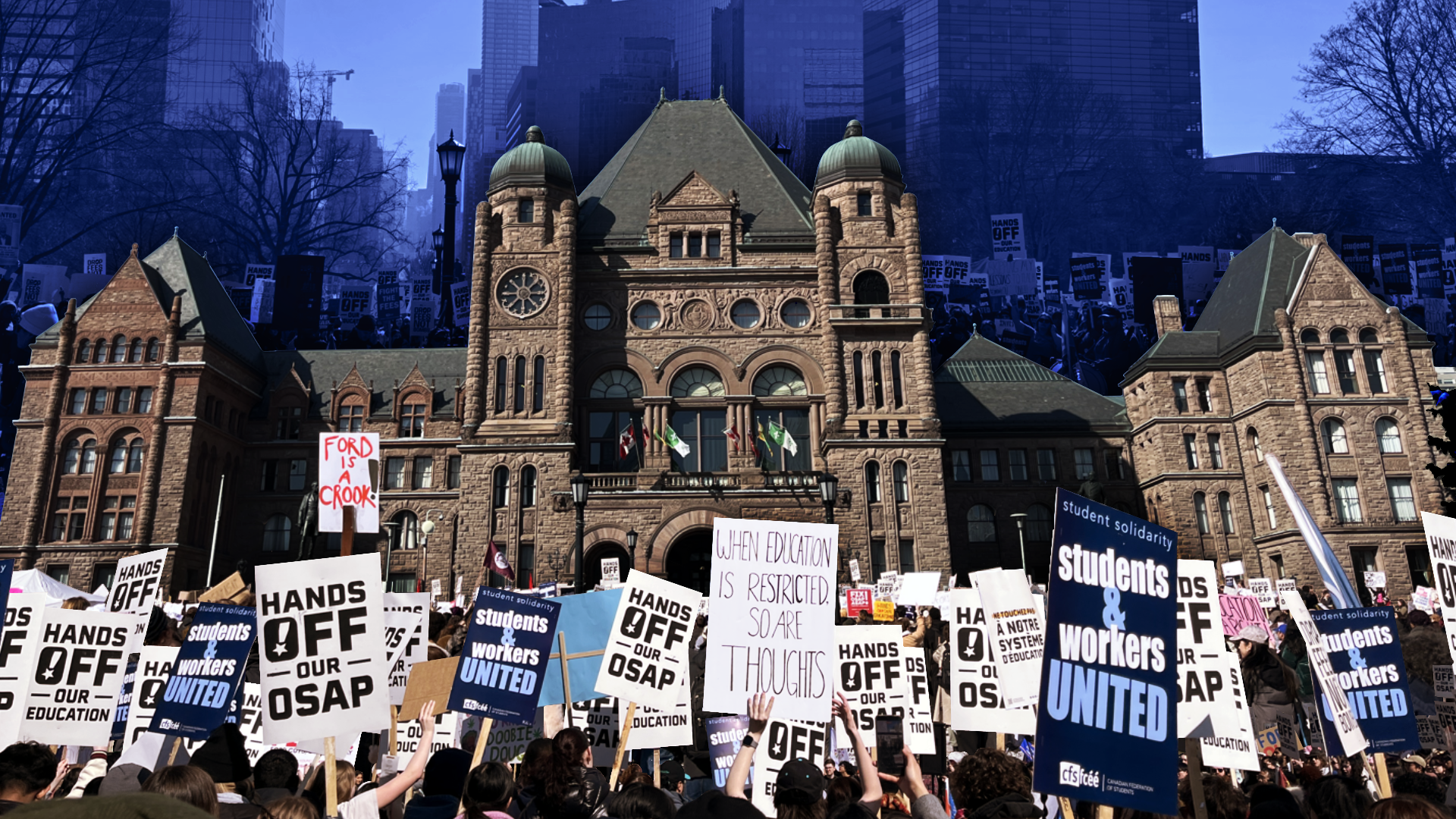
Over the past few months, as a Member of Provincial Parliament and opposition critic for Training, Colleges, and Universities, I have travelled to campuses across the province to meet with students, faculty, and staff. Those conversations could not have come at a more critical moment. The provincial government’s recent changes to the post-secondary funding model and the Ontario Student Assistance Program (OSAP) have made these conversations with students even more urgent.
I was on a university campus in southwest Ontario when the provincial government announced it would lift the domestic tuition cap and overhaul OSAP, heavily shifting support away from grants and towards loans. These changes will be felt by thousands of students and families across Ontario, adding further financial pressures at a time when the cost of living is already high, and institutions are struggling after years of underfunding.
The government’s announcement acknowledges the strain felt by post-secondary institutions. The commitment of $6.4 billion and the development of a long-term funding model provides colleges and universities with greater financial stability and predictability. The lifting of the domestic tuition freeze – allowing increases of 2% annually – will also help campuses plan more sustainably, particularly as reliance on international tuition revenue becomes increasingly uncertain. But while institutions gain stability, Ontario’s students are left to shoulder an untenable financial burden.
However, the changes to OSAP are deeply concerning. Previously, students could receive up to 85% of their support through non-repayable grants. Under the new model, grants can only account for 25% of assistance, with most of the support issued as loans. This is not a minor change – it is a seismic shift that will leave students graduating with substantially higher debt. For many students who are already struggling with rising housing, grocery, and transportation costs, this will put post-secondary education out of reach for many.
The impact extends beyond campus. At a time when Ontario faces critical workforce shortages in health care, education, skilled trades and technology, discouraging access to post-secondary education is short-sighted. Our economy depends on a well-educated workforce, and policies that make a degree, diploma, or certificate less attainable ultimately weaken that foundation.
A government cannot claim to be strengthening Ontario’s future while making it harder for low- and middle-income students to access higher education. A loan-heavy OSAP system raises financial barriers and shifts the burden of a funding crisis onto students. Supporting institutional sustainability and protecting access to education are not mutually exclusive. We can – and must – do both.
Since these changes were announced, my office has heard from thousands of students across the province who are worried about how they will afford their education. That is why I will table a petition when the legislature resumes, calling on the government to reconsider these changes and ensure that post-secondary education remains accessible to every qualified student in Ontario. Young people in the province deserve a fair shot at building their futures without being weighed down by an unreasonable debt load before their careers even begin.


.jpg)

.png)
The rich text element allows you to create and format headings, paragraphs, blockquotes, images, and video all in one place instead of having to add and format them individually. Just double-click and easily create content.
A rich text element can be used with static or dynamic content. For static content, just drop it into any page and begin editing. For dynamic content, add a rich text field to any collection and then connect a rich text element to that field in the settings panel. Voila!
"Headings, paragraphs, blockquotes, figures, images, and figure captions can all be styled after a class is added to the rich text element using the "When inside of" nested selector system."
The rich text element allows you to create and format headings, paragraphs, blockquotes, images, and video all in one place instead of having to add and format them individually. Just double-click and easily create content.
A rich text element can be used with static or dynamic content. For static content, just drop it into any page and begin editing. For dynamic content, add a rich text field to any collection and then connect a rich text element to that field in the settings panel. Voila!
"Headings, paragraphs, blockquotes, figures, images, and figure captions can all be styled after a class is added to the rich text element using the "When inside of" nested selector system."

.jpg)