




.png)



.jpg)
The province-wide celebration of Ontario’s architectural heritage has happened annually since 2000 when Heritage Canada (now the National Trust of Canada) adapted a European event and transplanted it here. The celebration provides a wide audience access to hidden architectural gems which are not always open to the public for free. Communities across the country and 32 municipalities in Ontario participated this year, including Peterborough.
Doors Open Peterborough is a partnership between the Ontario Heritage Trust Foundation and the Peterborough Architectural Conservation Advisory Committee (PACAC). There were twelve sites available to explore, ranging from Lock 19 (Scotts Mill) on the Trent-Severn Waterway Canal to the Peterborough Theatre Guild in Ashburnham Ward.
I decided to visit an excellent example of “adaptive reuse” at Dixon House, one of the newer additions to the tour at 661 Park Street North. It is a Georgian stone house built in 1837 by settler William Dixon on an 80-acre lot, which originally commanded a view of Parkhill Road and the town below. Dixon was one of the earliest Smith Township settlers who emigrated in 1818 with his family from Cumberland, a northern English county which once bordered Scotland.
In 1829, William married Isabella Harvey and built a wooden house on the hill. However, eight years later he built a stone manor on the same site, using stone from his quarry and lumber from his sawmill on Dixon Creek. He became a magistrate and a captain in the local militia but died in 1849 at the age of 44.
The Dixon family continued to live in the house until 1894 when the Laplante and Law families purchased the property. The federal government later acquired it in 1941 and erected war-time, bungalow-style housing over the property while using the house as an administrative centre.
The City took over in 1975 and subdivided the stone house into temporary offices and finally used it for storage. The building was designated in 1986, and the Hamilton family were successful in acquiring the building from the City and restoring it starting in 2009. Dr. Joanna Hamilton now operates a neuropsychological clinic specializing in brain injuries in the building. Her husband Stewart Hamilton, a member of PACAC, told the Peterborough Examiner (Sept. 2nd):
“I really think when people come, they will be taken aback by the size of the rooms, the height of the ceilings, the intricacies of the trim and woodwork,” says Stewart Hamilton. “It was originally built and then restored with such care and craftsmanship. It is stunning.”
Some photos of the exterior and interior work at the restored Dixon House which only took 11 months to accomplish under the supervision of architect Ken Trevalyn and general contractor Greg Sperry:
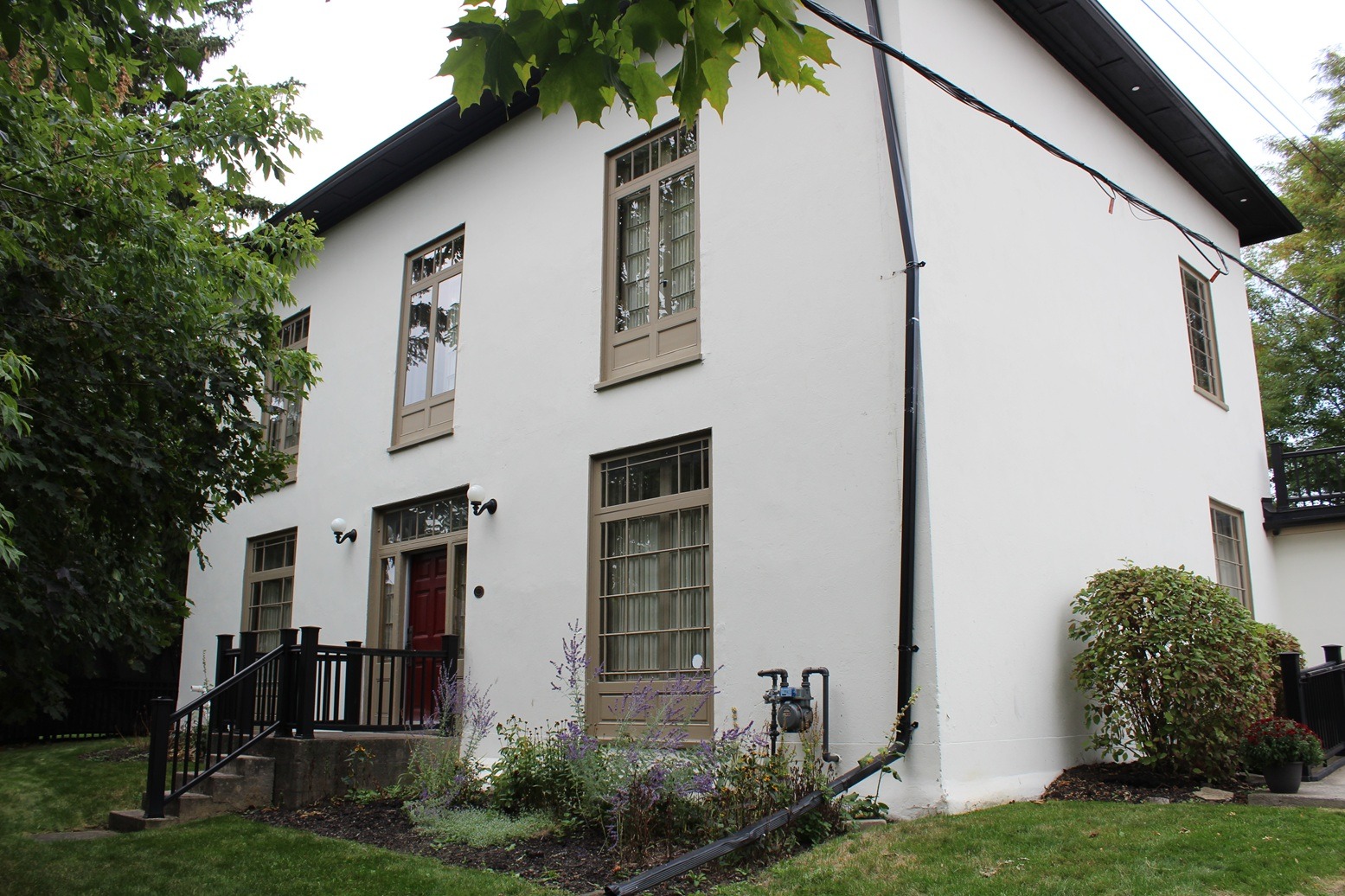
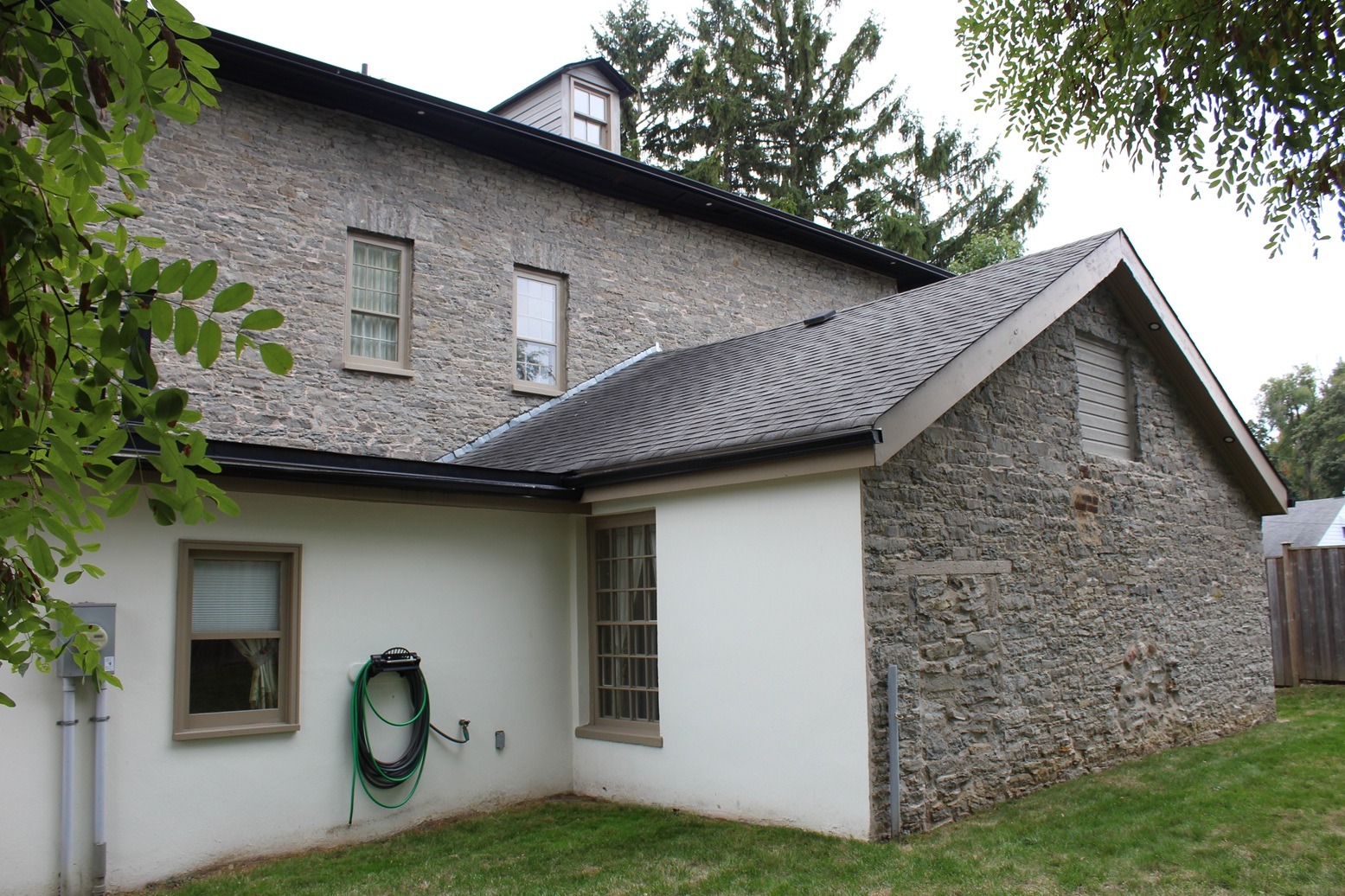
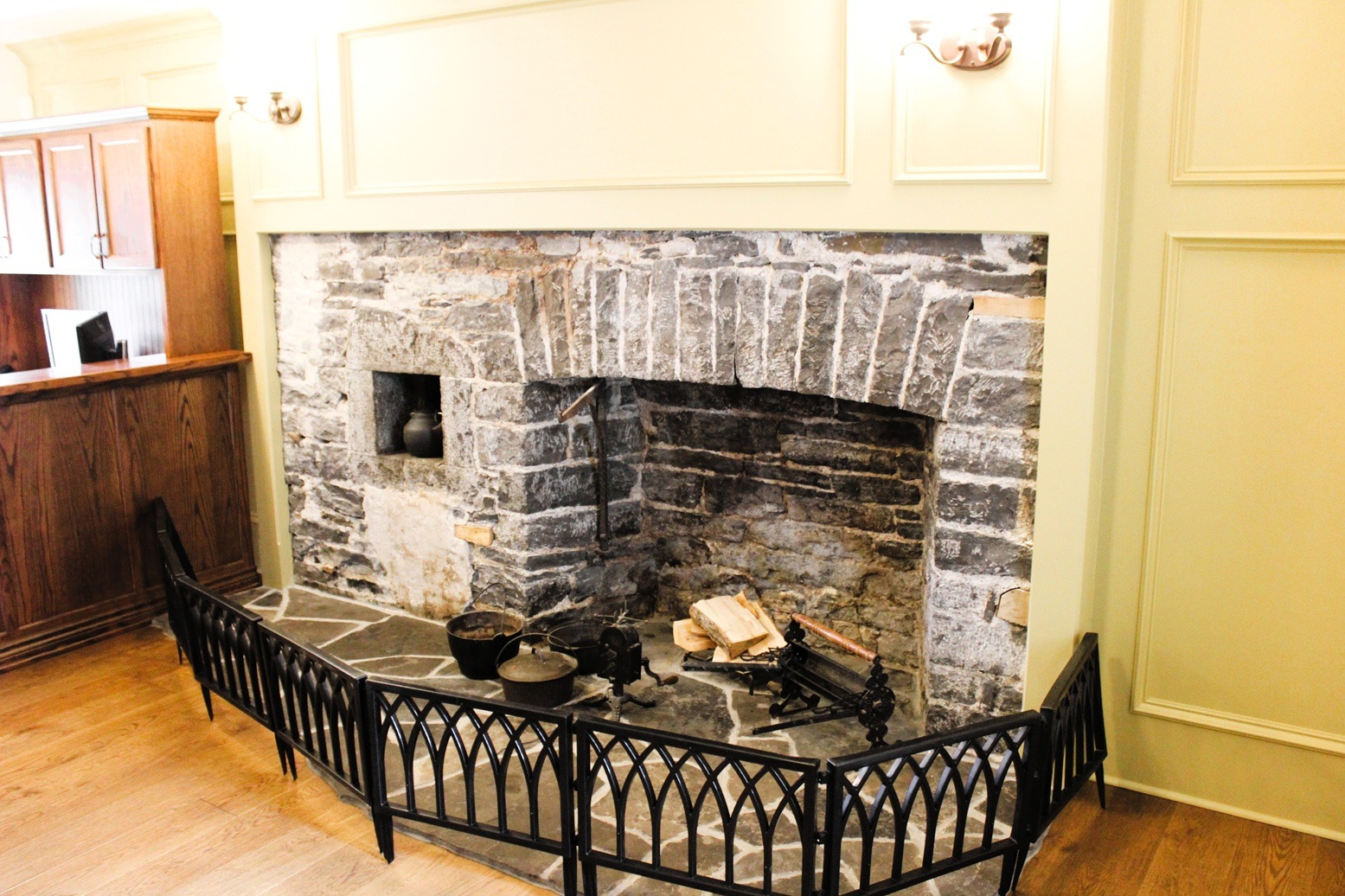

My next stop on the tour was Hutchison House Museum at 270 Brock Street downtown, which was by coincidence also built in 1837 of stone by the members of the community as an enticement for Dr. Hutchison to keep his medical practice local rather than relocating to York (now Toronto). The building was constructed as a family home and medical office, occupied by Dr. John Hutchison, his wife Martha and their eight children, plus visiting relatives from Scotland, including a young engineer who would later become Sir Sandford Fleming.
Unfortunately, Dr. Hutchison died of typhus in 1847 while treating an outbreak among new arrivals in the community. Subsequently, the building was sold in 1851 to merchant James Harvey, and it remained in his family when his daughter Elizabeth’s Connal family moved in. Harvey’s great granddaughter, Jeanette Connal Brown, bequeathed the house to the Peterborough Historical Society in 1969.
During the 1970s, a detailed 1837 restoration was undertaken by noted restoration architect Peter John Stokes and the building was reopened on May 24th, 1978, by Lieutenant-Governor of Ontario Pauline McGibben, as the Hutchison House Living Museum.
Today, it continues to be owned and operated by the Peterborough Historical Society. Costumed guides conduct tours of the doctor’s office, a room now dedicated to Sandford Fleming’s residence during his Peterborough years and after, plus the keeping room (kitchen) with open hearth cooking demonstrations. Scottish teas are offered in the summer months, and Hogmanay (Scottish New Years tradition) is celebrated on January 1st each year.
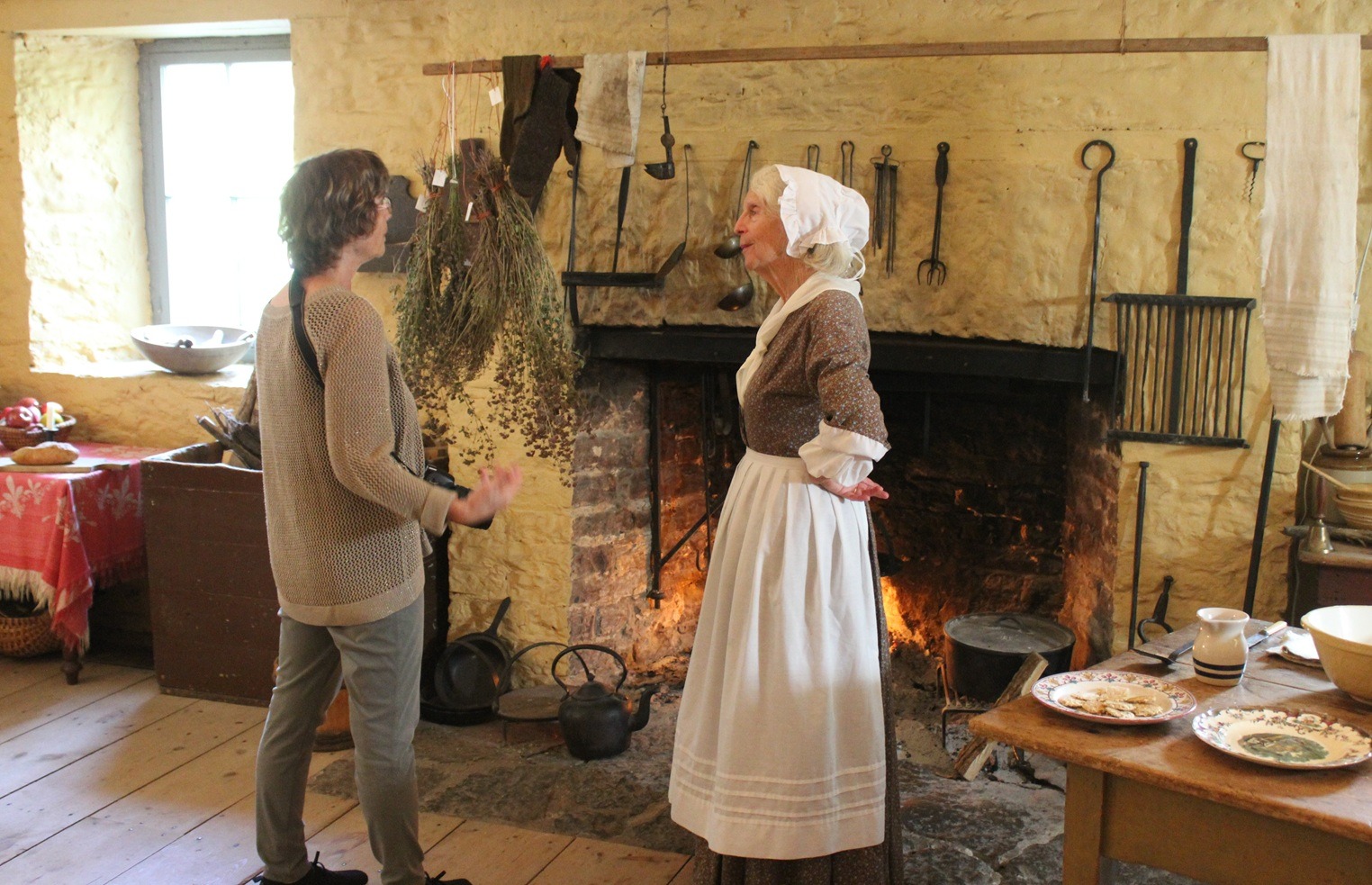
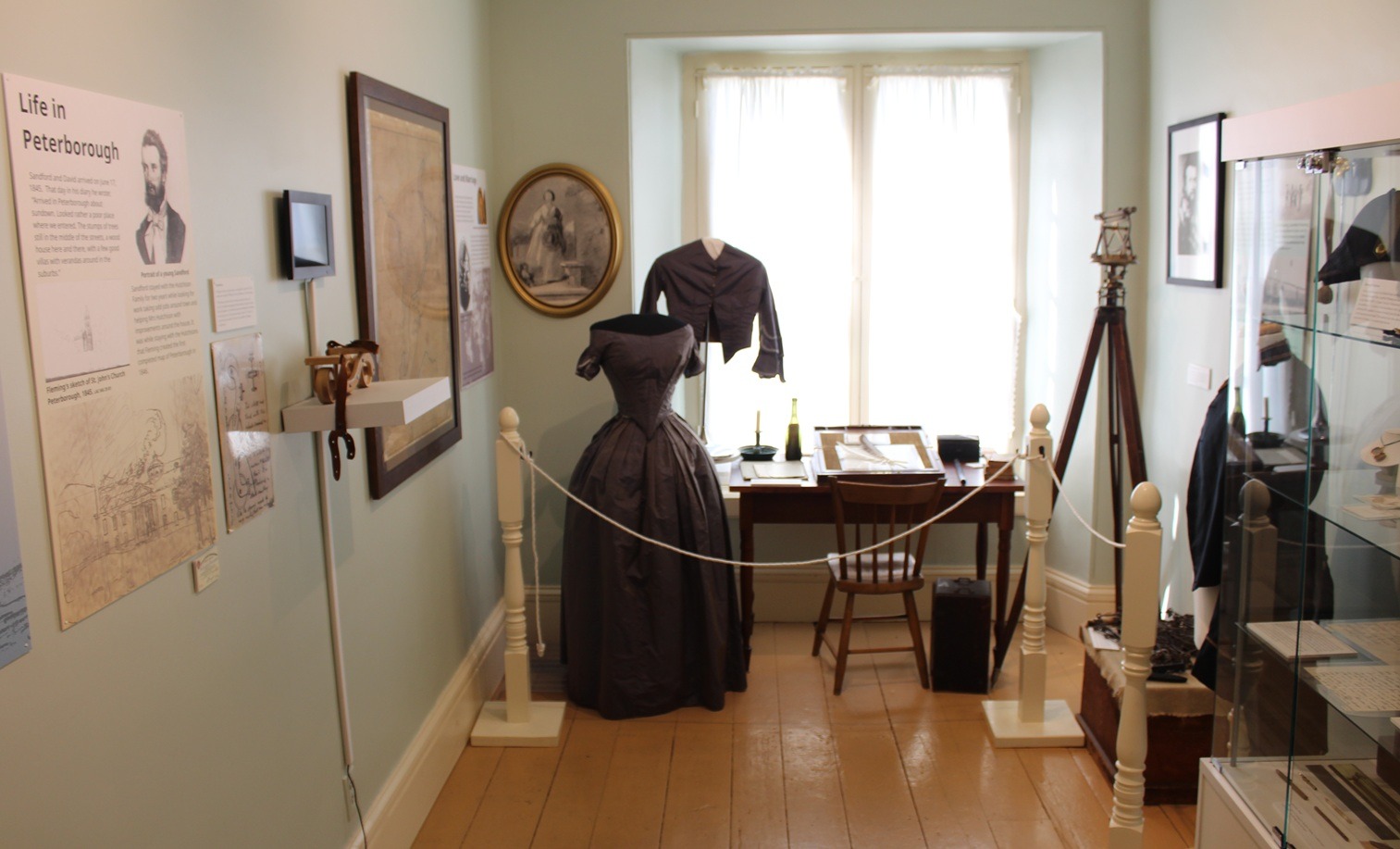

There are some interesting connections between these two buildings, which were both built in 1837 with stones from William Dixon’s quarry in Dixon’s Creek (now known as Jackson Creek). In fact, many of the earliest stone buildings in Peterborough came from this source, as Donald Willcock, current PHS President, points out in an e-mail:
“The stones for Hutchison House did, indeed, come from Dixon's Quarry, as did the stone for the Courthouse, the original part of St John's Anglican, the original part of St Peter's Catholic, the Old Stone Brewery (behind HH), and the Eastland House (Mulligan Insurance, Hunter & Stewart),” Willcock said. “Possibly some other buildings in town, but those are the ones we are certain of.”
In a curious inversion, Hutchison House was built as a medical office and eventually became a museum, while Dixon House was designed as a home and is now a medical office. By coincidence both William Dixon and Dr. John Hutchison died prematurely in their forties, two years apart in 1847 and 1849. The Harvey family purchased Hutchison House and Isabelle Harvey married William Dixon. It took Doors Open to illustrate the relationship between these Peterborough homes both now restored and designated.






.png)
The rich text element allows you to create and format headings, paragraphs, blockquotes, images, and video all in one place instead of having to add and format them individually. Just double-click and easily create content.
A rich text element can be used with static or dynamic content. For static content, just drop it into any page and begin editing. For dynamic content, add a rich text field to any collection and then connect a rich text element to that field in the settings panel. Voila!
"Headings, paragraphs, blockquotes, figures, images, and figure captions can all be styled after a class is added to the rich text element using the "When inside of" nested selector system."
The rich text element allows you to create and format headings, paragraphs, blockquotes, images, and video all in one place instead of having to add and format them individually. Just double-click and easily create content.
A rich text element can be used with static or dynamic content. For static content, just drop it into any page and begin editing. For dynamic content, add a rich text field to any collection and then connect a rich text element to that field in the settings panel. Voila!
"Headings, paragraphs, blockquotes, figures, images, and figure captions can all be styled after a class is added to the rich text element using the "When inside of" nested selector system."

.jpg)
.jpg)



.jpg)
.png)


