.png)



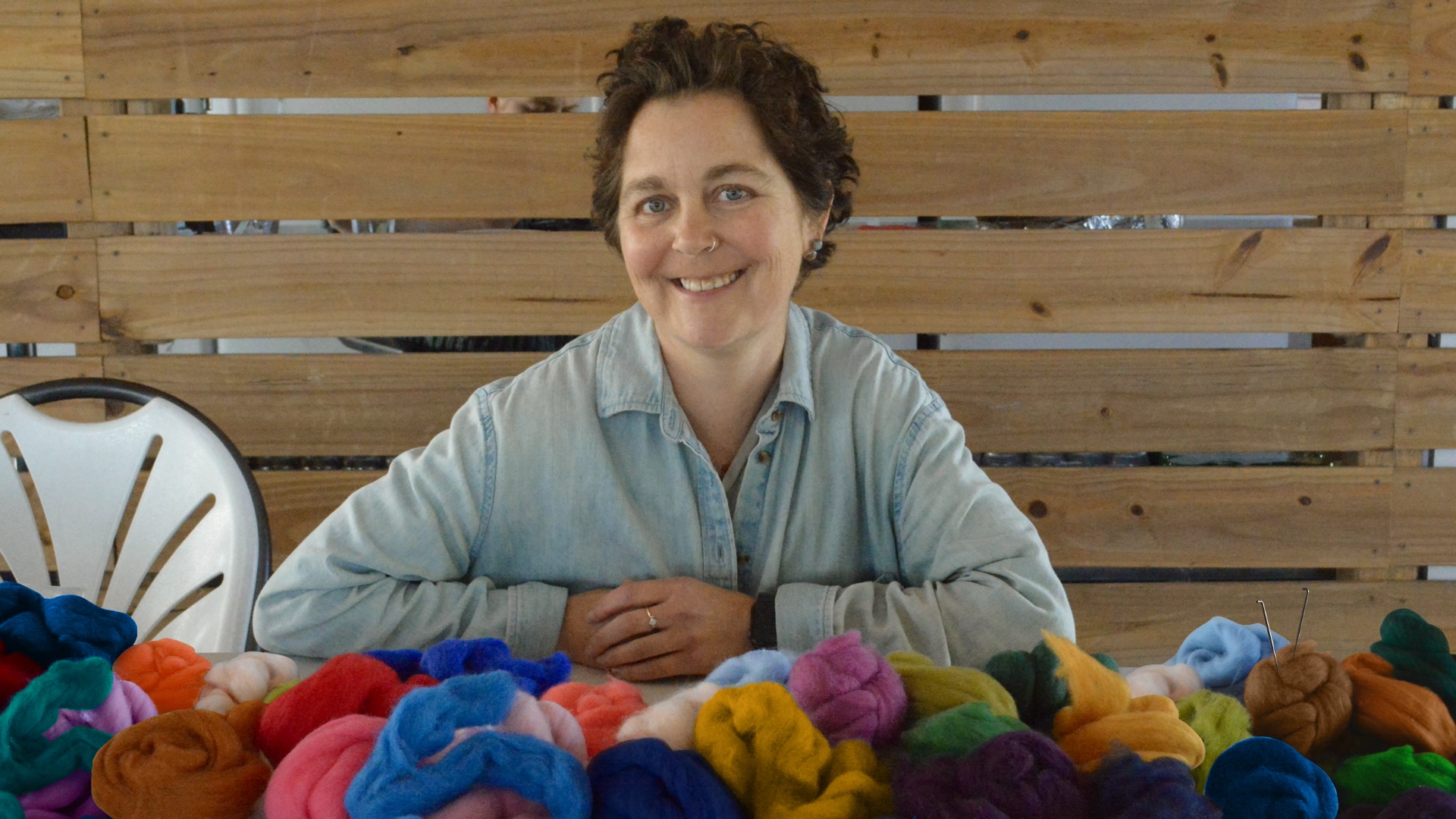
On the afternoon of October 2nd, Millennium Park’s Silver Bean Café hosted “Stab & Gab,” a felting workshop facilitated by Melissa Wilson, a cancer survivor and Cultural Studies student at Trent. This event took place as part of Electric City Culture Council’s 2025 Artsweek programming, which ran from September 28th to October 5th and involved more than 100 local artists.
Felting involves repeatedly stabbing loose wool fibers with a specialized “barbed” needle, binding the fibers together to create flat shapes or three-dimensional sculptures.
Wilson has “always done art” in some way, shape, or form. She “started out doing really figurative visual art, and then gradually worked more towards process-based, tactile textiles,” she tells Arthur on October 2nd.
She first tried her hand at felting while taking a Trent Visual Art Studio workshop course (CUST-3111Y) with instructor Fynn Leitch this previous academic year. During this time, she was also going through cancer treatment and experiencing side effects like numbness and hair loss. Having used art to cope with past health problems, she saw felting as a “tangible way” of processing her experience.
She began felting with a mixture of wool fibers and her own hair to create “cool little creatures,” and describes this process as being “really cathartic.” She also often mixed these felted creations with stitching or embroidery, both for added effect and as a method of saving time.
“It became this body of work that was totally process-driven,” Wilson says. “The objects got a bit more tactile because more hair was falling out and my fingers were more numb, so there were more sharp components and wax involved, whereas before it was just soft felt.”
This collection was displayed in the CultureX student exhibition in the Artspace Annex this past June.
As for what she enjoys about felting, Wilson describes the repetitive process as “intuitive”, with the craft acting as a way for her to mindlessly create. She finds a lot of excitement in trying a new material and art form, and allows it to guide her towards a process-driven creative approach that isn’t focused on the final product.
“I liked the idea of putting it out there, not having expectations, and just letting it happen, and letting it unfold,” Wilson tells Arthur. “And thinking ‘this is gonna happen, and it’s gonna look the way it’s gonna look and I’m not gonna be too precious about it.’”
In the art of felting, “you could be a perfectionist, but there’s no point,” she adds.
The “Stab & Gab” workshop also came about during coursework, as she was assigned an event proposal during a reading course for disability/cultural studies that was only two weeks long.
Despite a number of enrolments, only one registrant attended. Wilson graciously invited Arthur to join the event, and three Artsweek volunteers visited our table, making it a small but incredibly enjoyable introduction to felting.
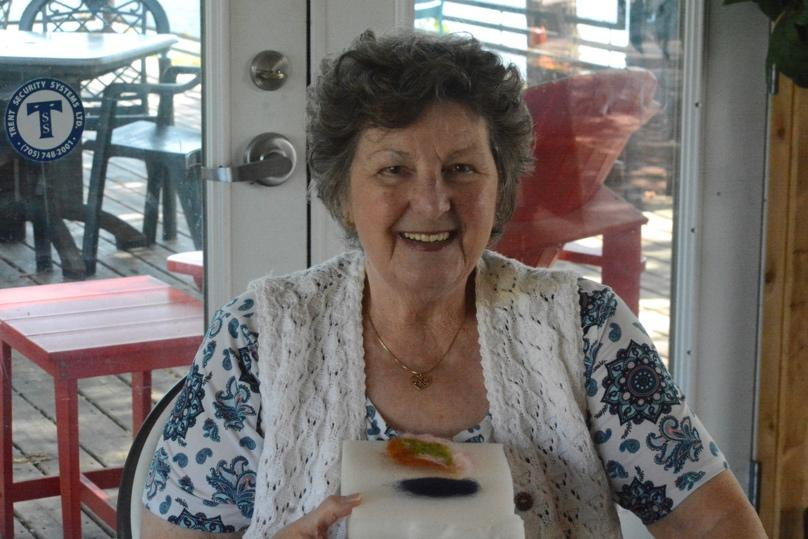
The workshop was complete with desserts—including some amazing dirty chai coffee cakes—baked by Wilson, all the necessary crafting materials, a wide variety of colours of wool, and some great conversation.
This was the first workshop that Wilson ever facilitated, and she hopes to run more events that create a welcoming, safe space for cancer patients and survivors in the future. She is especially interested in doing felting workshops for adolescents and young adults who are experiencing or have experienced cancer.
Through these youth-centric support groups of sorts, she would like to focus on how cancer can uproot main aspects of young people’s lives like relationships, work, education, and sex life. Wilson emphasizes the importance of community in general, but especially connecting with other people who are going through similar experiences with cancer.
“Not to say that I wanted to exclude other people,” she says. “But I wanted it to just be somewhere where only people who have experienced this could go because it’s so rare for those folks to have a space that isn’t medicalized.”
This interview has been edited for clarity and concision.
Editor's Note: This interview has been corrected to reflect that Melissa Wilson's event proposal was a part of a different course, not the Art, Culture, and Theory course with Kelly Egan.



.png)
The rich text element allows you to create and format headings, paragraphs, blockquotes, images, and video all in one place instead of having to add and format them individually. Just double-click and easily create content.
A rich text element can be used with static or dynamic content. For static content, just drop it into any page and begin editing. For dynamic content, add a rich text field to any collection and then connect a rich text element to that field in the settings panel. Voila!
"Headings, paragraphs, blockquotes, figures, images, and figure captions can all be styled after a class is added to the rich text element using the "When inside of" nested selector system."
The rich text element allows you to create and format headings, paragraphs, blockquotes, images, and video all in one place instead of having to add and format them individually. Just double-click and easily create content.
A rich text element can be used with static or dynamic content. For static content, just drop it into any page and begin editing. For dynamic content, add a rich text field to any collection and then connect a rich text element to that field in the settings panel. Voila!
"Headings, paragraphs, blockquotes, figures, images, and figure captions can all be styled after a class is added to the rich text element using the "When inside of" nested selector system."

.jpg)