




.png)



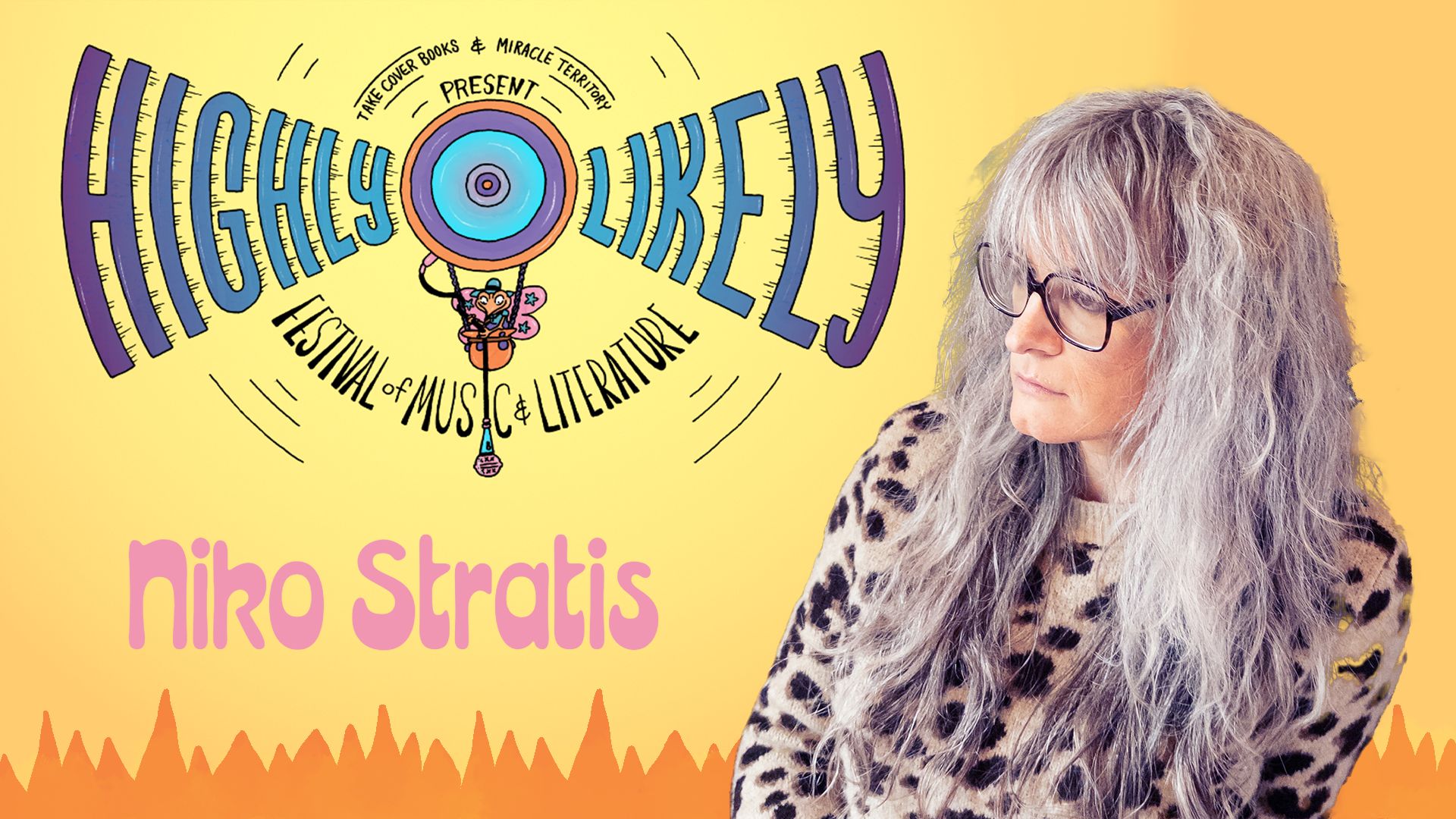
Niko Stratis is one of the coolest people writing right now. A couple decades in skilled trades gives the Toronto-based writer a unique slant from her contemporaries, and she writes about pop-culture with seemingly endless compassion and a finely-honed rhetorical point. Niko has helmed two equally great columns at Paste magazine, is a frequent guest on CBC’s Commotion with Elamin Abdelmahmoud, and runs one of the only newsletters I actively choose to receive in my inbox. When it comes to music, she also has great taste.
Her repertoire of anecdotes about growing up in the Yukon, spending workdays on the road, and transitioning later in life after a couple false starts are at once touching and entertaining, and meld exquisitely with the musical subjects of her 2025 book The Dad Rock That Made Me a Woman. Memoir and cultural criticism blend therein in a collection of essays that extol the enduring cool (and occasional un-cool) of the music that raised a generation.
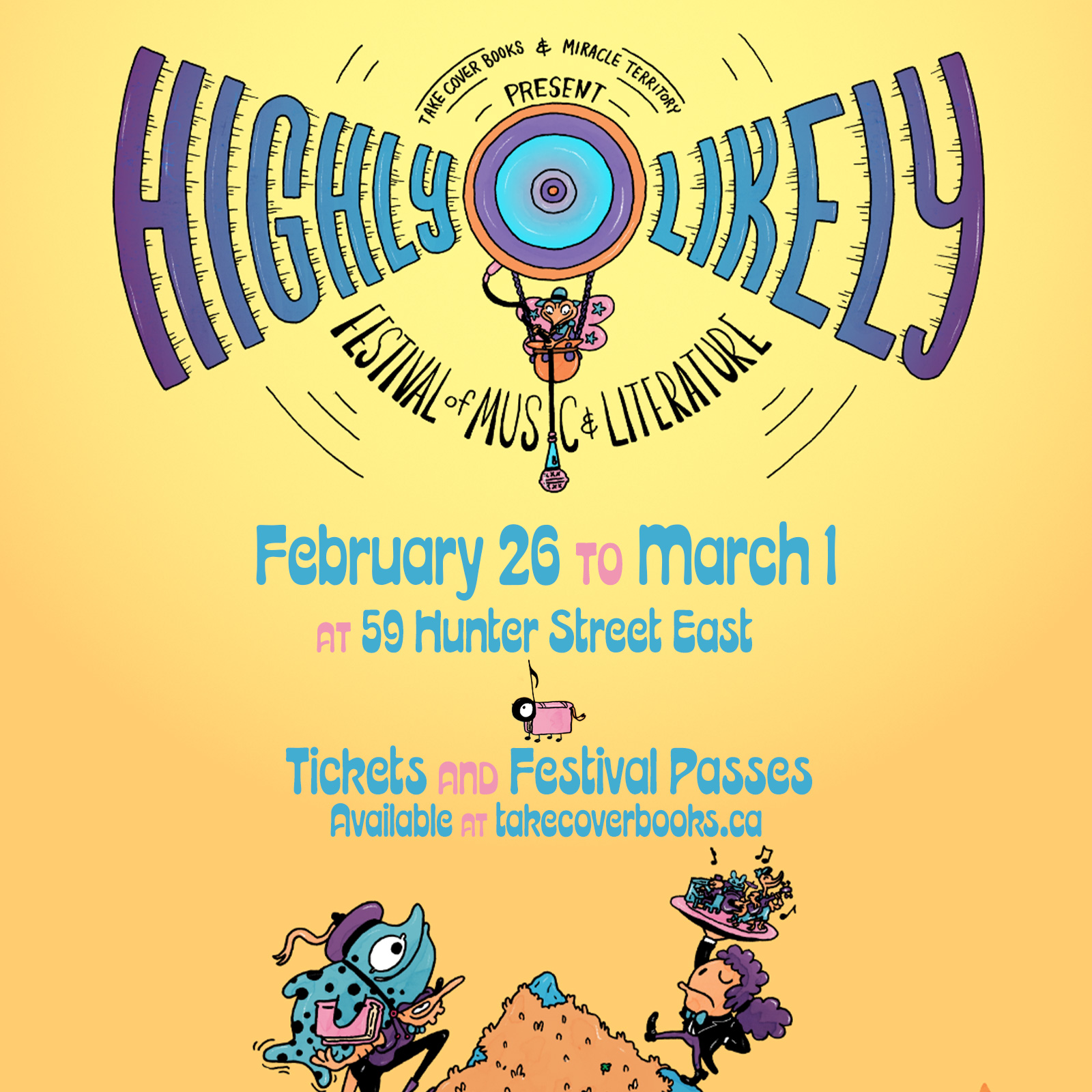
On February 27th, Niko Stratis joins a slate of writers and musicians performing at Take Cover Books & Miracle Territory’s Highly Likely Festival of Music and Literature. Arthur sent me to speak to her about the book’s continued appreciation more than six months since its release, how life and labour have shaped her writing process, and what “dad rock” might be for the kids of tomorrow.
Evan Robins: You put out a book (The Dad Rock That Made Me a Woman) last year.
Niko Stratis: I sure did.
ER: It’s coming up on a year since then. How does it feel to see the long tail of its reception?
NS: It’s been interesting, because I used to work in music and my partner is a musician, so I have this vision of like, a record comes out, and you’ve got a six-month window, and then after that you’re sort of onto the next thing.
It’s been really interesting with the book seeing how long of a shelf life it’s had. It’s still finding new audiences, and I’m still finding people reach out to me about it.
It’s been nice seeing it have a longer life than I was imagining. I still get to engage with people on it in a new way, which has been really fun for me because I thought I would be burned out on it by now, but it’s still quite fresh, and new, and interesting.
ER: Obviously, impressions of what constitutes “dad rock” are going to differ person-to-person. My dad’s a Welsh immigrant, so when I think of dad rock, I think of the music he listens to—New Order, XTC, Super Furry Animals. Do you have a working definition of what makes music fit into “dad rock” taxonomically?
NS: I’ve never been able to say this to anyone else, but my dad is also a Welsh immigrant!
I get into [a definition of dad rock] in the early stages of the book, but I recreated this taxonomy of it because it is often used as a pejorative—basically any music that is old enough that a guy who is a dad could be listening to it, but I really wanted to recreate [dad rock] as this idea of music that is serving a purpose in the way that dads do.
I have this delineation between a dad and father. A father is somebody who creates life in one way or another, but a dad is somebody who is raising somebody.
I took that in by asking, “What is music that is formative for me in some way? And what is it doing? And what is present in the work?” and trying to take all these big ideas and boil them down to create the playlists that became the essays in the book.
ER: That ability to boil down ideas is something I really admire about your writing. You’re able to articulate a lot, I find, even in a condensed format like your blog.
NS: It’s funny, somebody once wrote me an email and they were like, “You say that you write essays, but you write essays like a poet.” And I was like, “Thank you.” I don't think they meant that as a positive thing necessarily.
It is a question I'm always asking myself: “What's the most succinct way that I can describe this thing that I'm trying to get at? How am I boiling this down to its bare essence?”
ER: You come to publication from a different route than most, both through transition and through the trades. Is writing an extension of something you’ve always done, or do you view your work in terms of a kind of before-and-after?
NS: I wanted to write when I was quite young, when I was still in high school. I was good at it. I did good in English, and I took a creative writing course when I was in 11th grade and I was good at it, but nobody ever really took me aside to say, “This is a thing you're really good at, what if you applied yourself at it?” because I was really bad in a lot of other areas, and they were willing to let me fail.
I'm a glazier by trade, my dad is a glazier by trade, his father was as well, and when your dad is a trades worker, they sort of treated me like that's what I was going to go do anyways.
All the other kids whose parents had government jobs, they were allowed to amount to something, but I was only ever really going to go so far.
I worked in trades for almost two decades and I read a lot and I would write privately, but I would never show anybody. A couple of times I wrote things for a free newspaper in the Yukon, but really, it was a thing I always knew I wanted to do that I would express every now and then, but it would just never really go anywhere.
The idea of me being able to, you know, write a coherent sentence that might work on the page while also holding a sheet of glass in my hands, those two things never just went together for anybody.
But there's a lot of transness in that too, right? There's the person that was there before, and there's the person that's here now, and they're both shades of a shared life, but they're very different lives.
And when I look back at the younger version of myself, I am able to have a little bit more grace for myself because I see it as an almost different person who's living a very different life than I do now.
ER: I started getting paid to write around the same time I started transitioning, and I recall while trying to find my voice I would ask myself “How do I want to come off to people,” you know, “What kind of person do I want to write myself into being?”
NS: It’s hard, right? I remember telling somebody, “I would like to be a writer,” and that person told me, “Oh, I'm sure there's tons of trans stuff you could write about.”
I’m like, “Oh, so I'm only ever going to be this person to you,” the same as I was only ever a construction worker to people.
I made a very concerted effort when I started working on the book that I didn't want it to be a “trans book.” It is, in that in the course of the pieces that are in there I do transition, but to me, it's something more than that.
I worked hard to make sure that it wasn't just a trans memoir, because I think that has kind of been done, and I wanted to make it about something more, because that was of more interest to me.
lt is a book about labour, and death, and addiction, and music and all of these ideas. It's not just about this one singular identity that is easy to zero in on. It's the underlying hum beneath everything, but it's not the central driving force at the same time.
ER: Is there a song or artist you wanted to cover in the book but didn’t or couldn’t for whatever reason?
Yeah, funnily enough, I have a poster right here (She motions behind her). Grandaddy is a band that I really love. I had an essay about them in the book that we eventually cut, just because it wasn't really working, and it was standing in contrast to everything else.
“Wreck of the Edmund Fitzgerald” I wanted to put in, but I decided not to because I wanted to leave that for something else.
ER: That being?
NS: I've got a novel that I'm working on, but I'm also working on a couple of other non-fiction ideas at the same time. And I think they'll end up in another non-fiction book that I'm in the process of working on right now that I can't say too much about because I don't know fully what it is yet. (laughs)
ER: That sounds like an exciting place to be in!
NS: I'm extremely fortunate. You know, my body hurts from the many, many years I spent working hard physical labour, and it is really fortunate that I get to do this.
In my former job, when I had a bad day, I was in the hospital. Now when I have a bad day, I just have an empty Google Doc.
ER: Where do you see dad rock in 10–20 years? What’s that going to look like for the next generation?
NS: Who knows? I’m really curious.
One of the really nice pieces of feedback I've gotten from a lot of people on the book is that they have come to me with their own idea of what dad rock is to them. I like it being this personal thing that people can take on and redefine for themselves.
It does make me curious—the kids who are young now, when they’re older, what are they going to consider “dad rock?” I don’t really know.
I'm sure there'll be a lot more pop music in it, which is interesting to me. There'll be more women. There'll be more people of color. There'll be a lot of other ideas. There'll be more queer people especially, which is great.
ER: And lastly, you’ll be giving a reading at Highly Likely at the end of this month. What can people look forward to from that?
NS: I will be reading from the book, but what I really like to do with these events is try to engage with the people that show up as much as possible.
I think a reading can be a very cut and dry thing, and I don't ever want it to be “you show up, I read, and then you leave.”
I try to make the reading an engagement with the audience in some way or another. So it's not so much a static thing, it’s a thing we do together.
I've never been to Peterborough. This will be my first time. So I'm excited about that.
This interview has been edited for clarity and concision.
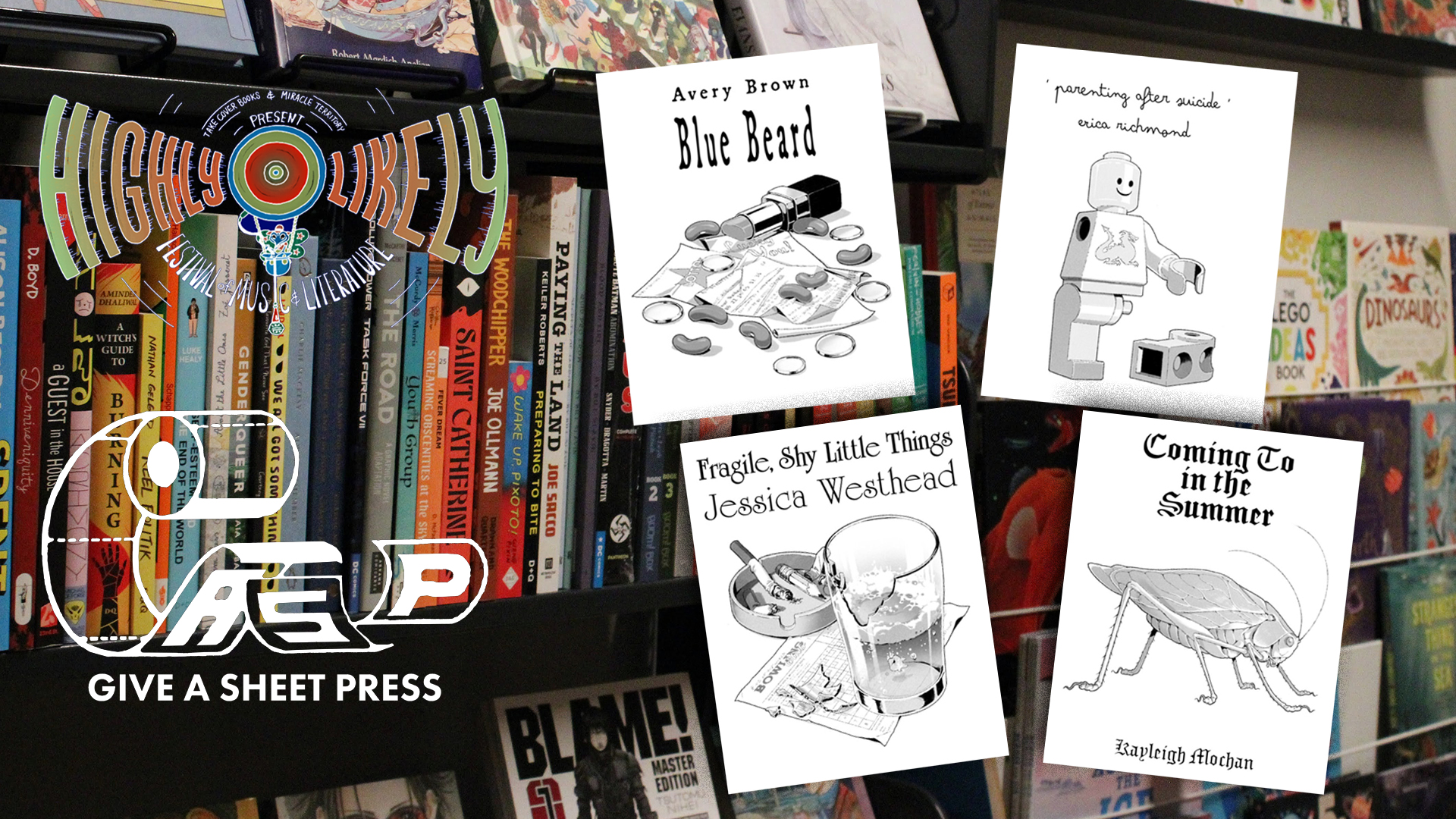
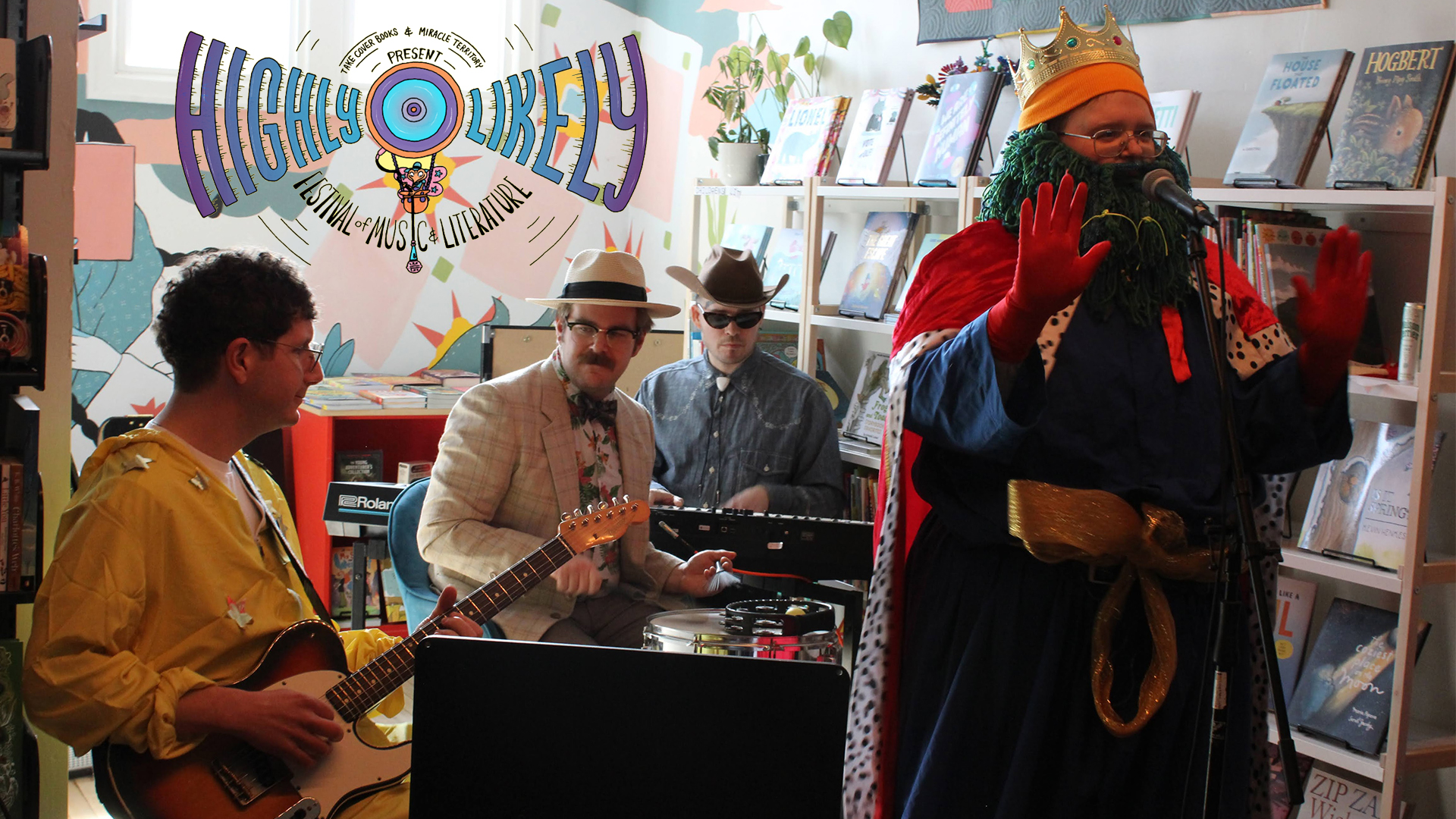
This article is the first of Arthur's coverage of Highly Likely Festival, presented by Miracle Territory and Take Cover Books. The festival runs from February 26 to March 1, 2026 with four nights of music, literature, and art at Take Cover Books on 59 Hunter Street E. For more information about the festival lineup, visit the Highly Likely site or visit Take Cover Books digitally or in-person for tickets or weekend passes. Highly Likely is also offering discounted student tickets for individual nights of the festival via their brick-and-mortar storefront or online.



.png)
The rich text element allows you to create and format headings, paragraphs, blockquotes, images, and video all in one place instead of having to add and format them individually. Just double-click and easily create content.
A rich text element can be used with static or dynamic content. For static content, just drop it into any page and begin editing. For dynamic content, add a rich text field to any collection and then connect a rich text element to that field in the settings panel. Voila!
"Headings, paragraphs, blockquotes, figures, images, and figure captions can all be styled after a class is added to the rich text element using the "When inside of" nested selector system."
The rich text element allows you to create and format headings, paragraphs, blockquotes, images, and video all in one place instead of having to add and format them individually. Just double-click and easily create content.
A rich text element can be used with static or dynamic content. For static content, just drop it into any page and begin editing. For dynamic content, add a rich text field to any collection and then connect a rich text element to that field in the settings panel. Voila!
"Headings, paragraphs, blockquotes, figures, images, and figure captions can all be styled after a class is added to the rich text element using the "When inside of" nested selector system."

.jpg)

.png)


