.png)

.jpg)

On February 26th, the Trent Central Student Association (TCSA) held its Winter Semi-Annual General Meeting at the Student Centre’s Event Space.
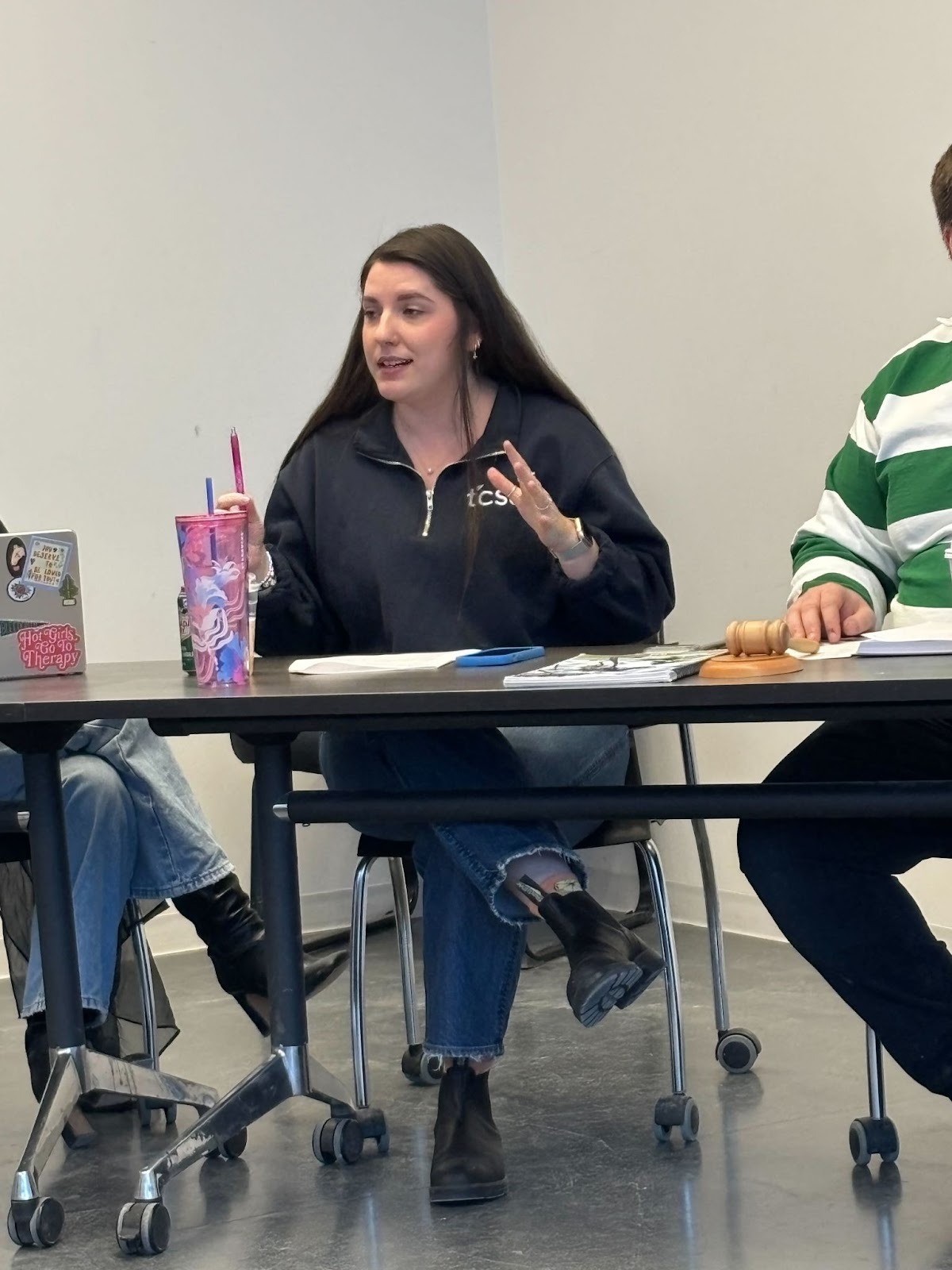
At the meeting, Chair Rob Monaco introduced the Association Financial Review in the form of a video presentation by Joanna Park from accounting firm Baker Tilly.
A review of the TCSA’s financial statements from the previous fiscal year (ending August 31st, 2025) showed the Association had followed the Canadian Accounting Standards for Not-For-Profit Organizations. The motion to receive the reviewed financial statement was adopted unanimously.
Director Reports covering the activities of the TCSA Executive Team during the 2025-2026 term were then presented by Executive Director Cinthia Hernandez.
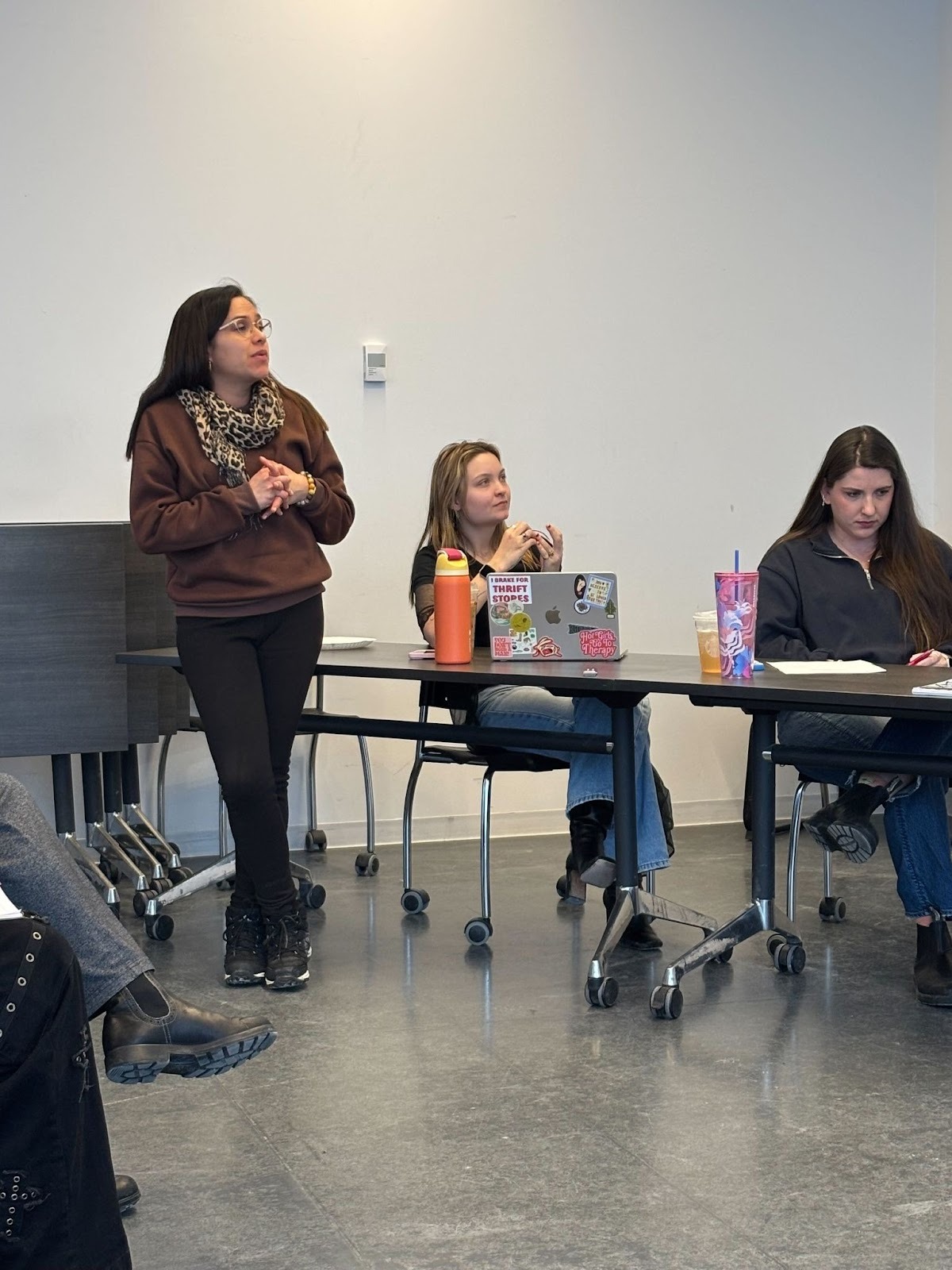
The first report from President Iyiola Alade mentioned Alade's transition of the Student Emergency Funding (SERF) into the Critical Life Event Fund (CLERF). This fund provides up to $1,200 per academic year to students whose finances have been negatively impacted by critical life events, such as accidents, illnesses, or the loss of a caretaker. Alade's report also mentioned restructuring the Grocery Assistance Program (GAP), and the creation of NOSAP [sic] for students who do not have access to financial aid.
Alade’s report noted a continued contribution to the Selwyn Link bus route, meaning Trent students will continue to use the Link for free to travel between Peterborough, Lakefield, Bridgenorth, Ennismore and Curve Lake. President Alade committed to continuing to advocate for antiracism by working with Trent's administration, following up on the Integrity Commissioner’s report about Mayor Jeff Leal’s use of the N-word and speaking at Peterborough City Council meetings.
Vice President of Student Health and Wellness Kyra Myderwyk reported some additional programs and services introduced. The TCSA committed to providing pregnancy test graphics with all pregnancy tests and therapy lamps for seasonal depression can now be purchased directly from the Association.
Vice President of University and College Affairs Gold Jegede’s report noted that he built relationships with members of the Colleges and Student Services Committee (CASSC) and initiated an ad-hoc committee of student representatives to discuss CASSC.
Vice President of Campaigns and Equity Mickayla Simpson-Carty reported on her role in the Hands Off Our Education! Hands Off Our OSAP! and Bill 33 campaigns to advocate for students rights and raise awareness in student tuition increases.
After all Director Reports were concluded, the floor was opened to questions, the first of which came from an attendee who asked about the TCSA’s response to Mayor Jeff Leal’s use of the N-word.
“Yes, it is part of our responsibilities to address that. We did have a statement after the incident,” said President Alade.
“We were speaking at the city council in regards to this. We made recommendations to the councillors to have antiracism training, which the city council did take our recommendation for antiracism training,” he explained.
“We did file an Integrity Commissioner complaint. We got a report back that wasn’t in our favour, but we did take it to the city council. Conversations are still ongoing. [Jeff Leal] has been uninvited to [Trent].”
The motion to accept the presented Directors’ Reports passed unanimously.
After a brief break, the SAGM continued with the presentation of this year’s policy changes and amendments, presented by Associate Resource Manager Wendy Walker.
For student accessibility: students with invisible disabilities are now being included under the Association’s definition of accessibility, virtual and hybrid options for events and meetings are being provided whenever possible, event promotions are releasing sooner to allow students with accessibility needs to assess and request accommodations, and accessibility request outlines are now being included in event promotions to provide clarity to students who require accommodations.
Information and statistics citing the 2016 Paris Agreement to limit global warming or the UN sustainable development goals have been removed from the Divestment from Fossil Fuel Companies policy.
“[The 2016 Paris Climate Agreement] was 10 years ago, which is a little bit outdated in terms of research; especially regarding climate change. We tried to update that and make it something that is going to have a little bit more longevity [and] to make it a little bit more straightforward for the average student,” Walker explained.
“Our policy is reviewed every five years, so there’s the potential that we could approve the policy today, and [not] look at it for another five years,” Walker said in response to a question about the removal of these statistics. We wanted to make sure what we put in the policy was relevant three or four years from now—[and] just focus on where we stand in general.”
The divestment policy also included a clause about providing transparency to the Association membership regarding investments in its annual financial reporting.
After consulting a committee of students and community members, the TCSA took the policy stance that the Trent Lands Committee holding “in-camera” meetings is an overextension of power that halts public participation and informative experiences from “individuals whose everyday activities are connected to, shaped by, or part of the institutional developments under exploration.”
The motion to approve the proposed policy changes carried unanimously, taking the meeting into other business.
The first motion presented involved an impassioned speech by a student speaker, who requested the TCSA announce, organize, and advertise a campus-wide one-day student strike against the Ford government’s changes of Ontario Student Assistance Plan (OSAP). This student also urged the Association to vote in favour of any student strike proposal through the Canadian Federation of Students (CFS).
“In 2012, the Quebec students… [were] able to defeat proposed tuition hikes and bring down Quebec's Provincial government. The CFS leadership must prepare to lead this fight on every campus,” the student speaker declared.
“Over the past few days, we have leafleted on campus and we have found that 80% of the students we have talked to are in favour of a student strike,” they added.
VP Kyra Myderwyk spoke against the motion under the premise that the TCSA was already in the process of those actions, then requested to have the motion separated into four different motions so each one could be addressed.

The first of the four new motions was to publicly announce a campaign to build towards a student strike.
“In terms of this, we’ve already announced that we are taking students to the national day of action—the national student strike, on March 4th, that has been organized by the Canadian Federation of Students Ontario. This is happening at Queen’s Park,” Myderwyk announced.
“We have arranged multiple buses to take students at no cost. We’ve also arranged a rally happening outside of Dave Smith’s office in Peterborough so that students who maybe can’t make it to Toronto, or can’t commit that much time, are still able to participate for two hours.”
The student speaker pointed out that the TCSA has not announced a plan to have a student strike on campus.
“The points you’re talking about are [about] the TCSA supporting action towards a student strike, but not publicly announcing that the TCSA specifically will be having a campaign for a student strike on the Trent campus, which is what I’m trying to request,” the student speaker rebutted.
They also clarified that they were not looking for just a protest in Toronto but that they wanted additional effort put into creating a one-day campus-wide strike.
“Make an announcement to the student body that this is not just actions that are happening in Toronto, or it’s not just an MPP strike that’s happening, [but] these are all leading up to the potential for a one-day student strike.”
VP Gold Jegede responded by pointing out that the March 4th protest would last just one day, and that CFS were continuing the Hands Off Our Education!! campaign into the foreseeable future.
“There is action, and there will be action,” Jegede said.
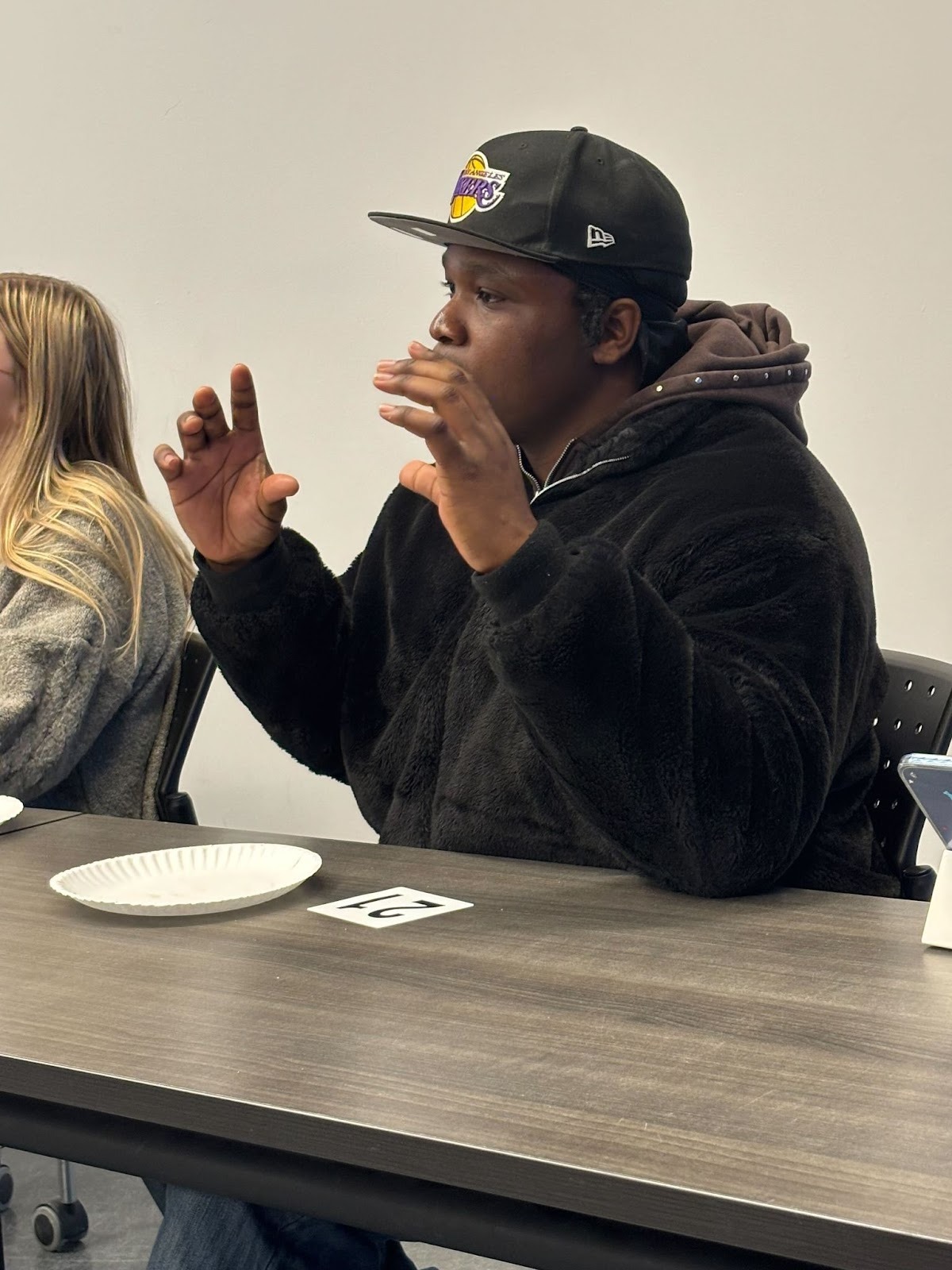
Myderwyk added that the TCSA has only had three days to act since coming back from reading week, and that it seemed like the announcement from Doug Ford was specifically launched during reading week when students and student governments were absent.
Myderwyk also mentioned that the TCSA had been “going table-to-table” to address students' concerns over the OSAP cuts personally, and that they were only starting the process to join CFS’ fight.
“Publicly announcing your support [for a strike] is the logical next step and it’s the commitment we need from our leaders right now,” another student commented.
President Iyiola Alade interjected that the TCSA, alongside the Trent Graduate Students Association, the Canadian Union of Public Employees and the Trent University Faculty Association were working on a statement to come out regarding the OSAP cuts.
“Our statement will say we fully stand against the OSAP cuts, and we fully support students mobilizing to stand up against this,” Myderwyk said. “However, at this point, we are not able to tell students that they should be striking.”
Myderwyk also mentioned that protection is required for students who want to strike so that their academic record is not affected, and international students' visas are not threatened.
After more back and forth on the validity of the motion, Rob Monaco proposed that the motion be amended to the TCSA committing to providing their statement as discussed at the SAGM. The amended motion carried unanimously.
The motion for the TCSA to organize frequent public meetings and outreach events to inform students about a student strike was then put to a debate.
Myderwyk again claimed that the motion was already being carried out by the TCSA, as they attempted to reach students on campus, awaited promotional material for their rallies, and hosted monthly town halls.
“I don’t want [the motion] to be specifically about a student strike,” Myderwyk said. “We welcome conversation from students about any issue, but there are student issues that are prominent and don’t relate to OSAP. We are not hosting town halls where we are limiting what students can speak [about].”
The motion was called due to circular arguments, where it failed unanimously. The student speaker retracted the next motion calling for the TCSA to advertise meetings on every available platform as it related to the previous failed motion and moved to continue with the final motion to vote for any CFS action in support of a student strike.
Myderwyk responded to the motion by alleging that CFS did not propose votes for student strikes and that the general meetings for the year had already happened, meaning the TCSA would no longer be capable of voting in favor of a strike.
“Because we are not in the GTA, we are pretty distant from a lot of what’s happening,” Myderwyk added. “What’s happening [at] Trent is not as impactful as what’s happening at a campus with 100,000 students.”
The student speaker clarified that they wanted the TCSA to vote in favour of a student strike at any opportunity they had, as it does not negatively impact them in any way to do so.
“Historically, at the [CFS National General Meeting] this year, we did vote against a student strike,” Myderwyk said. “They were looking at a Canada-wide student strike for food security, and as an Ontario group—we didn’t feel like there were the safety requirements in place for students in Ontario to safely strike.”
In fact, the original text of the motion for a student strike put forth by the Student Union of the Nova Scotia College of Art and Design stated the goals of the failed strike as (in order): a unilateral 20% decrease in tuition fees and the abolition of differential tuition for international students and divestment from fossil fuels, weapons manufacturing, Indigenous land exploitation, and the ongoing genocides and crises in Palestine, Haiti, the Democratic Republic of the Congo and Sudan.
“Ontario universities don’t have any kind of legislation specifically looking at students walking out,” continued Myderwyk. “Historically, it’s never really happened, and what we’ve seen with last year's protests for Palestine is that students were in danger.”
The motion was amended by the student speaker to “the TCSA advocating for a student strike at CFS,” to which VP Myderwyk reiterated that it would not be in the best interests of the Trent student population to participate in a student strike.
“No one is saying the OSAP cuts are good. We are all horrified,” she said. “But the action of taking a student strike right now is dangerous and we would not advocate for something that’s not benefitting all of our students at the CFS level.”
The motion to vote in support of any CFS action in support of a student strike was unanimously opposed, though seven voters abstained.
The dialogue between the TCSA and students advocating for a strike continued, focusing on whether a strike would truly benefit the student body—a claim the TCSA rejected. VP Myderwyk noted the 2012 (not 2014) Quebec student strikes were fundamentally different from the present situation, as students protested tuition hikes by negotiating directly with the government.
The TCSA vocalized that they were strongly against the idea of a student strike due to the harm it could cause national and international students, and Rob Monaco called a motion for the meeting to be adjourned.
“Our goal is actually that students would not have to go on a strike to be successful because of the giant risk that poses to students. That being said, we want students to speak up. We want [students] to be in dissent. There’s a lot of ways to be in dissent without risking your education,” Myderwyk concluded.
With files from Ziggy Kirch via Louanne Morin.


.jpg)

.jpg)
.png)
The rich text element allows you to create and format headings, paragraphs, blockquotes, images, and video all in one place instead of having to add and format them individually. Just double-click and easily create content.
A rich text element can be used with static or dynamic content. For static content, just drop it into any page and begin editing. For dynamic content, add a rich text field to any collection and then connect a rich text element to that field in the settings panel. Voila!
"Headings, paragraphs, blockquotes, figures, images, and figure captions can all be styled after a class is added to the rich text element using the "When inside of" nested selector system."
The rich text element allows you to create and format headings, paragraphs, blockquotes, images, and video all in one place instead of having to add and format them individually. Just double-click and easily create content.
A rich text element can be used with static or dynamic content. For static content, just drop it into any page and begin editing. For dynamic content, add a rich text field to any collection and then connect a rich text element to that field in the settings panel. Voila!
"Headings, paragraphs, blockquotes, figures, images, and figure captions can all be styled after a class is added to the rich text element using the "When inside of" nested selector system."

.jpg)




.jpg)