




.png)



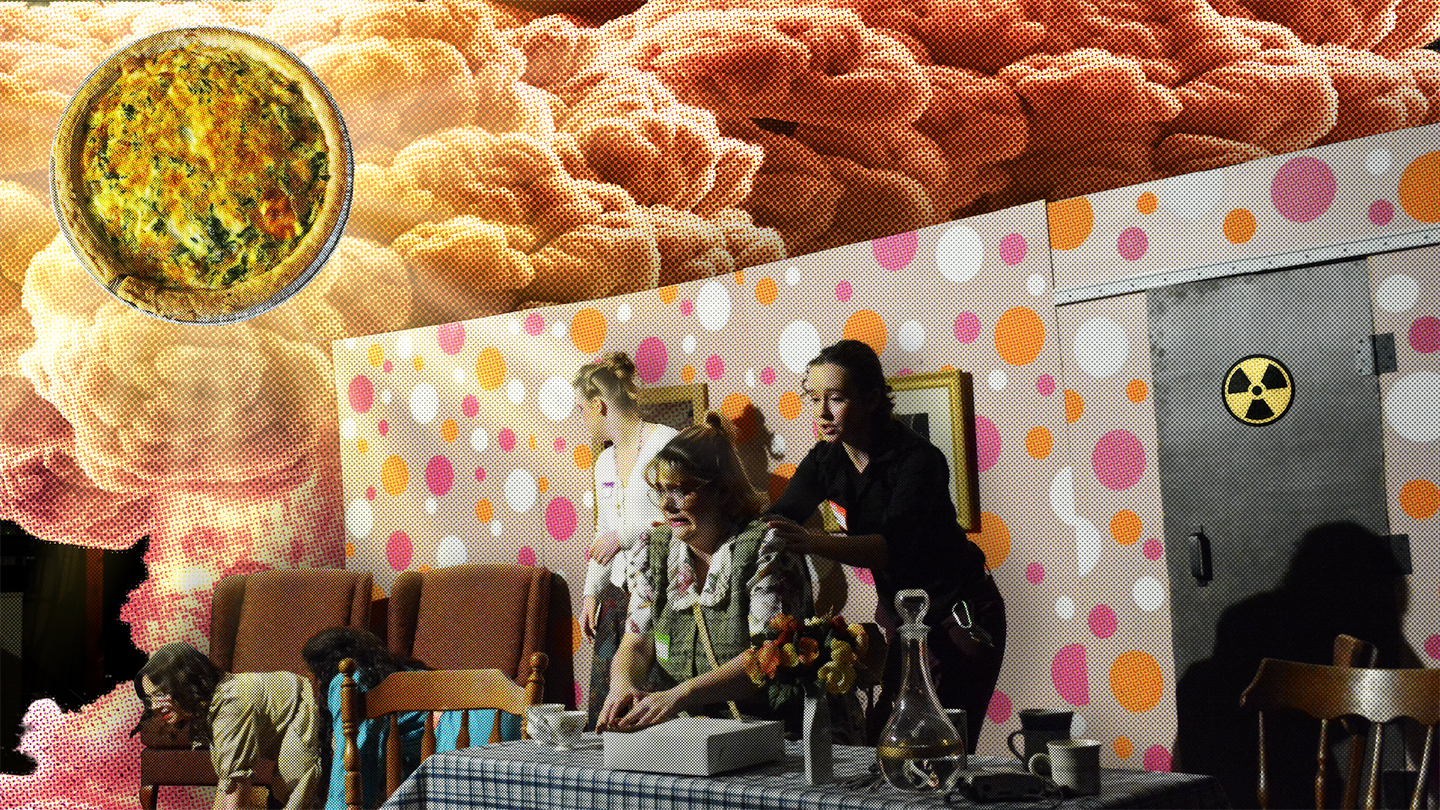
Warning: this review contains spoilers for Five Lesbians Eating a Quiche.
From January 16th-24th, Sadleir House’s John Lecture Hall hosted Anne Shirley Theatre Company’s (ASTC) production of Five Lesbians Eating a Quiche, a one-act comedy directed by Taya “Ty” McKeen featuring a five-person cast of ASTC newcomers.
The play opens in 1956 America, at the Susan B. Anthony Society for the Sisterhood of Gertrude Stein’s annual Quiche Breakfast. The five “widows” are about to begin their feast when they are interrupted by a bomb siren. They quickly file into an industrial shelter, where secrets are revealed and bonds are strengthened as they confront the possibility of “a quicheless world.”
They share the bomb shelter with the audience, who are addressed as fellow Society members throughout the show. The immersion begins right at the door, where each viewer is given a pre-written nametag, and continues as the cast urge their “sisters” to join them in coming out as lesbians.
“We were so scared on opening night for the audience participation,” said Monique Fitzmaurice, who played Society Buildings and Grounds Chairman Vern Schultz. “Especially the part where we go into the audience and [say], ‘Are you a lesbian, Judy?’ We’ve been practicing that with air, assuming that people will be in on the bit.”
“The audience is the sixth lesbian,” agreed Willow Brown, who played Society secretary Ginny Cadbury.
The audience participation only served to enhance the character work happening onstage. Each cast member convincingly communicated their character’s disposition through body language, facial expressions, intonation, and regional accents.
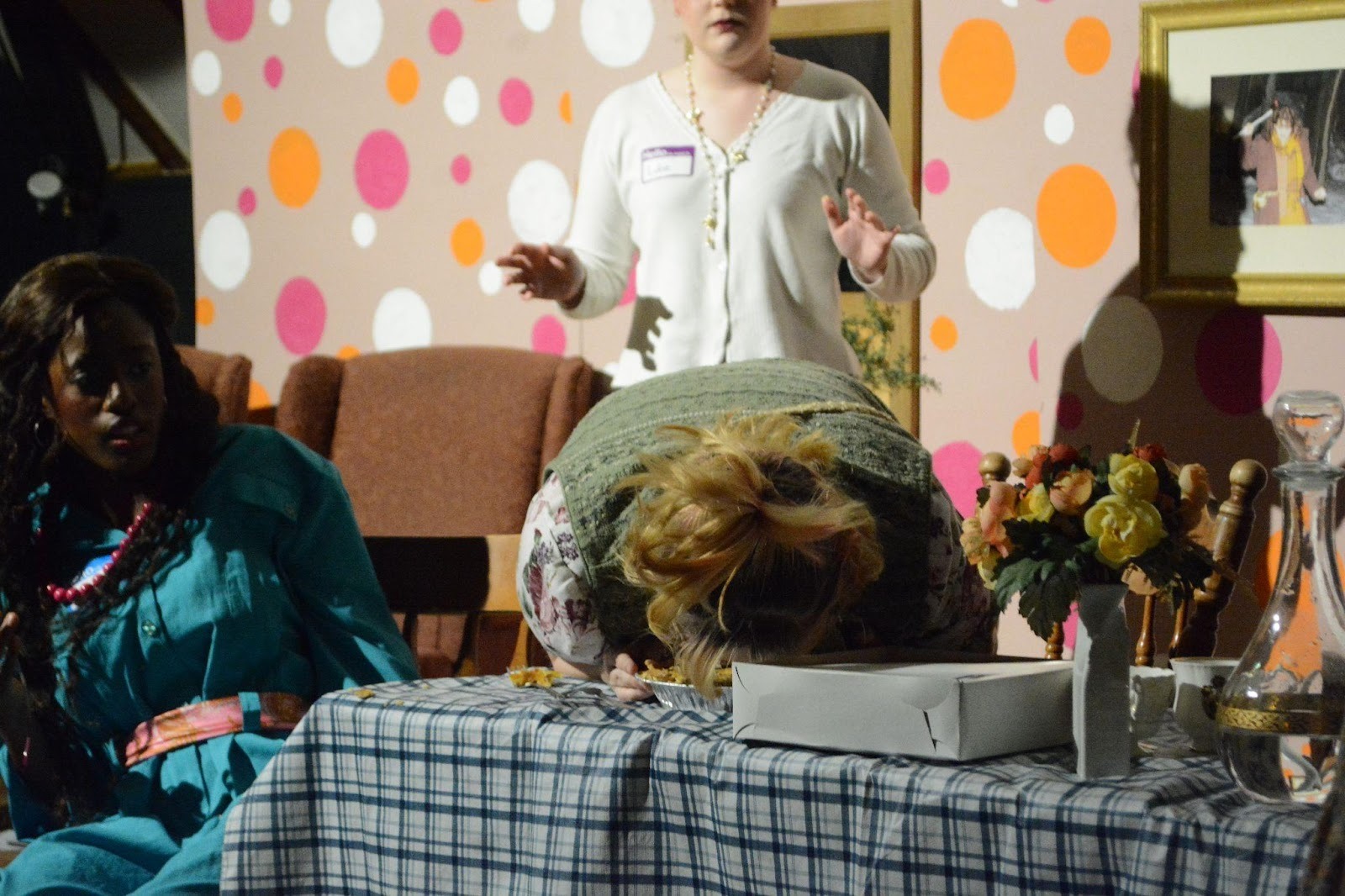
Brown personified Ginny’s giddy naivety in a very believable way, especially when it came to her dynamic with Vern. Their relationship consisted of many period-appropriate innuendos which eventually led to an onstage kiss, which Brown said was her “biggest challenge” in the rehearsal process.
“This is my first stage kiss ever, because most of the shows that I've done were high school productions, so we weren't allowed to do stage kisses,” Brown told Arthur. “I really liked that I had a stage partner who was very willing to help me work through that and work through all of the issues that I could have had with it.”
Fitzmaurice also found the stage kiss challenging, as they had been “typecast as a sort of quiet, reserved type of character” in past productions, the exact opposite of the assertive and charismatic Vern, especially in this context.
“I've done so many stage kisses in the last year, [so] I knew how to do it, but Vern is very confident, [she’s] a little bit of a player. So it was hard to figure out how to channel that without breaking character,” they explained.
Fitzmaurice’s Vern had plenty of swagger and authority, took great pride in her homemade quiche, and completed her 1950s masc lesbian look with a vest and carabiner.
Yani Saliu portrayed Society chairwoman Wren Robin with a strong balance of ambition and enthusiasm, emulating the “big sister vibe” of the character. She had only acted in musicals prior to her casting as Wren, but also got out of her comfort zone in other ways during the production.
“I'm not gay, I'm not [a] lesbian, I'm a Christian girl, and I'm in a play called 5 Lesbians Eating a Quiche,” Saliu explained. “[I knew] that some people would hear about it and shame me, or judge me for it, even though it's just acting. But all these girls, they've been just so gracious to me, I feel like I've learned so much.”
“One thing I really appreciate about theatre, or just acting in general, is [that] it doesn't matter what your background is, who you are, [or] what you look like, there's a space for everyone,” she continued.
Director Ty McKeen also emphasized the significance of making the theatre a welcoming space.
“It was really important for me to strive to have a very comfortable, safe environment, because I know theatre can get so high-strung and stressful,” she said. “You have a bunch of people [who are] all balls of energy, and if you don't foster the right environment, then everybody can burn out really quick.”
“Theatre is a collective process, and if the director is holding on to the reins too tight, then it doesn't fully embody what it should be,” McKeen continued. “We had a production assistant named Alexis who suggested the polka dots on our set and that's a huge hit. Our set looks so cute, it fits perfectly. And I just always wanted to give the opportunity for actors to develop their characters the way they wanted, and for production assistants, light techs, everybody [to have] a voice that I will listen to and respect.”
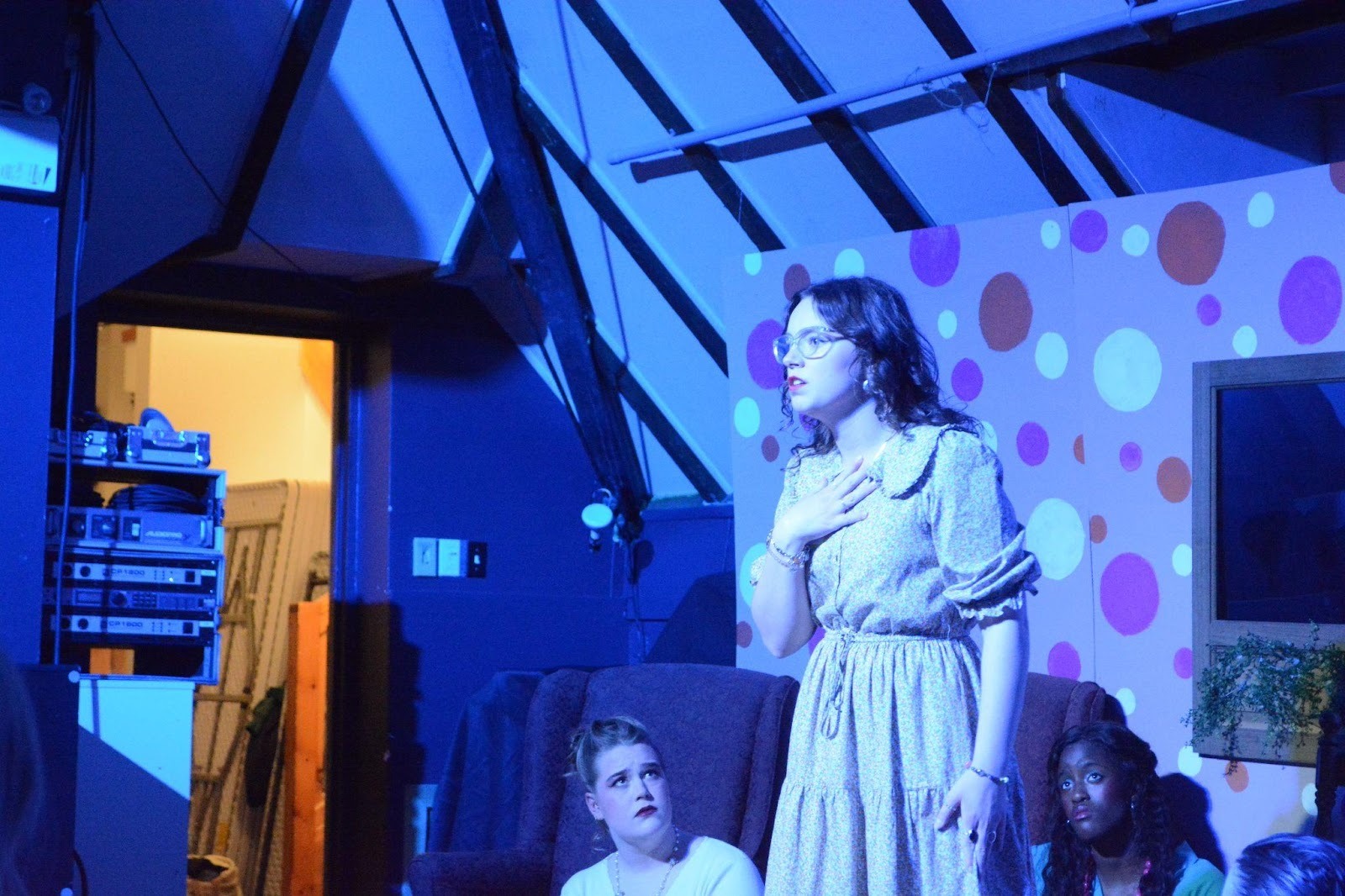
Trent alumni Chelsea MacDonald, who played Dale Prist, echoed Saliu and McKeen’s sentiments. She said that during a time of chaos she “was desperate for a sense of community,” which led to her return to the stage.
“Theatre has always been that for me,” she told Arthur. “It's always felt so cozy, and warm, and inviting, and kind, and I needed that right now.”
Amidst the serious circumstances of the play, MacDonald’s Southern hilarity was a highlight. Her monologue when she played the roles of both her younger self and her father was one of the best moments of the show, and left the audience in stitches.
Another notable aspect of the play was the cast’s frequent ridicule of society member Marjorie, played by a selected audience member each night. The justification? Marjorie’s crime of presenting a quiche that contained meat.
“[On opening night], we chose a very outgoing, very loud person [to be Marjorie],” said MacDonald. “He added flavor, and I loved it. It was really funny, because when we started rehearsing, we did it to a giraffe, like a stuffed animal, but it was really cool to see it work and see [each Marjorie] get uncomfortable.”
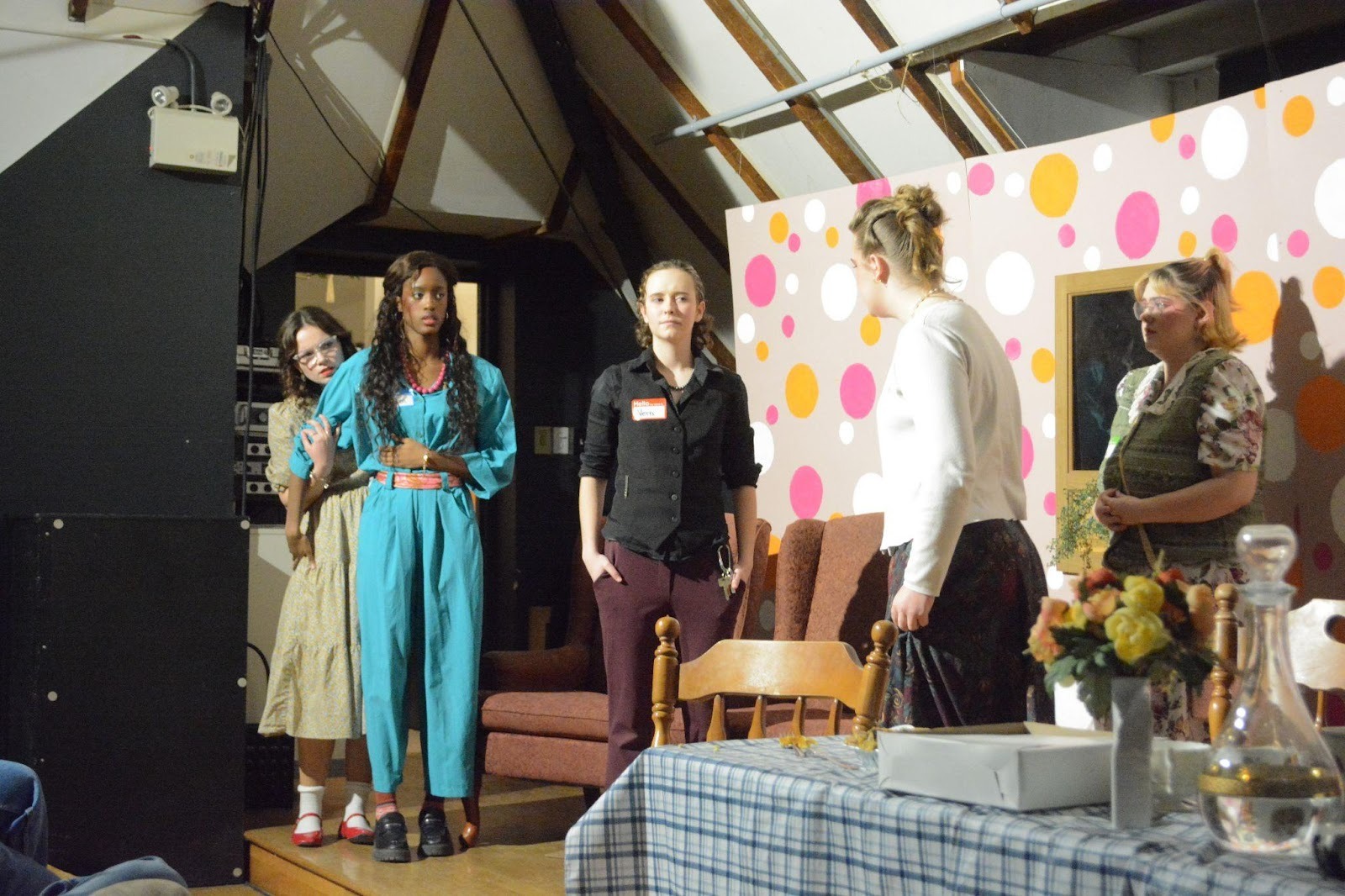
“As funny as the play is, it also has those moments where it's challenging what people think of [as] queer stereotypes, and also has those profound moments where we get to be who we are,” said Keira Schaefer, who played Lulie Warwick.
This production was Schaefer’s first time acting, having spent her time in high school theatre out of the spotlight either backstage or directing. This was hard to believe based on her ability to personify the Society president’s uptight professionalism and fierce loyalty to the quiche.
While Lulie initially expresses dismay at the others coming out to the entire society as lesbians, she comes to admire their bravery and feels safe enough to tell them she is pregnant. Schaefer was able to resonate with the importance of support systems for her character, resulting in a perfect embodiment of these disparate aspects of Lulie’s identity.
“I'm queer myself, and in my community, I've always been accepted,” Schaefer told Arthur. “My parents accepted me, my friends accepted me, and although that's the way it should be, I'm really lucky in that position. Whereas Lulie is someone who's incredibly repressed and doesn't believe that she can have that.”
“And although she never officially comes out in the play, one of my favorite things to see was the support that the sisterhood gave her, as queer people, immediately everyone was on her side and there for her. And I think that's really something beautiful to see.”
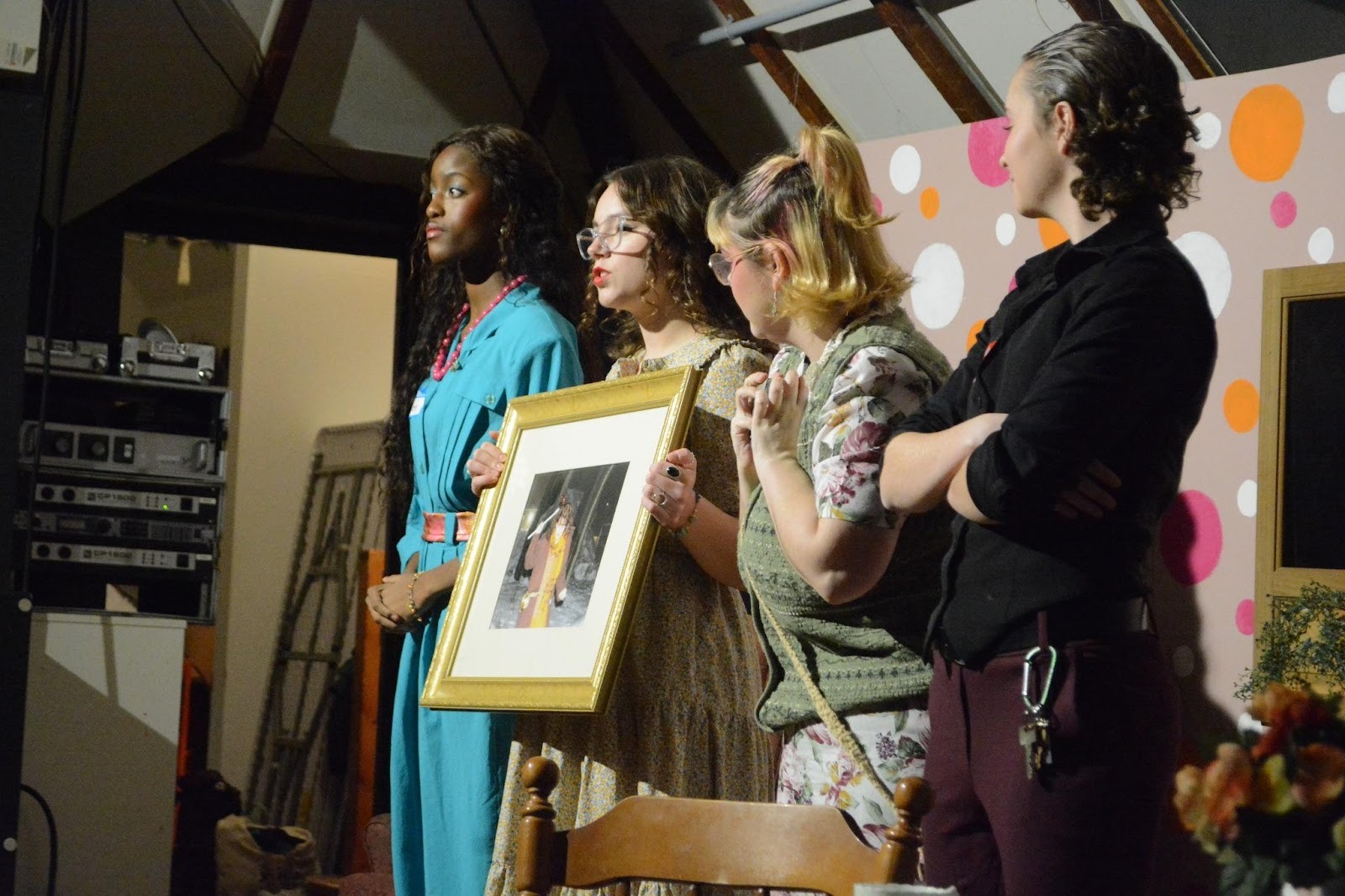
It was clear that the cast and crew had put their heart and soul into the production. McKeen was especially passionate, having pitched the show at the ASTC Annual General Meeting for the past two years. She said the title and format of the play particularly attracted her attention.
“I think that comedies often hide a lot of truths,” said McKeen. “Having sapphic, queer relationships and women on the stage is so important, especially in the time we're living in right now. It's getting scarier and scarier to be a queer person anywhere, even when you think you're safe in a country.”
“I also think the threat of war is very prominent and pertinent in our current times,” they continued. “I think [this play] does remind us where we have been and what could happen. And I think there's a lot of deeper stuff behind the laughs. And [while] it is fun and it is colorful and outgoing, and you fall in love with the characters, but if you do choose to dig a little deeper . . . [you’ll ask], why did [the author] choose this time period? What are they saying? And I think it is [because] these women did exist, and we will always exist.”






.png)
The rich text element allows you to create and format headings, paragraphs, blockquotes, images, and video all in one place instead of having to add and format them individually. Just double-click and easily create content.
A rich text element can be used with static or dynamic content. For static content, just drop it into any page and begin editing. For dynamic content, add a rich text field to any collection and then connect a rich text element to that field in the settings panel. Voila!
"Headings, paragraphs, blockquotes, figures, images, and figure captions can all be styled after a class is added to the rich text element using the "When inside of" nested selector system."
The rich text element allows you to create and format headings, paragraphs, blockquotes, images, and video all in one place instead of having to add and format them individually. Just double-click and easily create content.
A rich text element can be used with static or dynamic content. For static content, just drop it into any page and begin editing. For dynamic content, add a rich text field to any collection and then connect a rich text element to that field in the settings panel. Voila!
"Headings, paragraphs, blockquotes, figures, images, and figure captions can all be styled after a class is added to the rich text element using the "When inside of" nested selector system."

.jpg)
.jpg)

.png)


.jpg)

