




.png)




Warning: This article contains discussions of murder, racial violence, and police brutality.
In October, CBC’s This Hour Has 22 Minutes comedy released a two-minute video titled “When the ICE Agent is Canadian.” Going in, I expected a passive-aggressive version of American ICE agents; perhaps some xenophobia punctuated by tongue-in-cheek references to Tim Hortons. Maybe they won’t show any physical violence, I thought, because that would feel insensitive. But maybe they’ll allude to the worsening state of border-tightening policies in Canada.
Boy, was I wrong.
What I found was an uncritical depiction of Canadian officers as polar opposites of American Immigration and Customs Enforcement (ICE) agents. The video centered around a “N.I.C.E.” agent welcoming newcomers to Canada, telling one person she was “officially an honourary Canadian” and offering hugs. As I watched, I became queasy—what was 22 Minutes, a satirical show normally critical of large institutions, trying to say?
On February 4th, CBC Radio One published an article about a group of Toronto police officers facing criminal corruption charges related to the tow truck industry. The charges against them include shootings, drug trafficking, theft, and conspiring to murder another officer.
I think this contrast between the fictional officer of the 22 Minutes episode and the subjects of the Radio One article highlights a greater problem in how Canadians—primarily white Canadians—view ICE and the police. There have been widespread calls to abolish ICE since at least 2018, led by prison abolitionists and inextricably tied to the Black Lives Matter movement. However, with Donald Trump’s crackdown on immigration and deployment of National Guard troops to blue states, ICE abolitionism has become mainstream.
The number of people who believe that ICE is an inherently violent organization, but simultaneously believe that the police are there to protect them, fascinates me. What, do they think that immigrants are going to start being treated kindly once they’re being addressed by regional officers instead of border officers? This line of thinking requires a separation of these types of violence that are fundamentally part of the same system.
These officers wear the same uniforms, they both carry weapons, and they both brutalize peaceful protestors on a regular basis. ICE and regional police officers frequently collaborate, exchanging data on immigrants and asylum seekers. Barack Obama actually ended the legal clause that enabled these collaborations in 2012, because of how often they enabled racial profiling. (I don’t need to tell you which president brought it back.)
Many Canadians seeing the violence towards immigrants (and non-immigrants) in the USA are appalled, as they should be, and have joined the calls to abolish or reform ICE. However, in addition to this disconnect between their perceptions of ICE and the “friendly local neighborhood cop,” there seems to be another layer of mental shielding between the American police force and Canadian police force.
I am worried that as these comparisons become more mainstream, there will be suggestions that US customs enforcement and border policies should reflect Canada’s. And while I would consider going from mass incarcerations, kidnappings and murder to intense surveillance and cancelled immigration documents an improvement, I would hardly call it a favourable system for migrants. One only needs to look at the case of Francisco Barahona, a man who was denied cancer treatment and threatened with deportation once he became unable to work, to understand this.
Did you know that in 2025, Canada forcibly removed 18 969 people from the country? Almost 9 000 of these removals were deportations; the highest number we’ve had in ten years. Another 5 889 asylum seekers were blocked from their flights by Canadian liaisons on grounds of presenting invalid documents. I wonder if these liaisons know about the linguistic and financial barriers that prevent people from accessing proper documentation, or the ways that the asylum-seeking process can be retraumatizing.
And immigration regulations are only getting stricter. Mark Carney’s Bill C-12 (Strengthening Canada’s Immigration and Borders Act) promises to prevent asylum claims by people who enter from the US between ports of entry after 14 days, or any claim made one year after entry.\
Bill C-2, colloquially known as the Strong Borders Act, promises to amend the Immigration and Refugee Protection Act so that government officials can cancel, suspend or change immigration documents immediately if deemed "in the public interest." The government would also be able to suspend the acceptance of new applications and cancel applications en masse for the same reason.
C-2 would also amend the Canada Post Corporation Act to ensure police officers could search personal mail during investigations uninhibited. At the risk of sounding like a filthy little anarchist, I wonder if it is truly necessary or advisable to give stronger powers to a sector increasingly involved in fatal interactions.
All of this makes me unsurprised by the presence of five ICE offices in Canada. These agents are, theoretically, limited to Homeland Security-related criminal investigations, but their continued presence indicates that our government is pretty tolerant of violence towards people labelled as criminals. We’ve seen that Canada has maintained arms deals with the USA throughout the ongoing trade war, and with the rightward shift of Canadian federal politics, the possibility of collaboration between American ICE agents and the Canadian federal government no longer seems far-fetched.
I’ve noticed that people who argue that ICE has only become violent under the Trump administration are often the same folks who believe in the myth of "Protect and Serve". They’re also usually white and born in Canada. I find it ironic how quick these people are to condemn Americans’ complacency in violence towards immigrants, yet will swallow whatever justification about fentanyl crackdowns used to defend furthering restrictions on immigrants and asylum seekers in Canada.
This brings me back to CBC Radio and This Hour Has 22 Minutes. If we continue to perpetuate these images of Canadian officers as benevolent rule-followers with undocumented immigrants’ best interests at heart, we promote ignorance when they justify killing people by painting themselves in this light. If you find this comparison too extreme for your sensibilities, ask yourself: Where do I draw the line? How do you define violence? Is there a way to deport someone—to force them to return to a country where they might not be safe—peacefully? What justifies an officer’s use of force, and is it different from what justifies a civilian’s use of force?
How many more Francisco Barahona's must there be before non-immigrants stop trusting the Canadian Border Services Agency?
How socially acceptable do people like Ejaz Choudry have to be before other Canadians decide that police shootings are never justified?
How many more Alacie Iqaluks must there be before we stop seeing police brutality in Canada as isolated from police brutality in the USA?
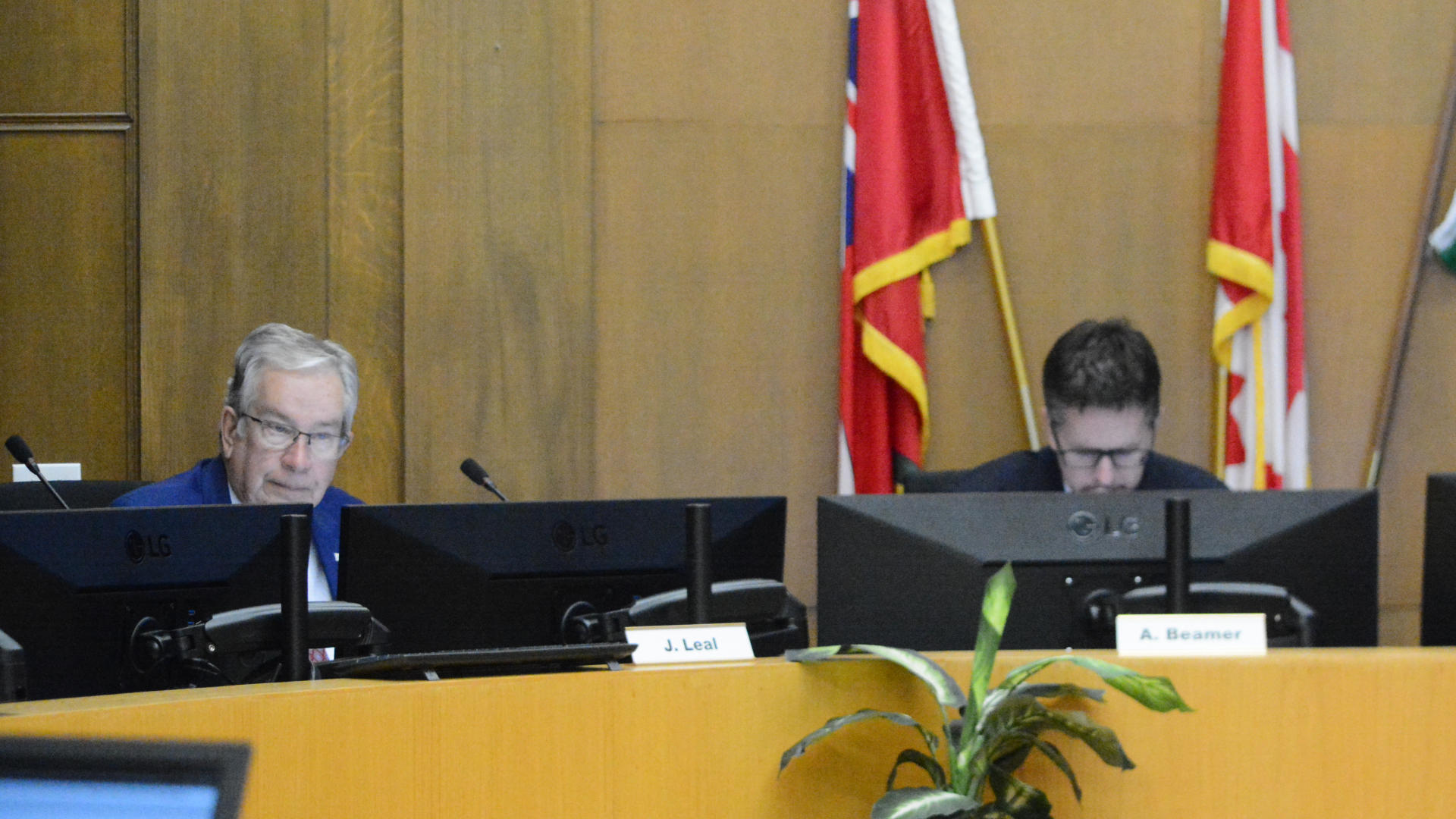
Here in Peterborough, how much will the unhoused have to suffer before the rest of the community stops tolerating the way cops harass them during encampment evictions?
How close will we inch towards draconian immigration policies before we decide jokes about “N.I.C.E.” agents are no longer funny?









.png)
The rich text element allows you to create and format headings, paragraphs, blockquotes, images, and video all in one place instead of having to add and format them individually. Just double-click and easily create content.
A rich text element can be used with static or dynamic content. For static content, just drop it into any page and begin editing. For dynamic content, add a rich text field to any collection and then connect a rich text element to that field in the settings panel. Voila!
"Headings, paragraphs, blockquotes, figures, images, and figure captions can all be styled after a class is added to the rich text element using the "When inside of" nested selector system."
The rich text element allows you to create and format headings, paragraphs, blockquotes, images, and video all in one place instead of having to add and format them individually. Just double-click and easily create content.
A rich text element can be used with static or dynamic content. For static content, just drop it into any page and begin editing. For dynamic content, add a rich text field to any collection and then connect a rich text element to that field in the settings panel. Voila!
"Headings, paragraphs, blockquotes, figures, images, and figure captions can all be styled after a class is added to the rich text element using the "When inside of" nested selector system."

.jpg)

.png)

.jpg)


.jpg)

