.png)



I’ve been thinking a lot about polyamory lately. Not just the word (whose Greek etymology I personally love), but the way it’s become The Thing people whisper about at house parties, The Thing you now have to clarify on your dating profile if you’re “poly-friendly,” The Thing that shows up in student essays about freedom, love, and Google calendars.
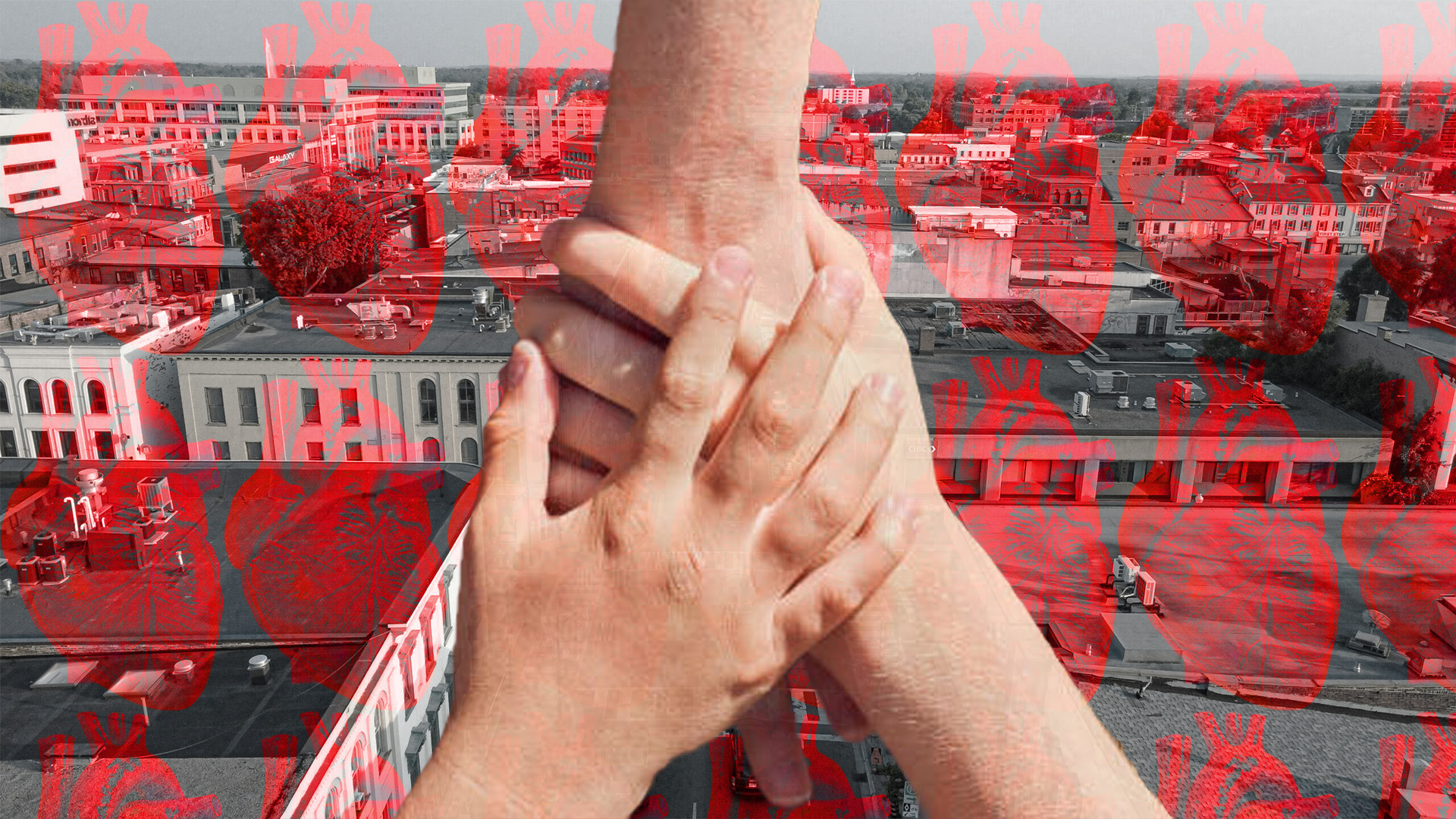
As someone who has been building relationships in Peterborough for over a decade through my research, my friendships, and through the ever-complicated experience of trying to belong in a small city while being racialized, female, and also just…human, I’ve noticed something that feels worth saying out loud: polyamory, as it’s currently showing up in Peterborough, looks a lot like gentrification.
Not just the condo kind, but the emotional kind.
Let me explain.
In the last ten years, I’ve seen Peterborough change. The average rent has nearly doubled, with one-bedroom apartments now listed for over $1,700, according to Rentals.ca. And just like in Mexico, my other home, this “revitalization” comes with a very particular aesthetic: boutique stores, yoga studios, and dating profiles that read like consent workshops.
At the same time, I’ve also watched the ethical non-monogamy conversation explode. People are opening their relationships, exploring polyamory, organizing “cuddle-puddles” (I don’t love the etymology of this word, by the way), and experimenting with entire architectures of love and intimacy.
And to be clear: I think that’s beautiful. I have close friends (mostly white) who practice or are exploring polyamory, and I’ve seen some of them build incredible relationships grounded in care, agency, and accountability.
But I’ve also seen what doesn’t get said.
One friend of mine recently joked, “She’s my anchor partner, I’m just the boat she unhooks for fun on weekends.” Another told me, “I’m polyamorous, but only when my main partner is in a good mood.”
They were being serious, and their stories aren’t rare.
In many of the frameworks I’ve seen around here (especially the ones that come from more white, university-adjacent circles) polyamory ends up reproducing some deeply familiar patterns: the heterosexual couple “opening up” but only inviting women in, or only letting the “openness” happen during the day while the night is reserved for the “primary” or “anchor” partner. There’s a whole politics to who gets to be the anchor, who gets to be the side raft, and who is never even invited to the lake.
I often wonder: if polyamory is about abundance and radical love, how come so many of its structures still resemble property arrangements? Who gets permanence? Who gets time? Who gets to stay over?
This isn’t a callout. It’s an invitation. And it starts with one question: What does a political economy of polyamory look like?
That sounds intense, I know. But really, political economy just means looking at how power, resources, and systems shape our everyday lives, including how we love. Who has access to time? To housing? To sexual health care? Who has the social and emotional safety net to handle three relationships and still go to therapy?
If we only focus on freedom as an individual feeling—“I’m free to love who I want!”—without asking what conditions make that freedom possible, we risk building relationships that look radical on the surface but are quietly reproducing old hierarchies.
What I’ve noticed in Peterborough is that many of my racialized friends (students, single moms, newcomers, queer youth) aren’t building cuddle-puddles. They’re building survival systems. They’re less interested in multiple romantic or sexual partners and more focused on expanding what little support they have into intentional relationships that might hold them through hard times.
For them, love is about mutual care, safe space, shared food, and watching someone’s kid when the daycare closes. It’s sexy in a different way—less lingerie, more lentil soup.
And yet, these frameworks rarely get recognized in polyamorous circles, which still tend to center a certain aesthetic of openness that requires money, time, and often whiteness. What happens when the city’s most visible models of “radical love” are inaccessible to the very communities already pushed to the margins? That’s the gentrification of intimacy I’m talking about.
I say this not as an expert in relationships (who is?) but as a person trying to make sense of what’s happening around me. I’m a Mexican researcher, an educator, and someone who’s spent my career working with Indigenous communities and marginalized populations, both in Canada and back home in Mexico, fighting to build models of care that are reciprocal, trauma-informed, and rooted in collective wellbeing.
At Trent, I work with hundreds of students, many of them racialized, queer, or first-generation, who are trying to build community in a city that doesn’t always make space for their realities. I’ve seen the confusion on their faces when they’re told that monogamy is “colonial,” but the only alternatives being offered feel weirdly individualistic. Optimized. Disembodied.
Maybe what we need isn’t more options, but more honesty about where those options come from and who they leave out.
None of this is a takedown of polyamory. I’m not here to say people shouldn’t explore, love big, or build relationships that defy old norms. I love love. I want more of it. More tenderness, more freedom, more late-night conversations about what it means to show up for each other.
But if we’re serious about love as liberation, we have to ask: Liberation for whom? Are we building structures that redistribute care and power, or just rebranding privilege as progress?
Love is political. It always has been. And maybe, just maybe, the sexiest thing we can do is stop pretending it’s not.




.png)
The rich text element allows you to create and format headings, paragraphs, blockquotes, images, and video all in one place instead of having to add and format them individually. Just double-click and easily create content.
A rich text element can be used with static or dynamic content. For static content, just drop it into any page and begin editing. For dynamic content, add a rich text field to any collection and then connect a rich text element to that field in the settings panel. Voila!
"Headings, paragraphs, blockquotes, figures, images, and figure captions can all be styled after a class is added to the rich text element using the "When inside of" nested selector system."
The rich text element allows you to create and format headings, paragraphs, blockquotes, images, and video all in one place instead of having to add and format them individually. Just double-click and easily create content.
A rich text element can be used with static or dynamic content. For static content, just drop it into any page and begin editing. For dynamic content, add a rich text field to any collection and then connect a rich text element to that field in the settings panel. Voila!
"Headings, paragraphs, blockquotes, figures, images, and figure captions can all be styled after a class is added to the rich text element using the "When inside of" nested selector system."

.jpg)