.png)



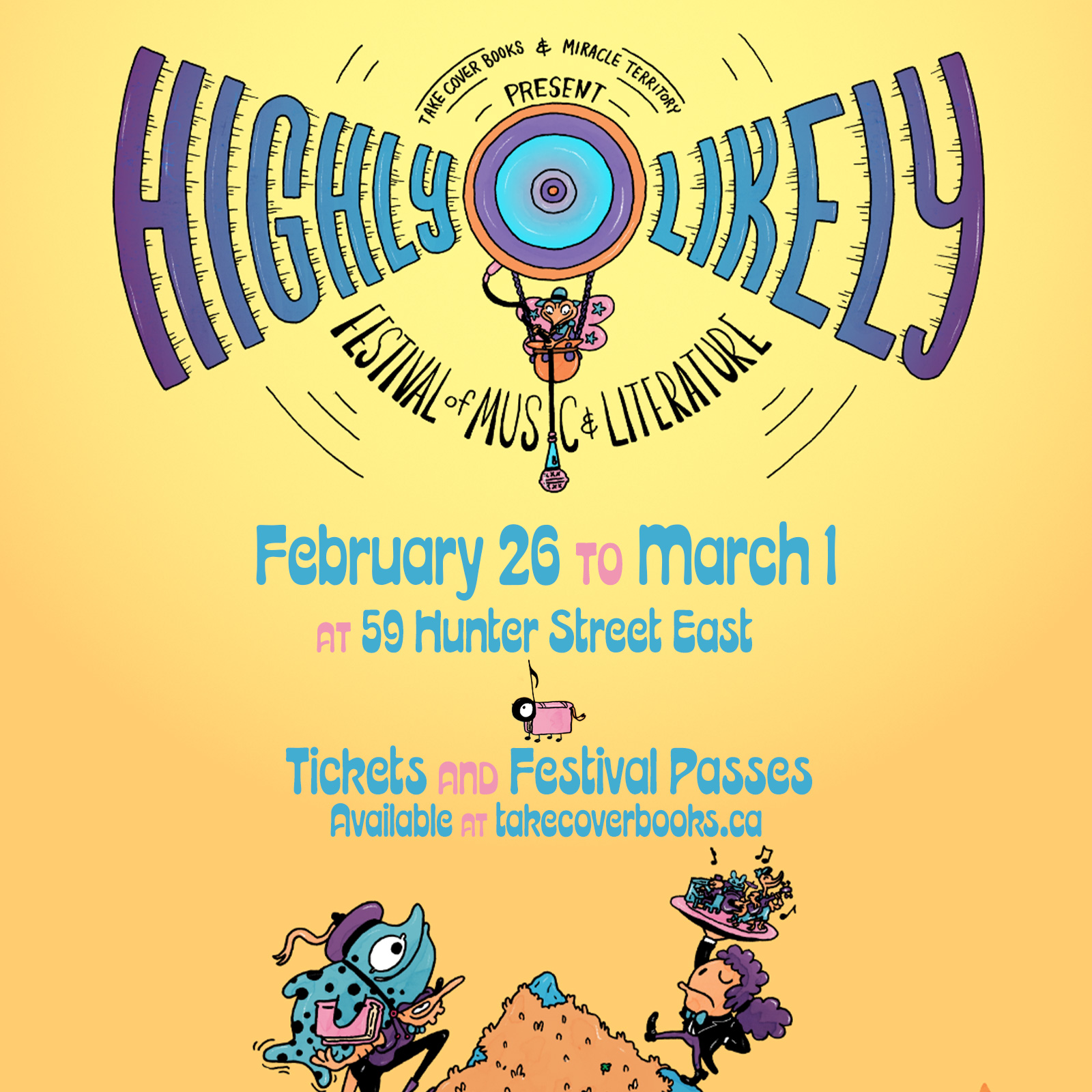
On March 1st, Take Cover Books hosted the fourth and final day of its Highly Likely festival. Colloquially referred to as “the weird day” by co-owner Sean Fitzpatrick, the closing festivities consisted of a diverse range of avant-garde music, art installations, and French-to-English novel translations.
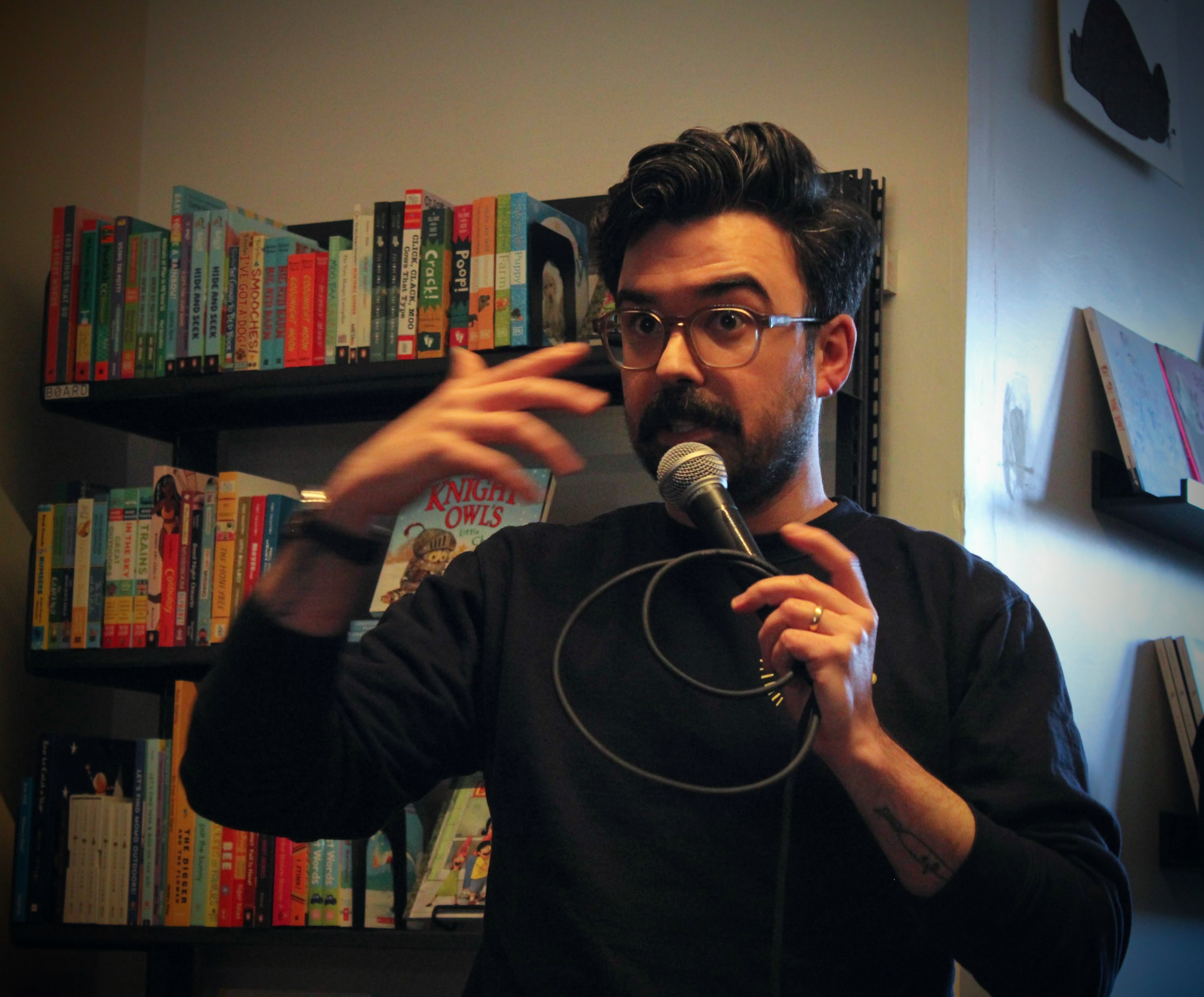
Garrett Gilbart kicked off the night with an artist talk and demonstration of his sound art installation, which was displayed at the front of Take Cover Books from February 10th to March 1st.
The installation resembled a massive face made of metal fragments, with two glowing incandescent light bulbs where the eyes would have been. With the lights dimmed and the crowd hushed, Gilbart used his metal detector and synths to create an atmosphere of electronic beeping, thrumming percussion, and metallic chatter that could only be described as though the lungs of someone with pneumonia were made of sheet metal. The performance would have been terrifying were it not so uniquely enthralling.
Gilbart attributed his inspiration to lichen, the algae/cyanobacteria that is often found on trees and rocks throughout nature.
“Lichen is a really interesting organism. They have this very direct niche with atmospheric conditions, so they’re very sensitive,” Gilbart explained during a question period.
“[Lichen] are hardy plants that can live way up north, they [also] live here. As soon as air quality drops you can see a huge [decrease] in lichen, but they can also store heavy metals, so that’s the relationship between lichen and metal."
“I’ve never been much of a music person, but I really love sound because I love objects and objects make sound, I love space and space makes sound, and time, and all of these things I love about sculpture, I’m also realizing I love about sound,” Gilbart concluded.
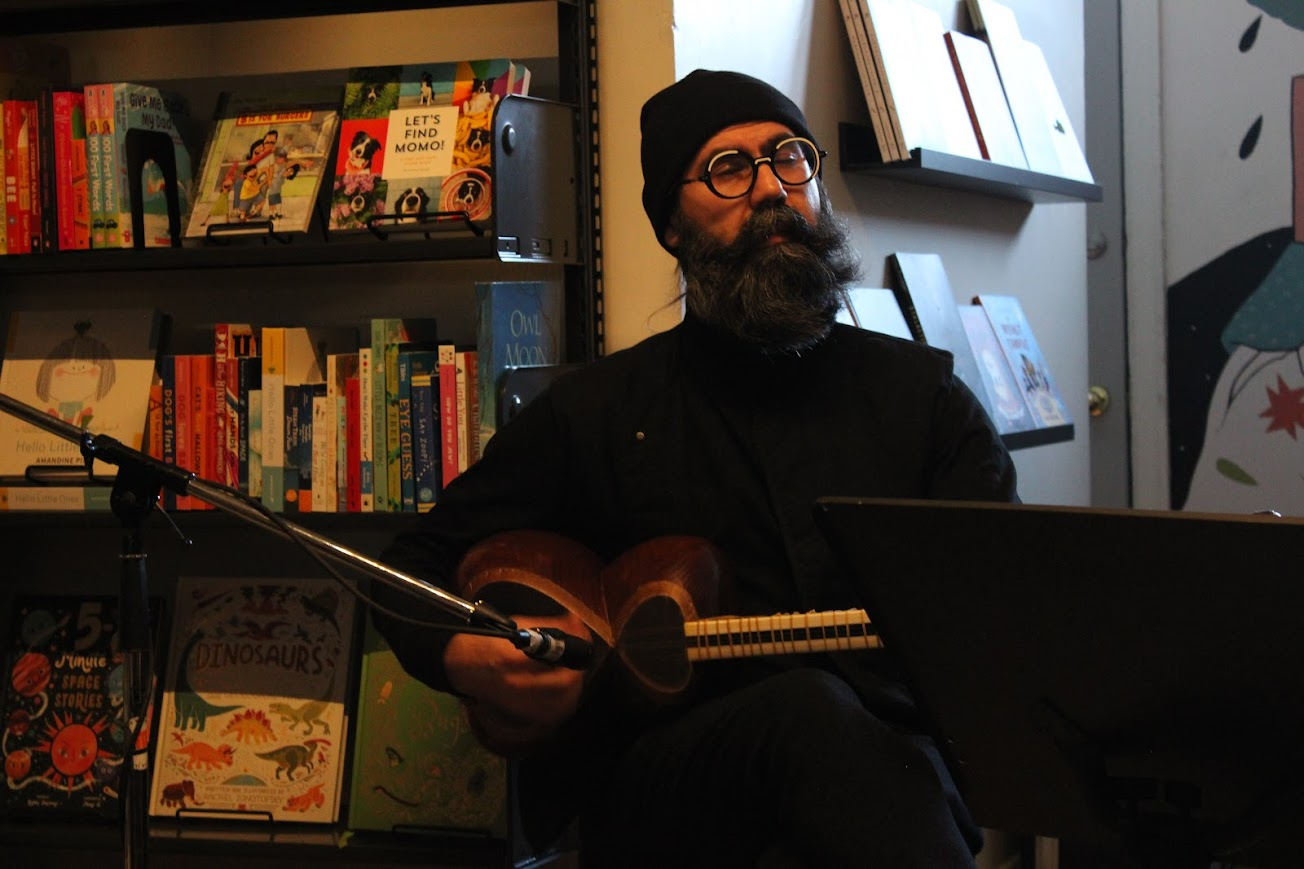
Araz Salek and Aysel Taghi-Zada of Fragmented Forms and the Labyrinth Ensemble were the next to perform. With Salek on the tar and Taghi-Zada on violin, the duo fused traditional Maqam music with 13th-century Cantigas de Santa Marias and 15th-century composer Guillaume de Machaut pieces to create a beguiling synthesis between Maqam and the Middle Ages.
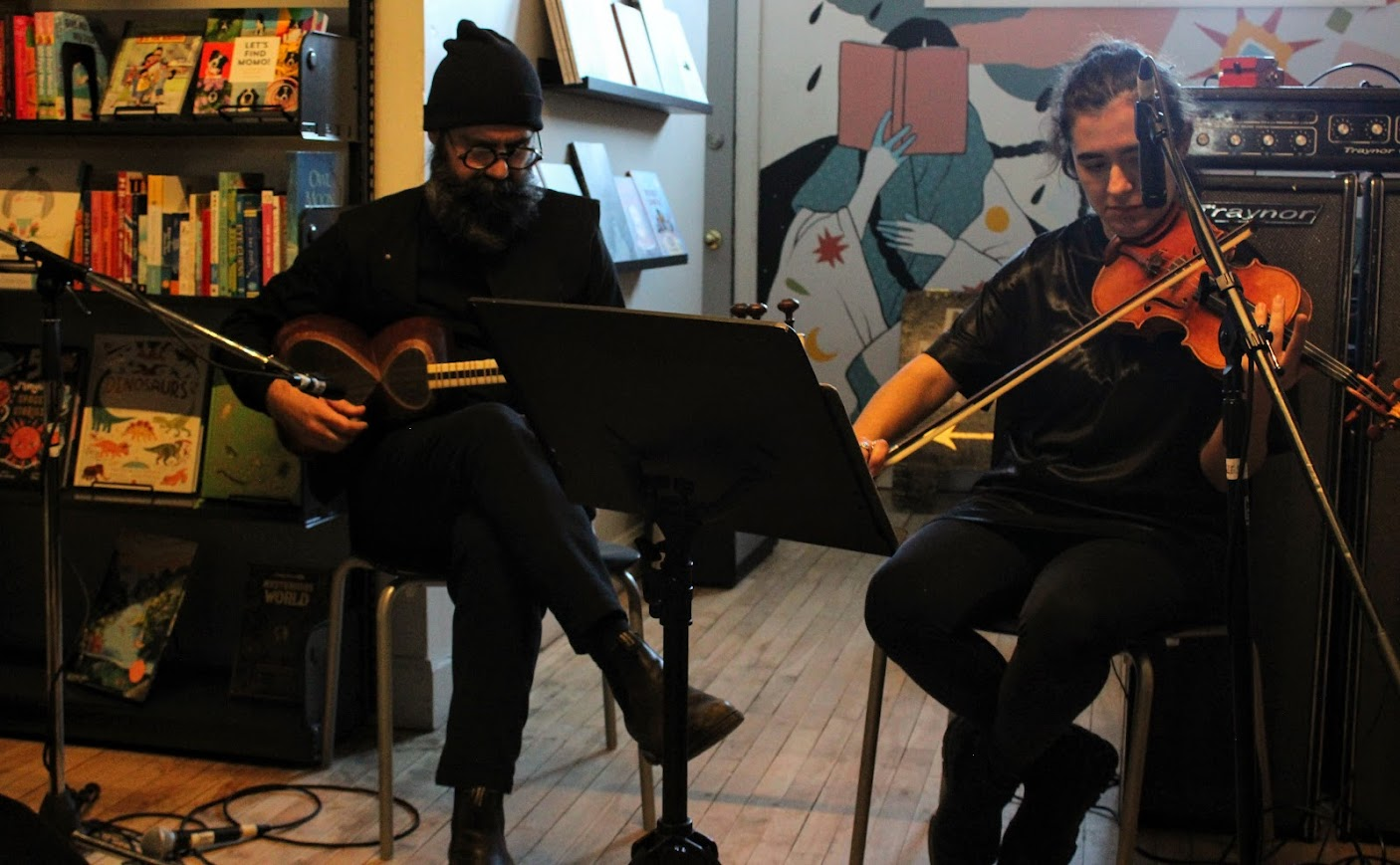
“Maqam music is music making practices that are very common all the way Northwest of China to the Balkans. This practice is based on modal music, and tuning systems that do not fall under the 12-tone core temperament. So, we had that in mind when we rebred those texts, keeping in mind that these compositions were composed way before the 12-tone core temperament system was even discovered,” Salek explained to the audience.
Fragmented Forms captivated the audience with radiant microtones for roughly 25 minutes with their adept violin and tar performances before handing off the front stage to literary translator Claire Foster.
With her goal to translate the novel The Furrow, or in French Le Sillon, by Valerie Manteau from French to English, Foster offered the audience an insight into the process of translation and a reading—with occasional comedic interjections on translations—of a chapter that she had completed so far.
“The novel, Le Sillon, was published in 2018 in France by an independent publisher called Le Tripode. The reason that I found [the novel] was because I was in a bookstore in Bordeaux and there was a blurb by Annie Ernaux on it, and I got it because Annie Ernaux said nice things about it.”
“I’ve been translating and pitching [Le Sillon] since 2020. I did a little piece of it and I then emailed it to a bunch of people and it eventually got picked up,” Foster explained.
“You could understand the book as an autofiction—it’s a first person narration that strongly resembles the author. [Valerie Manteau] is about forty right now but when she was writing it she was in her thirties. She worked at Charlie Hebdo, which was a satirical cartoon journal in France. She has spent a lot of time in Turkey, and this book begins sort of when the narrator is coming back to Turkey to live for a second period of time,” Foster continues.
“She begins a book project about a real life person named Hrant Dink. He was a Turkish-Armenian journalist who was assassinated in 2007 on the steps of his newspaper. His paper was named Agos, which means ‘sillon,’ which means furrow, which is the title of the book.”
“The book is taking up these questions of freedom of expression, democracy, what does a book project? Is it ethical for a white French person to waltz in and start thinking and interviewing [the people]. She has a boyfriend, and she walks, and a lot is going on and it’s like an intermingling situation.”
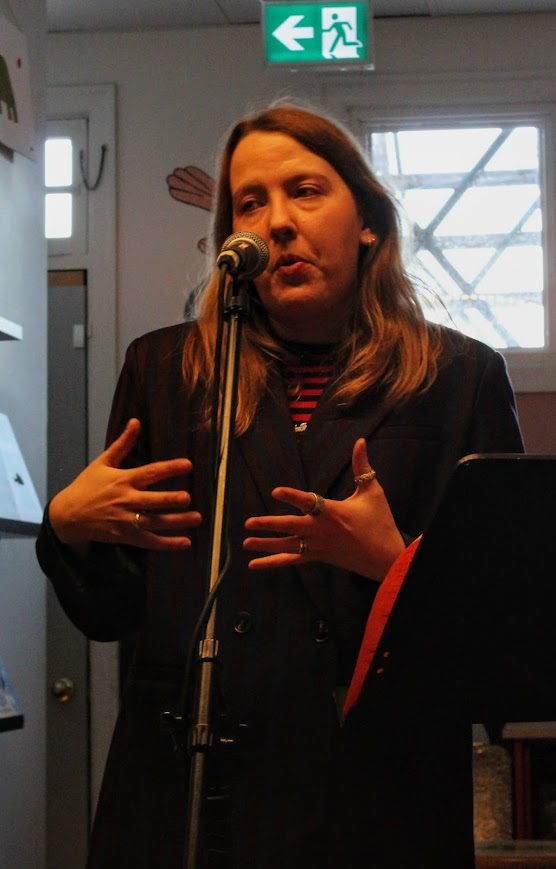
Foster played a clip of author Valerie Manteau reading her novel to give the audience an impression of the narrator’s voice before proceeding with her own reading. The chapter Foster read depicted the narrator fighting with her Turkish boyfriend after a bomb went off in Istanbul. It contained themes of existential and suicidal grief over being an impotent bystander, powerless to change the violence the world around them was subjected to.
The reading was sympathetic and heartwrenching; yet Foster managed to keep the atmosphere alive with her quippy, comedic interjections about translation issues. After drawing the audience into her reading, Foster concluded her chapter and made way for the next performer, Marcus Floats.
Marcus Lake, otherwise known as Marcus Floats, came from Montreal to perform his synthetic-audio/electronic music. He utilized text and audio from poet and professor Fred Moten, Buddhist monk Reverend Angel Kyodo Williams, and Black radical and psychiatrist Frantz Fanon.
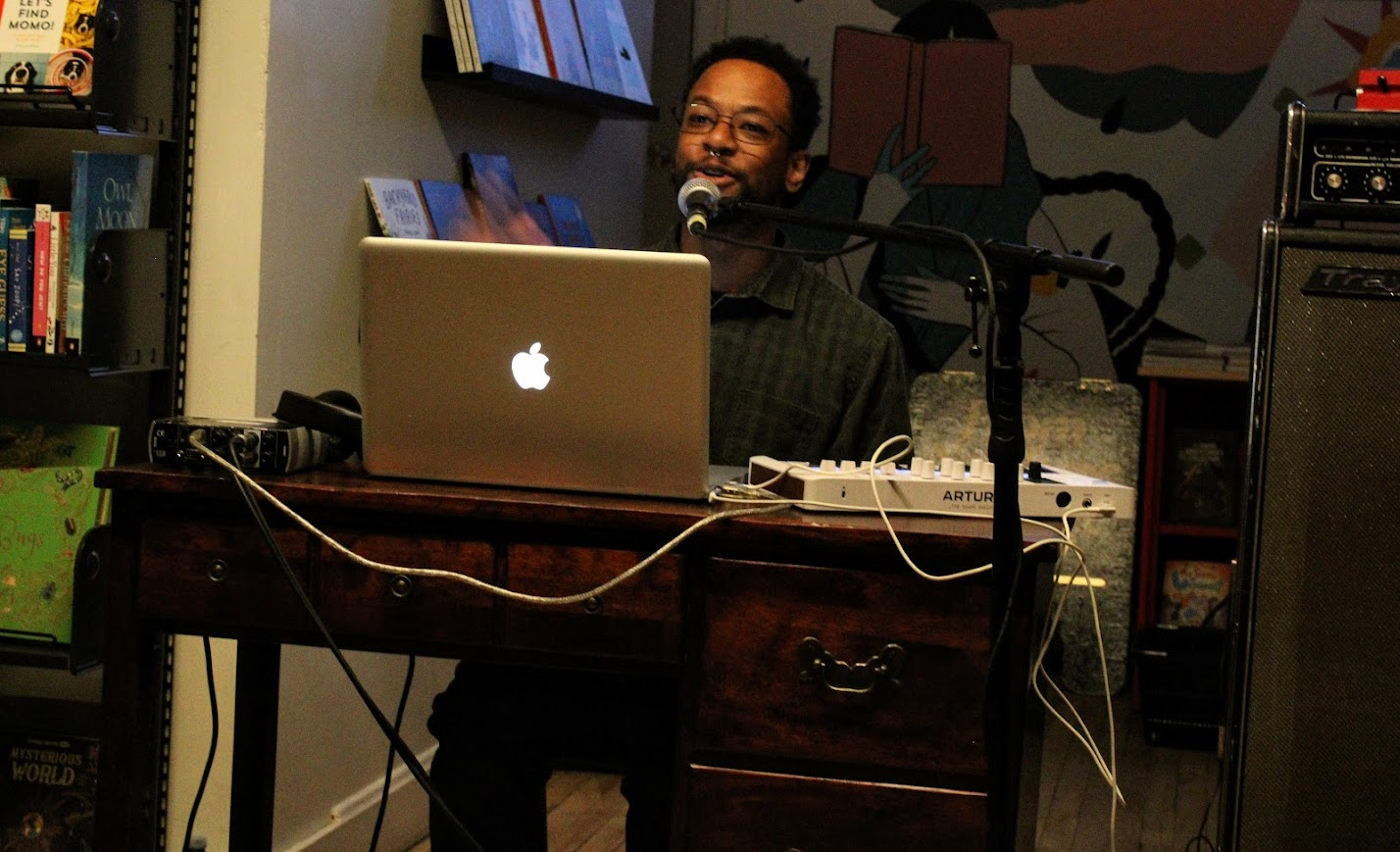
“The piece starts with a meditation by her [Reverend Williams]. She wrote a book called Radical Dharma, a collection of short essays vaguely about how to enter a decolonial, antiracist space when everyone is white,” Lake explains.
“I grew up in Calgary, so I’m very often the one Black person at the show. It’s just kinda a thing you have to learn to deal with.”
“I will also be reading from Wretched of the Earth by Frantz Fanon. He’s famous for being on the Black Panthers initial reading list. If you wanted to join the Black Panthers you had to read this book.”
“[Franz Fanon] promoted violence. There is a point in which a colonized [person] is justified—if they are being dehumanized—in taking up arms against the colonists. It’s a good thing to keep in mind sometimes. I don’t always agree with it, but it is important to have that view point,” Lake remarked.
Lake’s performance toed the line between therapeutic—bolstered by the speaking of Reverend Williams—and downright uncomfortable, fueled by the readings of Fanon and Moten alongside eerie synth beats. The dichotomy between these moods is what made the performance so profound.
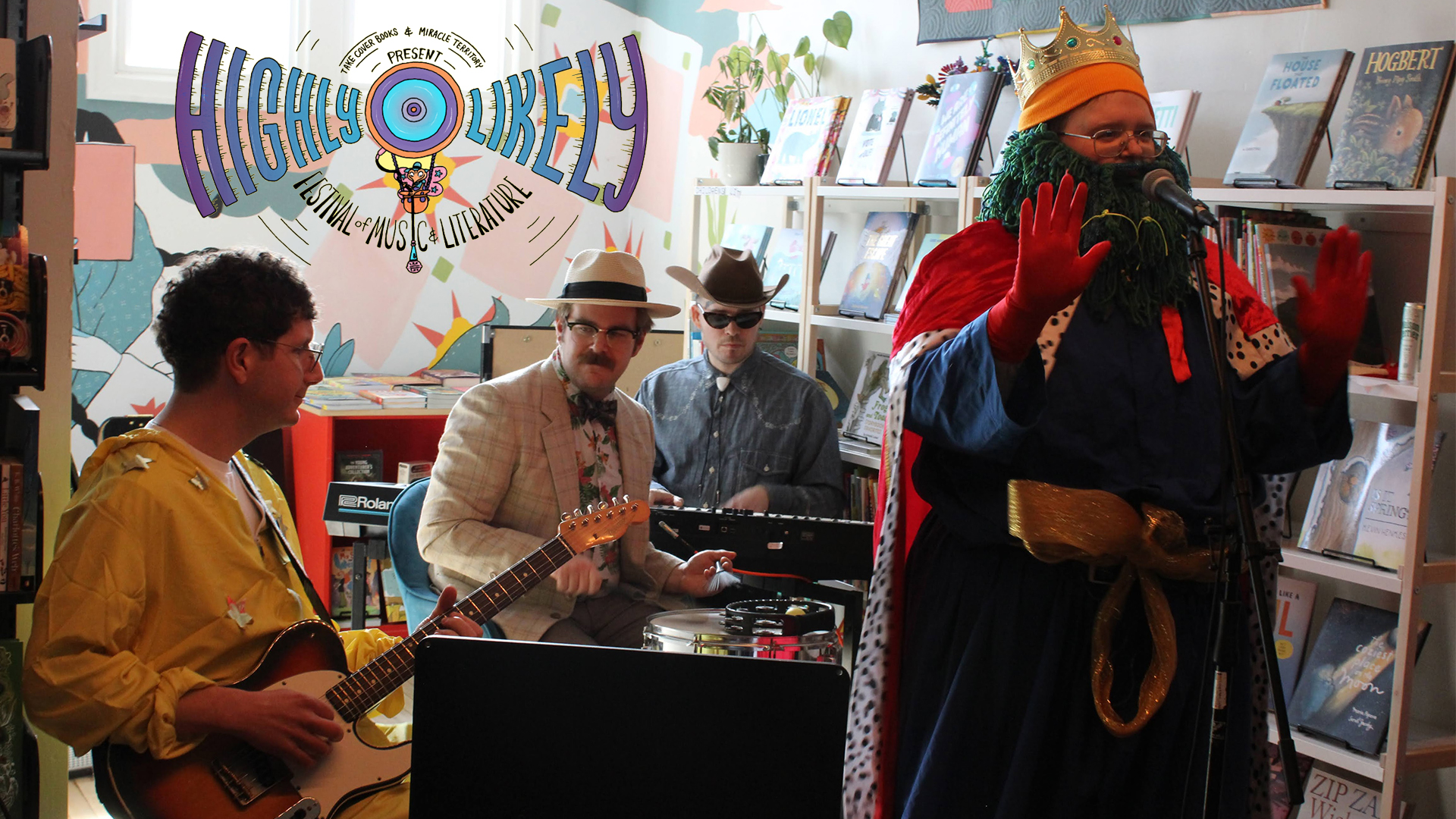
The final show of Highly Likely 2026 featured Chris Adeney’s solo indie-rock project, Wax Mannequin. With a setlist spanning topics from burning your house down to kids vomiting in class and leaving an obelisk for when humans disappear, Adeney’s “weird” music easily fit the vibe of the “weird night.”
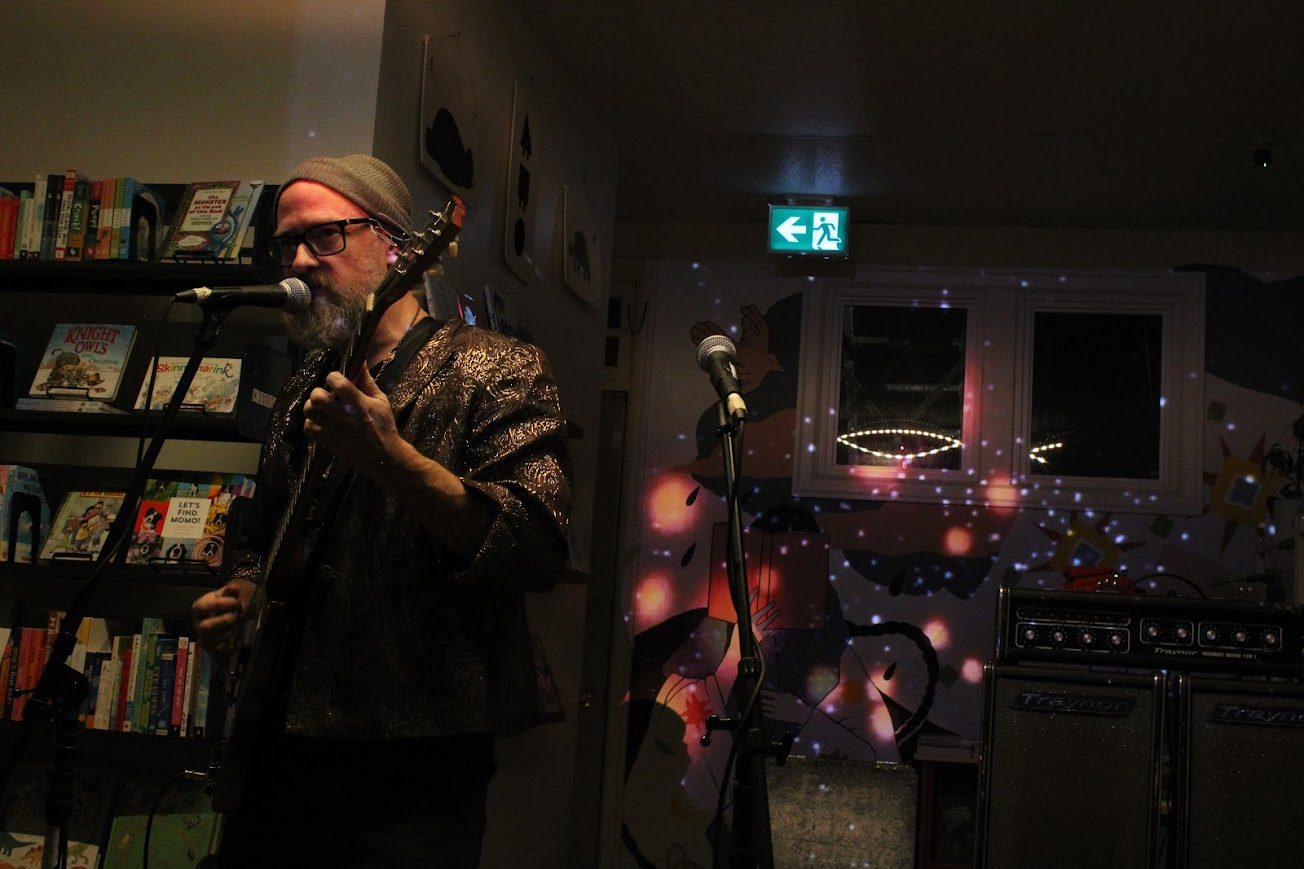
After receiving a song request from a child fan—and being brought a fake gold necklace in exchange for playing it—Adeney relayed an anecdote about collecting necklaces: “I collect necklaces from coast to coast. I don’t have them all with me because they are broken and corroding from the sweat and the moving. But I’m looking for necklaces.”
Adeney also performed a song about the rise of fascism, called “No One Ever Dies.”
“I wrote it a few years ago when it seemed inevitable that fascism was on the rise, and now that it is deeply unafraid and risen, the song is not so quaint,” he explained.
“Sometimes when you hear about the stuff [happening], you get on with your life, and it’s almost like you compartmentalize and have to pretend that it’s not all going on. It’s about the quality we all have of setting it aside—it’s kind of a denial, just to get on with our lives.”
“I feel weird bringing that all up, but it’s kind of good that we made it through the impossible conundrum of life to get out and support this festival,” Adeney concluded.
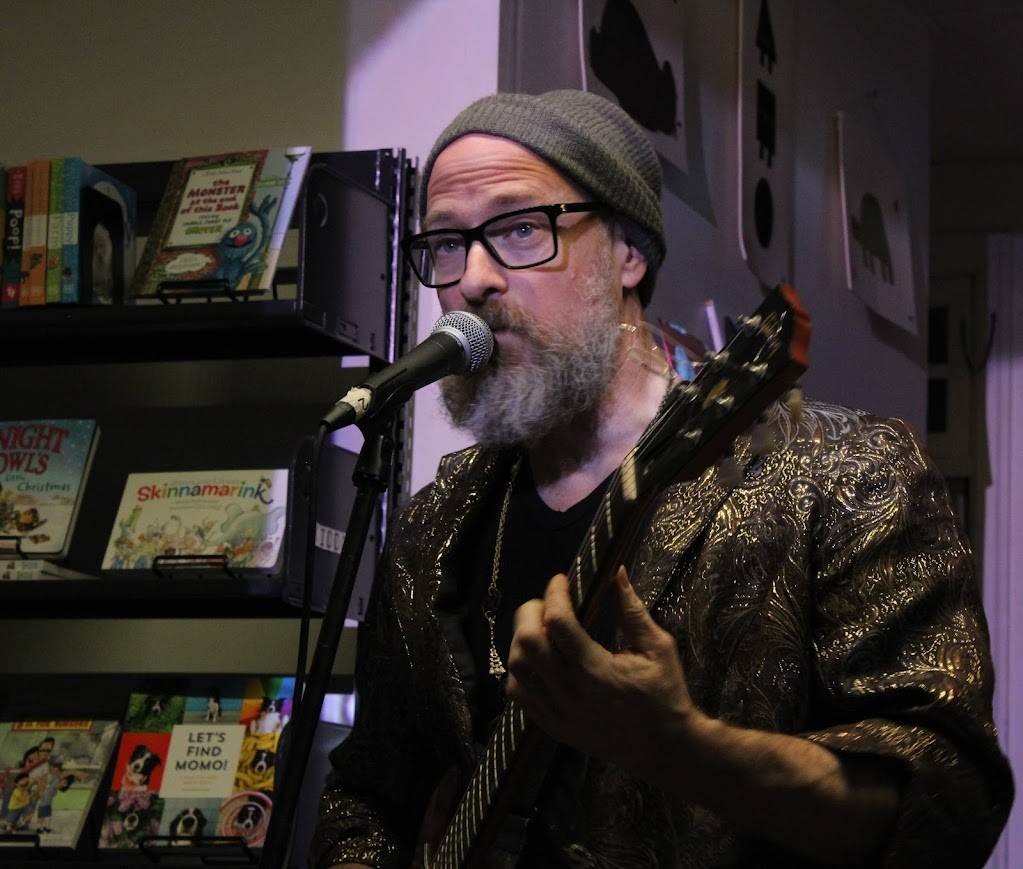
Wax Mannequin performed a dozen songs for about an hour, to the adoration of the audience.After finishing, he gave a few words. We got a quick thank you from Take Cover Books co-owners Sean and Andrew Fitzpatrick, and the Highly Likely festival concluded its 2026 run.



.jpg)
.png)
The rich text element allows you to create and format headings, paragraphs, blockquotes, images, and video all in one place instead of having to add and format them individually. Just double-click and easily create content.
A rich text element can be used with static or dynamic content. For static content, just drop it into any page and begin editing. For dynamic content, add a rich text field to any collection and then connect a rich text element to that field in the settings panel. Voila!
"Headings, paragraphs, blockquotes, figures, images, and figure captions can all be styled after a class is added to the rich text element using the "When inside of" nested selector system."
The rich text element allows you to create and format headings, paragraphs, blockquotes, images, and video all in one place instead of having to add and format them individually. Just double-click and easily create content.
A rich text element can be used with static or dynamic content. For static content, just drop it into any page and begin editing. For dynamic content, add a rich text field to any collection and then connect a rich text element to that field in the settings panel. Voila!
"Headings, paragraphs, blockquotes, figures, images, and figure captions can all be styled after a class is added to the rich text element using the "When inside of" nested selector system."

.jpg)
.jpg)
.png)
.jpg)