.png)

.jpg)

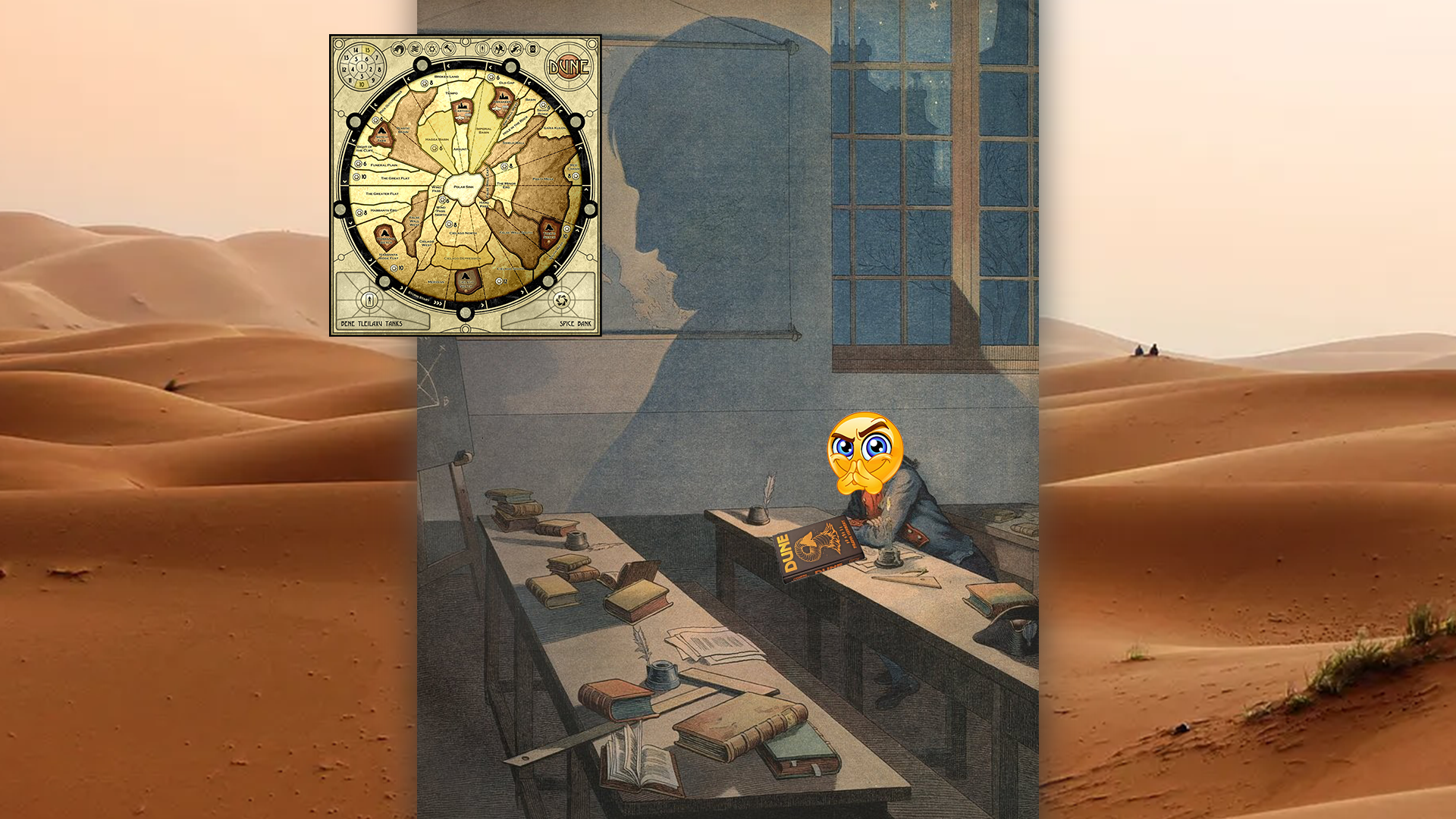
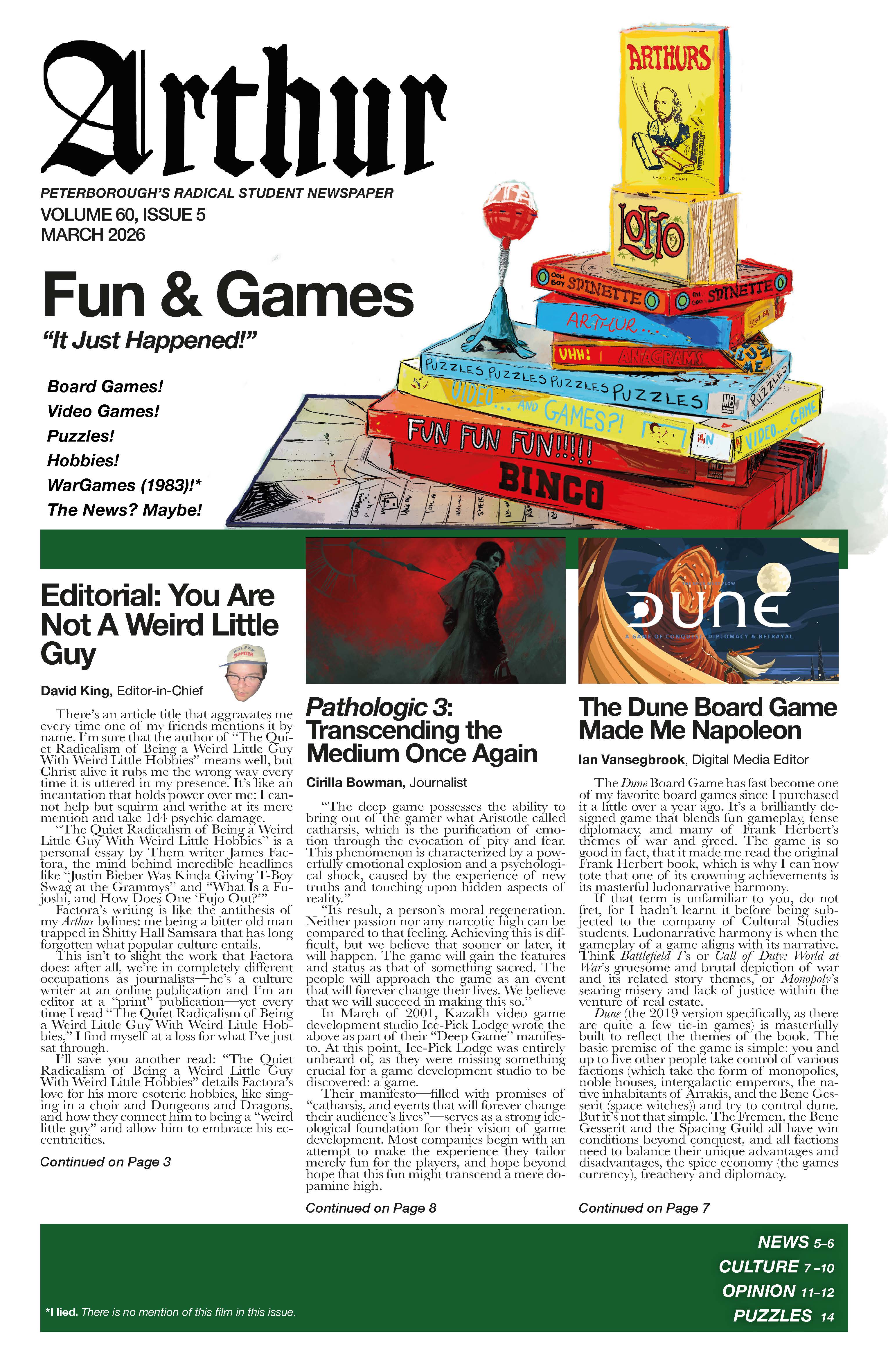
The Dune Board Game has fast become one of my favorite board games since I purchased it a little over a year ago. It’s a brilliantly designed game that blends fun gameplay, tense diplomacy, and many of Frank Herbert’s themes of war and greed. The game is so good in fact, that it made me read the original Frank Herbert book, which is why I can now tote that one of its crowning achievements is its masterful ludonarrative harmony.
If that term is unfamiliar to you, do not fret, for I hadn’t learnt it before being subjected to the company of Cultural Studies students. Ludonarrative harmony is when the gameplay of a game aligns with its narrative. Think Battlefield 1’s or Call of Duty: World at War’s gruesome and brutal depiction of war and its related story themes, or Monopoly’s searing misery and lack of justice within the venture of real estate.
Dune (the 2019 version specifically, as there are quite a few tie-in games) is masterfully built to reflect the themes of the book. The basic premise of the game is simple: you and up to five other people take control of various factions (which take the form of monopolies, noble houses, intergalactic emperors, the native inhabitants of Arrakis, and the Bene Gesserit (space witches)) and try to control dune. But it’s not that simple. The Fremen, the Bene Gesserit and the Spacing Guild all have win conditions beyond conquest, and all factions need to balance their unique advantages and disadvantages, the spice economy (the games currency), treachery and diplomacy.
Not only is each individual faction taken from the book, all their motivations and abilities are accurately drawn from the book. Many of the broad themes of the books, of greed, tyranny, and violence are embedded in the game’s DNA.
Rather than telling you how the boardgame brilliantly reflects the narrative of the book though, allow me to demonstrate.
Warning: Minor spoilers for Dune to follow.
Five hours, five players, and three factions sit around a table. On one side are the Emperor and the Fremen, who have been waging vicious guerilla warfare against the entrenched ruling Harkonnen-Atreides faction sitting opposite to them. And in the corner, biding my time and representing my own faction of me, myself, and I, was the Spacing Guild.
Everyone’s goals were clear from the start of the game: Between the Atreides’ military genius and the Harkonnens’ treachery, the Fremen-Emperor faction know from the beginning of the game that they wouldn’t be able to fight an offensive war. Their only hope is to hold the southern reaches and win through attrition via the Fremen’s unique win condition centered around protecting their southern independence. The Atreides-Harkonnen know this as well and throw themselves full force at them, trying desperately to take and hold vital southern strongholds.
Watching over all of this is me: the rich monopoly that holds everyones reins. While the Emperor is funded through purchases of treachery cards (weapons and tools that support your faction), I’m funded through troop deployments. Every spice—the primary resource on Arrakis central to Dune’s narrative—spent on spilling blood on Arrakis is given directly to me.
My route to victory is much the same as the Fremen-Emperor alliance—with one key difference. While the Fremen’s special victory comes from making sure no off-world powers control important southern strongholds at the end of the game, I win if no one else wins. My special victory as the Spacing Guild relies on my ability to play the other factions, and to therefore continue profiting from the cycle of violence on Arrakis.
It comes down to the last turn. The two major alliances have worn themselves down in a massive war of attrition. Most of their armies lay dead, and the four players have less than 12 spicesleft collectively. I have 43.
The Atreides-Harkonnen have been unsuccessful in their attempts to wrest control of the southern reaches from the Fremen, and their last ditch assault on the Habbanya Sietch (held by the Emperor) fails after the Emperor launches a surprise feint attack on the Atreides capital of Arakeen, forcing them to pull away resources.
The fate of Arrakis rests on the siege of the Sietch Tab, the Fremen capital. I deploy as many forces as I can into the Sietch, joining the fray alongside the Fremen and the Harkonnen. At this point, the Harkonnen know they have lost, and being the first in the turn initiative, they decide to attack me before the Fremen, angrily declaring “If someone is going to win that isn’t me, it won’t be Ian.”
But alas! This effort will be in vain. You see, alongside their many dead troops, the two factions have lost most of their generals as well. I’ve been harassing the Harkonnens the entire game, sending small forces to drain their resources at the spice harvest (the principal way of making money for every faction other than the Emperor or the Spacing Guild), knowing that I can afford the losses and they can’t. But lo, below these attacks stirred an even darker plan. I was luring them into a false sense of security.
At the beginning of the game, all the factions draw traitor cards. These cards, distributed at random, allow you to take a traitor from any of the other factions. The Harkonnens get four and the other houses each only get one. Playing the traitor card in battle grants you automatic victory, regardless of any other factors.
So when the Harkonnens turn their armies onto me, I accept this with open arms. I gambled the entire game on the odds that they’ddeploy their best remaining general into the battle—a general who I’d been trying to establish as “safe” from any treachery from me, by losing inconsequential battles to them— I would deploy nothing to counter them, preserving my resources. In Dune, all forces deployed into battle are destroyed, no matter the outcome.
We both flip our secretive battle wheels, only for the Harkonnens to stare in confusion when I deploy no generals, no troops, and no items. Then, slowly, I reveal my traitor card that matches the general leading his last campaign. His entire expeditionary army, the last of his military weapons, and his last competent general disappear, joining the mountain of dead troops and commanders that lay waiting to be revived.
It’s now a 7-6 fight (favoring me) against the Fremen, who watched in fear as my traitor swept the Harkonnen dogs aside. We prepare our battle, and I deploy my armies, leaving one unit behind to garrison the fortress. The beleaguered and drained Fremen have neither weapons nor shields to hinder my general, and as the battle begins, I poison their general, leaving their armies leaderless and confused. I sweep the field, finally wresting the Habbanya Sietch from its rightful claimants, and win.
I collapsed in my chair, literally shaking. After sweeping the Harkonnens, I was already mentally drained. I was ecstatic that all of my scheming had paid off, and I no longer really cared if I won.
Nonetheless, I did.
After hours of scheming, hours of pouring funds into whoever was losing, and hours of consolidating my economic dominance over the table, I shrug off the ruling powers of the planet, maim the domineering empire, and wrest control of the planet from its native inhabitants. The spice will continue to flow, blood will continue to be spilt, and wars will continue to be fought.
The board game is able to reflect so many of the themes of Frank Herbert’s masterpiece in the span of a few hours with nothing more than painted cardboard and a rule book. His masterful allegory for oil exploitation in the middle-east, and the related social and economic issues caused by it, could probably never been fully replicated within a board game, but Dune (2019) does one hell of a job.
If you have at least four nerds to play with, I highly recommend you check out the board game. If not, you can always read the book.
Be warned however, although the book is amazing, there is something quite special in the sheer thrill of strategically and methodically destroying your friends. That board game session was one of the best moments of 2025, and all it cost was the trust of my dear friends.



.jpg)


.png)
The rich text element allows you to create and format headings, paragraphs, blockquotes, images, and video all in one place instead of having to add and format them individually. Just double-click and easily create content.
A rich text element can be used with static or dynamic content. For static content, just drop it into any page and begin editing. For dynamic content, add a rich text field to any collection and then connect a rich text element to that field in the settings panel. Voila!
"Headings, paragraphs, blockquotes, figures, images, and figure captions can all be styled after a class is added to the rich text element using the "When inside of" nested selector system."
The rich text element allows you to create and format headings, paragraphs, blockquotes, images, and video all in one place instead of having to add and format them individually. Just double-click and easily create content.
A rich text element can be used with static or dynamic content. For static content, just drop it into any page and begin editing. For dynamic content, add a rich text field to any collection and then connect a rich text element to that field in the settings panel. Voila!
"Headings, paragraphs, blockquotes, figures, images, and figure captions can all be styled after a class is added to the rich text element using the "When inside of" nested selector system."

.jpg)