.png)

.jpg)

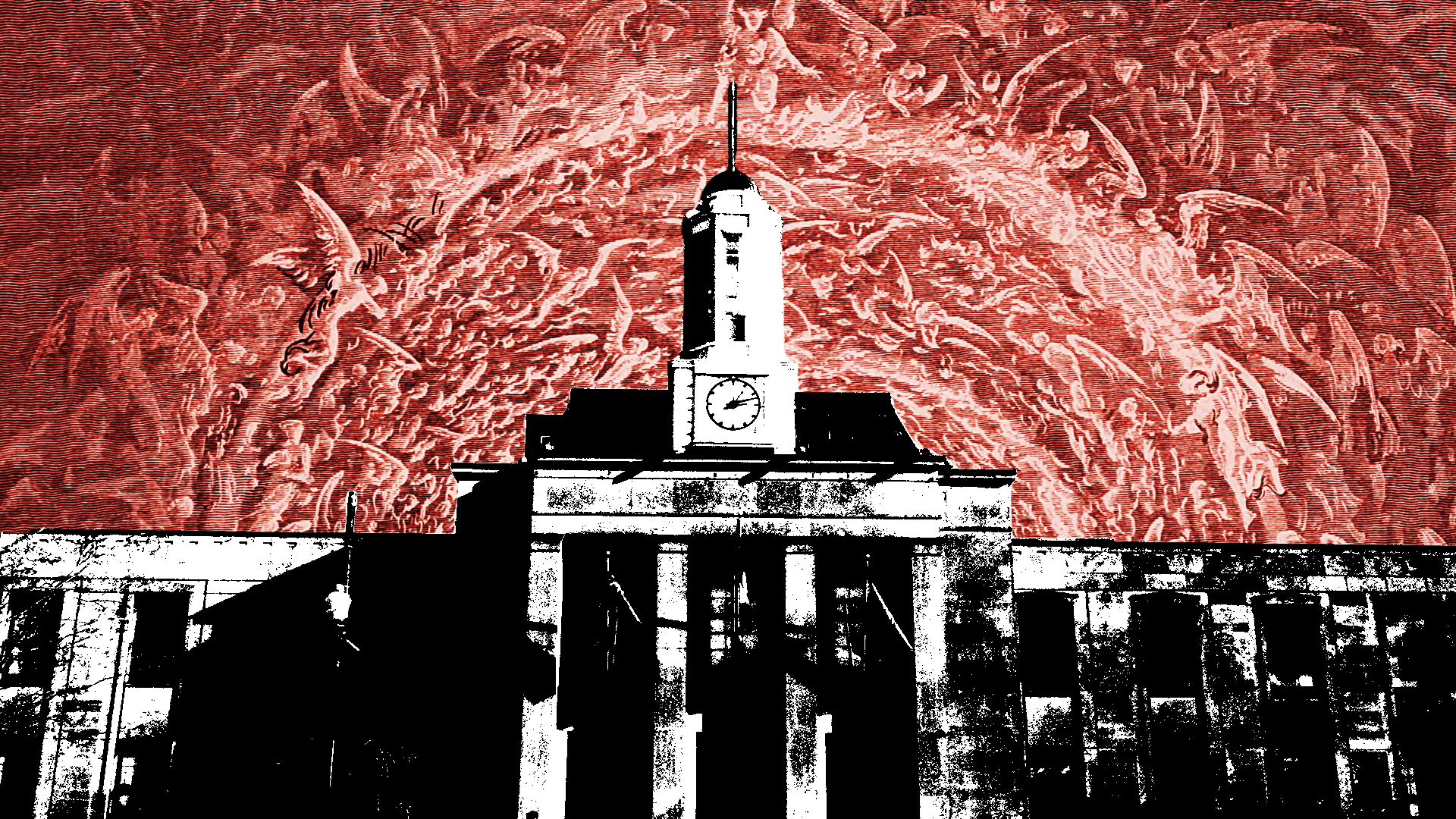
On the second day of budget deliberations on November 18th, Peterborough City Council finished their page-by-page review of the 2026 draft budget with a reduced tax rate of 6.56%, down 1.32% from an initial rate of 7.88% after council elected to withdraw an extra $3 million from reserves to infuse into its operating budget.
This move came almost six hours into the general committee deliberations, which saw further talks regarding the police budget, transit fare increases, and additional spending on individual artists’ grant funding and library collections acquisition.
For the median assessed household worth $260,000, the initial 7.88% all-inclusive rate (which combines a property tax, education tax, and a sanitary sewer surcharge) would’ve seen an increase in tax levy to $33.81 a month, or $360.58 for the 2026 year.
Yet as budget talks concluded, the new tax rate of 6.56% brought the annual increase in taxpayer burden down slightly to $28.31 per month, or $300.18 for the 2026 year.
The average property owner of that $260,000 household paid around $4,576 in property taxes in 2025, or around $381.33 a month. The 2026 tax rate of 6.56% will increase taxes to an annual total of $4,914, or $409.50 a month.
The “average taxpayer” throughout this article refers to this property owner paying taxes on that $260,000 household. This is a metric frequently used by the City of Peterborough in illustrating the tax increase, yet another metric we see frequently used is the “typical residential taxpayer based on $100,000 of residential property assessment.” Arthur refrained from introducing this metric in our calculations of updated tax burden for consistency and clarity of figures presented.
In order to pay for over $434.2 million in municipal services, the City is using $235.8 million in non-municipal property tax sources, leaving a tax requirement of $198.4 million to the municipal tax base.
Figures presented in this article are based on updated municipal property tax calculations as of November 21st. Figures regarding departmental budgetlines are percentages of tax levy based on what was initially prepared in the Draft 2026 Budget and the updated annual tax contribution of the median assessed household of $260,000. As a result, presented figures may vary when the Operating Budget is ratified by Peterborough City Council in December.
While figures illustrated here show that a property owner pays more in municipal taxes as an individual renter annually, the tax burden on renters is relatively obscured, as they do not pay taxes directly to the municipality yet still make up a substantial portion of the Peterborough tax base by virtue of paying rent to a property owner.
For renters, an increase in property taxes for your landlord generally spells out a proportional increase in your total rent. The residential rent increase guideline for 2026 in the province of Ontario has decreased to 2.1%.
For the average Peterborough tenant renting a one bedroom apartment at $1,217/month, it’s likely their 50-unit multi-residential building built is evaluated at $3.5 million, according a similar property's assessed value on the City of Peterborough's property tax calculator. Due to the property class of that building and the fact it was built before 2018, the landlord pays more in the combined property/education tax: the multi-residential tax rate was set at 3.29% last year, meaning that landlord would’ve paid over $115,150 in property taxes in 2025, or $2,303 per unit/year.
For newer multi-residential buildings built after 2018, these builds are subject to a lower tax rate to encourage purpose-built rental housing. In Peterborough, this new-build rate is the same as the regular residential all-inclusive tax rate.
According to the way that the Draft 2026 Budget calculates tax rate and an updated net tax burden, the 2026 multi-residential inclusive tax rate will likely increase to around 3.38%, meaning this hypothetical landlord will likely pay $118,300 in property taxes in 2026, or $2,366 per unit/year.
For that renter paying $1,217 a month, or $14,604 total annually, their annual rent increase of 2.1% would likely be $25.57 per month for 2026, or $306.68 annually, for a total monthly rent of $1,242.57, or $14,910.84 annually.
For every month this hypothetical tenant pays rent in 2026, it’s estimated that around $197.16 (or 15.86%) of that monthly sum goes towards paying their unit’s respective property tax. Although this guideline is not the same for every multi-residential property, the all-inclusive tax rate affects the cost of living in Peterborough for both homeowners and renters, as both types of residents receive the same services, like water, social services, and infrastructure.
According to a 2023 housing needs assessment, 59.4% of all people living in Peterborough own their place of residence, while 40.6% of the population rent.
Property tax rates are also not final for the City: after adjustments to operating and expenditure lines in the budget, the City’s operating budget for 2026 will have adjusted property tax rates based on council’s adjustments and standard tax ratio. The Draft 2026 Budget was also prepared with a 7.84% all-inclusive tax rate, and the City has not updated its various budget resources to reflect the new tax rate, like its OpenBook interactive budget book.
As of November 18th, Peterborough City Council has elected to restore certain funding lines in their operating budget, reduce the all-inclusive tax burden by increasing the City’s corporate revenue by $3 million from their Legacy Income Retention Reserve (a reserve that collects interest from invested proceeds from the City’s sale of its electrical distribution system to Hydro One) and send the Peterborough Police Services’ budget back to its Board.
Council also voted to approve a recommendation to extend the Electric City Culture Council’s (EC3) Community Service Agreement for the 2026 year, as well as to restore their Grants to Individual Artists programming back to its 2025 budgetline of $50,000, instead of the initially proposed $25,000.
The community services budget—which represents $175 million in total expenditures for 2026—makes up around 24% of the total tax levy, costing around $1,179.36 for the average taxpayer annually.
For the median assessed household, the operating budget for community services administration—for items like community investment grants and funding for non-profit organizations like Kawartha Food Share and Artspace—accounts for 5% of the community services tax burden, or $58.96 a year.
Council also elected to begin restoring the Peterborough Public Library’s collections acquisition budget to its previous level by withdrawing $32,000 from a materials acquisition reserve for 2026.
After the 2025 budget deliberations last fall, the library’s operating budget was allocated a total of $366,535 in funds for its collections. This number fell short of what they expected by $193k, forcing the library to counteract that shortfall by withdrawing from that same materials reserve. This gradual restoration of funding is slated to continue over the next two years, totalling to about $62,000 ($32k this year, then another additional $32k in the next budget year.)
The Library’s budget makes up around 9% of the community services tax burden, costing around $106.14 for the median assessed household a year.
Council also voted to send the Peterborough Police Services budget and its $3.4 million (or 9.22%) budget increase (for a total ask of $41.3 million) back to the drawing board, despite councillors’ concerns about the “veiled threat” of the City potentially going to arbitration with the Ontario Police Arbitration and Adjudication Committee.
Last time Peterborough City Council went to arbitration against the Police Services in 2015, it cost the City over $500,000 for severance clauses in then-Police Chief Murray Rodd and Deputy Chief Tim Farquharson’s contracts.
After a motion to reduce the Police Services budget increase to 7% failed 4 - 7 (with councillors Alex Bierk, Joy Lachica, Andrew Beamer, and Keith Riel voting in support), Tuesday’s motion for that budget to be returned with potential reductions was successful 6 - 5, opposed only by councillors Beamer, Parnell, Duguay, Baldwin and Mayor Leal.
Despite this, the Police Board stood firm on its increase after meeting Wednesday to once again review its budget request, coming out of closed session to publicly state the Board’s unanimous motion to back the controversial request.
The Police Services budget is among one of the largest drivers of next year's increase in tax: while outside organizations account for 26% of the median net tax levy, or $1,277.64, approximately 76% of that amount is devoted towards Peterborough Police Services, or $971. The two-site police station renovation capital project is also one of the largest capital projects slated for the City, with $23 million of its total 2026 precommitment being funded by the municipa; tax base.
The other 24%, or $306.64, is devoted to healthcare services like Lakelands Public Health, Peterborough City/County Paramedics, and Fairhaven, and other agencies like the Peterborough Humane Society and the Otonabee Region Conservation Authority.
The City’s 2026 Budget will be presented for adoption on during the city council meeting on December 8, 2025.
Editor's Note: This primer has been updated to provide further clarity on calculations made by Arthur and differentiate between the two multi-residential tax classes.


.jpg)


.png)
The rich text element allows you to create and format headings, paragraphs, blockquotes, images, and video all in one place instead of having to add and format them individually. Just double-click and easily create content.
A rich text element can be used with static or dynamic content. For static content, just drop it into any page and begin editing. For dynamic content, add a rich text field to any collection and then connect a rich text element to that field in the settings panel. Voila!
"Headings, paragraphs, blockquotes, figures, images, and figure captions can all be styled after a class is added to the rich text element using the "When inside of" nested selector system."
The rich text element allows you to create and format headings, paragraphs, blockquotes, images, and video all in one place instead of having to add and format them individually. Just double-click and easily create content.
A rich text element can be used with static or dynamic content. For static content, just drop it into any page and begin editing. For dynamic content, add a rich text field to any collection and then connect a rich text element to that field in the settings panel. Voila!
"Headings, paragraphs, blockquotes, figures, images, and figure captions can all be styled after a class is added to the rich text element using the "When inside of" nested selector system."

.jpg)