




.png)




What is it about high school which so compels us to mythologize it?
If you’ll forgive that breathless opening sentence I am, in fact, being quite serious.
You see, I’ve been thinking about school a lot. For the first time in sixteen years, I no longer have a defined class schedule. I’m still “in” school, though practically speaking my day-to-day as a master’s thesis student having finished my classwork last year amounts to sitting at my desk, at home, in my pajamas, or else dragging myself to Sadleir House to down five cups of coffee and try to send at least one email so that I might feel productive.
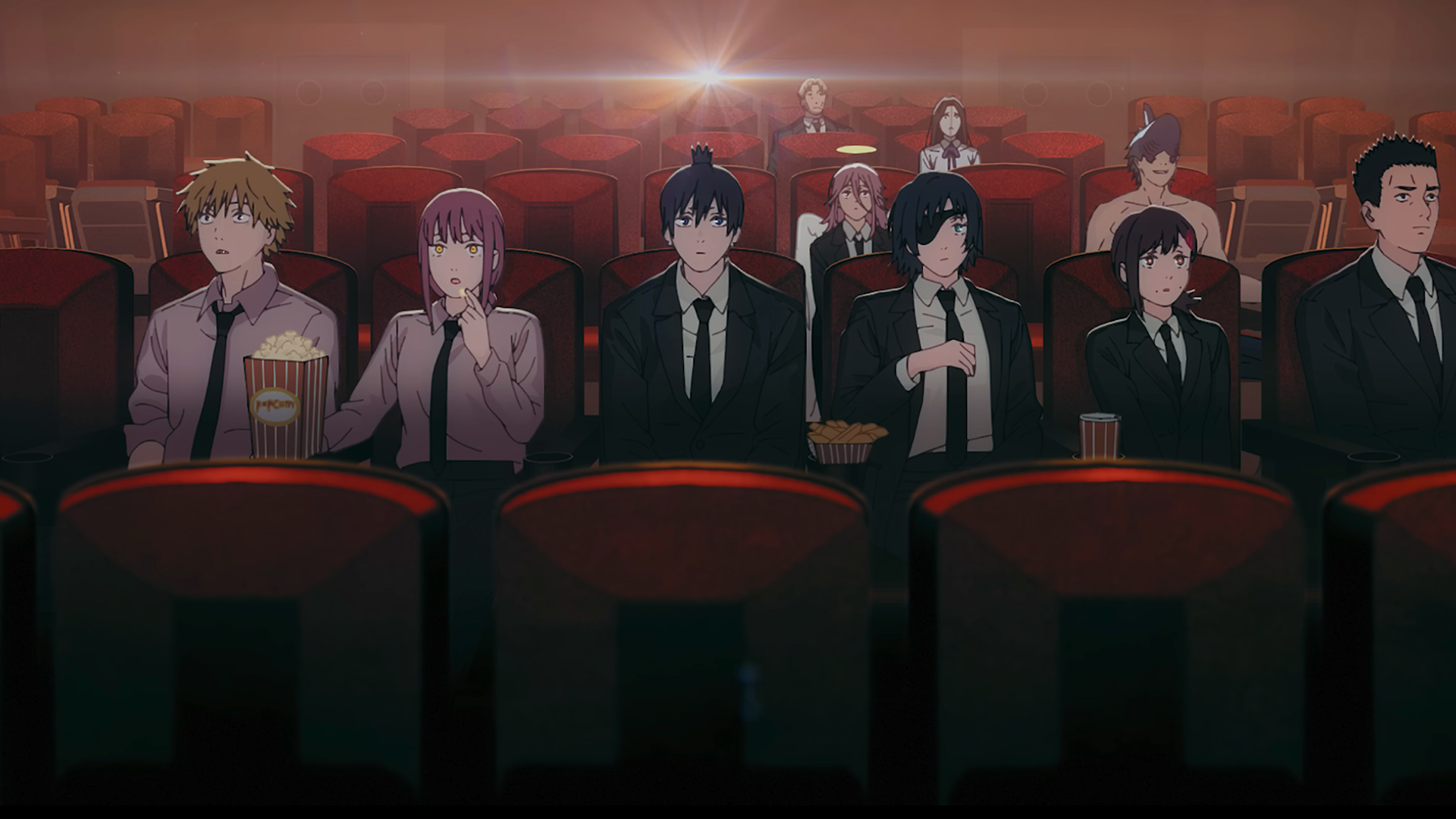
The structure of my days mostly falls to me. I get up when I want, I write for several hours, I make myself dinner, and then watch a movie or play five hours of Marvel Rivals with my former co-worker. Still, I’ve been thinking about school because try as I might, I never seem to be able to escape it. Turn on your TV and it feels like it’s dragged you right back in.
The number of popular media objects—films, novels, television series, and more—about high school truly beggars belief.
Superbad; Booksmart; The Holdovers; Heathers; Dead Poets Society; The History Boys; Footloose; every major Spider-Man movie; Tall Girls 1 and 2; Bill & Ted’s Excellent Adventure; Mean Girls; Personas 3, 4, and 5; Tokimeki Memorial; Euphoria; and Mobile Suit Gundam: The Witch from Mercury. I wrote that list off the top of my head with my eyes closed, and I could keep going.
To find more examples would be trivial, to the point this whole article could just be a list of media objects set at high schools and I would still run out of words.
Compare this to the number of novels, television series, videogames, or major motion pictures set at a university which spring readily to mind. I can name you one: Good Will Hunting.
At some point you find yourself asking “Why do we keep telling stories about high school?” Eventually, this also begs the question “At what point does it become sad for me to keep engaging with them?”
The point I started asking myself these questions was while watching Mobile Suit Gundam: The Witch from Mercury earlier this summer. G-Witch (as it’s called in the Gundam fandom for sake of not typing its name every time), the 17th mainline entry in the long-running Gundam franchise, differentiates itself from its sister shows by virtue of its setting: a private boarding school in space.
In the first episode, Suletta Mercury, the eponymous “witch,” arrives at the Asticassia School of Technology. The school is run by the Benerit Group, a corporate megaconglomerate run by a number of internally competing dynastic subsidiaries. Here the children of the great and the good develop the requisite skills to succeed their parents in the great game of capitalism.
The catch, because this is a mecha anime, is that the Benerit Group manufactures “mobile suits”—giant bipedal robots—and mobile suits figure prominently in the school’s elite culture. Students settle fights through mobile suit duels, and the heirs to the Group’s three largest branches are engaged in a fierce “dueling game,” as Miorine, the daughter of Benerit CEO Delling Rembran is to be married to the reigning “Holder” (the highest ranked duelist) on the day of her 17th birthday.
When Suletta accidentally draws the ire of resident jock-archetype Guel Jeturk (yes, they’re all named like that), he challenges her to a duel. However, her surprise upset victory precipitates a number of scandals, as not only is Suletta now engaged to be gay-married to Miorine Rembran, but her mobile suit, Aerial, is accused of being a Gundam (that’s the name of the franchise!) a make of “cursed” mobile suits outlawed some two decades prior because their neural interface routinely killed their pilots.
There is more going on behind the scenes: the series’ deeper plots concern corporate intrigue against the backdrop of a brewing armed conflict between the economically deprived residents of Earth and the space-dwelling capitalists who exploit them, all while thematically exploring such things as transhumanism, autonomy, self-determination, and interpolating everything from the Salem Witch Trials to William Shakespeare’s The Tempest.
However, the bulk of the first season—and a good part of the second—concerns the day-to-day lives of teenagers at space school.
A lot of Gundam fans seem to really hate this.
I, for one, think it’s brilliant.
Here's the thing about Gundam fans: if you tell them you like a show, they won't just disagree with you, they'll tell you "it's not REAL Gundam" because "not enough children FUCKING DIED."
Listen, buddy, if you can't enjoy a perfectly good story about two girls in love because you wish you got to see more kids shot in the head—let me break this to you—it sounds like you might be some kind of monster.
We’re all familiar with a book called The Hero With a Thousand Faces, yes? It’s by a guy called Joseph Campbell. If that doesn’t ring a bell, you might well have seen a graph labelled “the Hero’s Journey” in your twelfth grade English class or in a video by some c-list YouTube video essayist.
I bring up Campbell to submit a sort of argument-from-narrative-utility to explain the ubiquity of high school stories: high school provides a structured and highly-regulated setting complete with its own associated tropes, conventions, and even stock narratives.
Consider: the sports team, the jock, the popular girls, the big dance, the theater kids, the childhood friend, the first kiss. All these and more fit the auspices of a high school setting.
It’s also an excellent starting point for a story in as much as it is one with which the prospective audience is assumed to have a level of baseline familiarity. While up to as recently as our parents’ generation not everyone could be assumed to have gone through post-secondary education, most people have gone to high school, hence why it’s been a stock setting since at least the inception of Archie comics.
Moreover, the regimentation of the high school setting provides a handy skeleton over which to stretch a narrative skin. Not only does it provide interesting opportunities to see how the story’s characters respond to externally imposed expectations and authority, but the four years of high school also presage the imminent period of self-determination necessitated by adulthood.
Consider why so many coming-of-age stories concern high school seniors. If you know any seventeen-year-olds, you know it’s not because they’re especially mature people. Nonetheless, they find themselves on the precipice of the largely arbitrary benchmark at which we begin to expect young people to fend for themselves.
Otherwise said: the high school narrative is effective because of the finite nature of adolescence. High school is a basically stable (or at least predictable) point in one’s life which prefigures a greater period of both institutional and personal instability, be that in university or otherwise. Adult responsibility can therefore serve the role of a creeping horror in high school stories, an existential paradigm shift which must be confronted in order for the narrative to resolve.
This is one of the things G-Witch does very, very deliberately. Miorine’s seventeenth birthday serves as a turning point for the denouement of the narrative. As the day she legally comes of age, it’s the day when both her Presidency of the Benerit Group will be legally recognized, and the one on which she will become legally engaged to the incumbent Holder.
On the level of interpersonal drama it serves to effectively codify her relationship with Suletta, but it equally works to give definition to the series’ otherwise abstract anxieties about growing up, self-determination, and responsibility.
High school and coming-of-age narratives already carry with them certain implications about the way their characters relate to the world and each other. For instance, as the film Lady Bird so inelegantly noted, teenage girls often have mothers, and some of them have big feelings about that fact. If your series already has those elements baked in as subtext by virtue of its high-school setting, it may well be easier to sell your audience on the question “is my mother a war criminal/trying to mould me into a sentient weapon?”
I think what makes G-Witch both brilliant and accessible, even to people who know or care nothing about Gundam, is this basic degree of narrative familiarity. You’ve been to high school. Despite the giant robots, you recognize bits of your life in story.
The same is probably not true of say, Dune, or Star Wars, or even the original Mobile Suit Gundam—all series I’d argue have far less “out there” science fiction concepts than G-Witch. As the Persona franchise has proved time and again, esoterica is easier to swallow if you dress it in a school uniform.
Of course, there’s equal narrative merit to be mined from a story in the ways it resists the conventions of its setting. At the risk of giving Rian Johnson undue flowers, subverting expectations is an effective way to engage the audience. Guel Jeturk may start as an arrogant dickhead, but give him 12 episodes, a haircut, and some lifelong trauma and he’ll really start to grow on you!
While the fail-jock with a secret sensitive side is becoming cliché in its own right by this point in current year, his is still one of my favourite character arcs in all of G-Witch because it remains endlessly compelling to watch a pretty rich kid rebel against the script of wealthy mediocrity they were given. He’s the Sylvain Jose Gautier of this show!
However, all stories must come to an end, and in this respect the high school setting proves a perfect vessel. There’s a pretty strict limit on the length of narrative one can mine from what is generally recognized to be a four-year period of time. Barring some timeline fuckery à la VicTorious where everyone remains juniors indefinitely, it stretches credulity to draw out a story past the point when someone might ask “Hey, shouldn’t they be graduating by now?”
Here the high school story provides a neat, tidy bow: G-Witch ends with lovers’ marriage. You walk across a stage and suddenly your high school is a place to which you can no longer return (except as a teacher) lest you be placed on a public registry.
This legal imposition is also an implicit presumption—that you can’t go back to school; more figuratively, that you are a wholly different person to when you started. The hero returns to the world known to her, only to find herself irrevocably changed by her journey and unable to rejoin it.
The high school years of your life go by so quickly, and in retrospect they're gone before you really learn to appreciate them. In the absence of our being able to literally return to those carefree days, perhaps we find some solace in telling the same stories about them over again.








.png)
The rich text element allows you to create and format headings, paragraphs, blockquotes, images, and video all in one place instead of having to add and format them individually. Just double-click and easily create content.
A rich text element can be used with static or dynamic content. For static content, just drop it into any page and begin editing. For dynamic content, add a rich text field to any collection and then connect a rich text element to that field in the settings panel. Voila!
"Headings, paragraphs, blockquotes, figures, images, and figure captions can all be styled after a class is added to the rich text element using the "When inside of" nested selector system."
The rich text element allows you to create and format headings, paragraphs, blockquotes, images, and video all in one place instead of having to add and format them individually. Just double-click and easily create content.
A rich text element can be used with static or dynamic content. For static content, just drop it into any page and begin editing. For dynamic content, add a rich text field to any collection and then connect a rich text element to that field in the settings panel. Voila!
"Headings, paragraphs, blockquotes, figures, images, and figure captions can all be styled after a class is added to the rich text element using the "When inside of" nested selector system."

.jpg)
.png)
.jpg)
.png)


.jpg)
.jpg)
