.png)



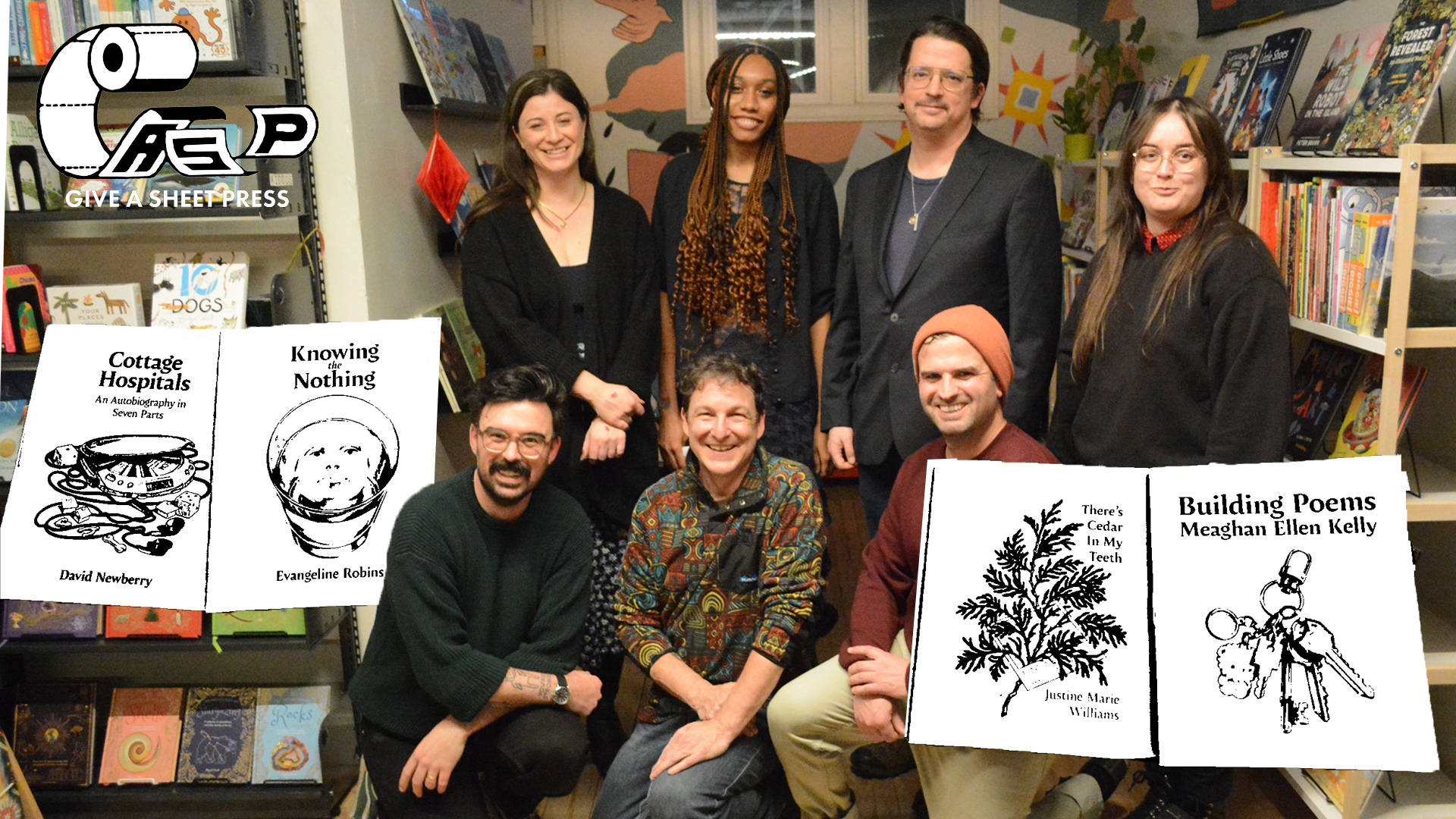
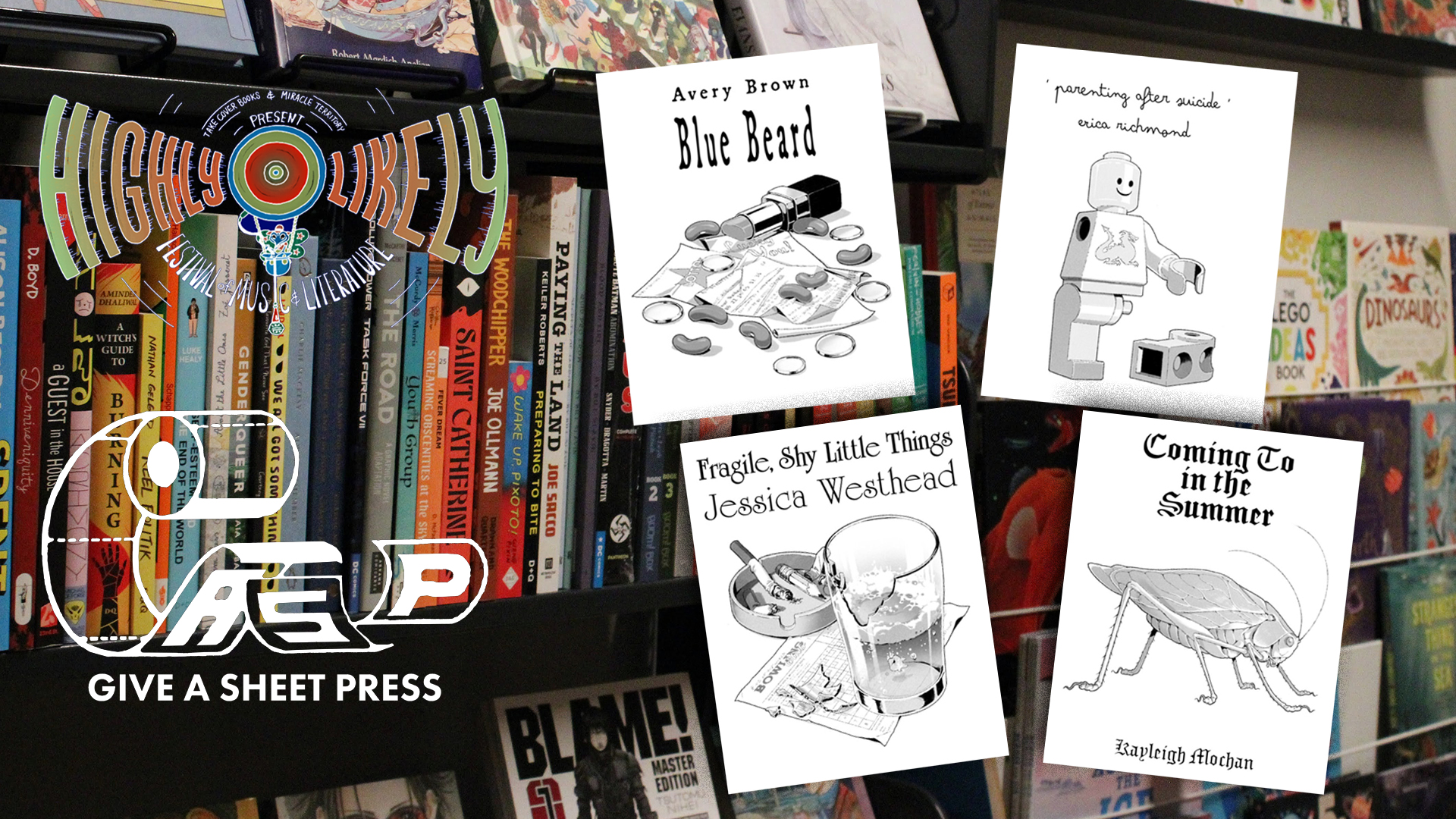
On the night of December 5th, Arthur attended the Give a Sheet Press winter launch hosted at Take Cover Books. Happening alongside the First Friday Holiday Night Market and the Christmas tree lighting ceremony, the night was definitely bright for those looking to jump into the festive community spirit.
After being on hiatus since 1996, Give a Sheet Press was able to relaunch this winter with assistance from Take Cover Books. The revival featured four writers selected to give readings of their published works. They were challenged to keep their projects to 2500 words or less so that it is able to fit on the adorable printed-on-one-page zines that were up for sale.
Musician David Newberry started the readings with their piece Cottage Hospitals: An Autobiography in Seven Parts — a hauntingly beautiful story initially told through the narrative device of the negotiations taking place between hospitals and cottages as they synthesize to become cottage hospitals. Newberry merged those negotiations with his own personal experiences; exploring the internal dichotomy between the comfort and pain the two buildings represented to him.
Cottage Hospitals wonderfully blends the interconnectivity between the representation of cottages—dwellings where memories flourish, life is celebrated, and families gather—and hospitals—facilities that can harbour grief, tarnish memories, and leave everlasting ghost stories within us.
Newberry, through his humor and melancholy, invites us to find a reconciliation within the dichotomies of good and bad that make up our lives, and he does so courageously through his vulnerable, impactful memories.
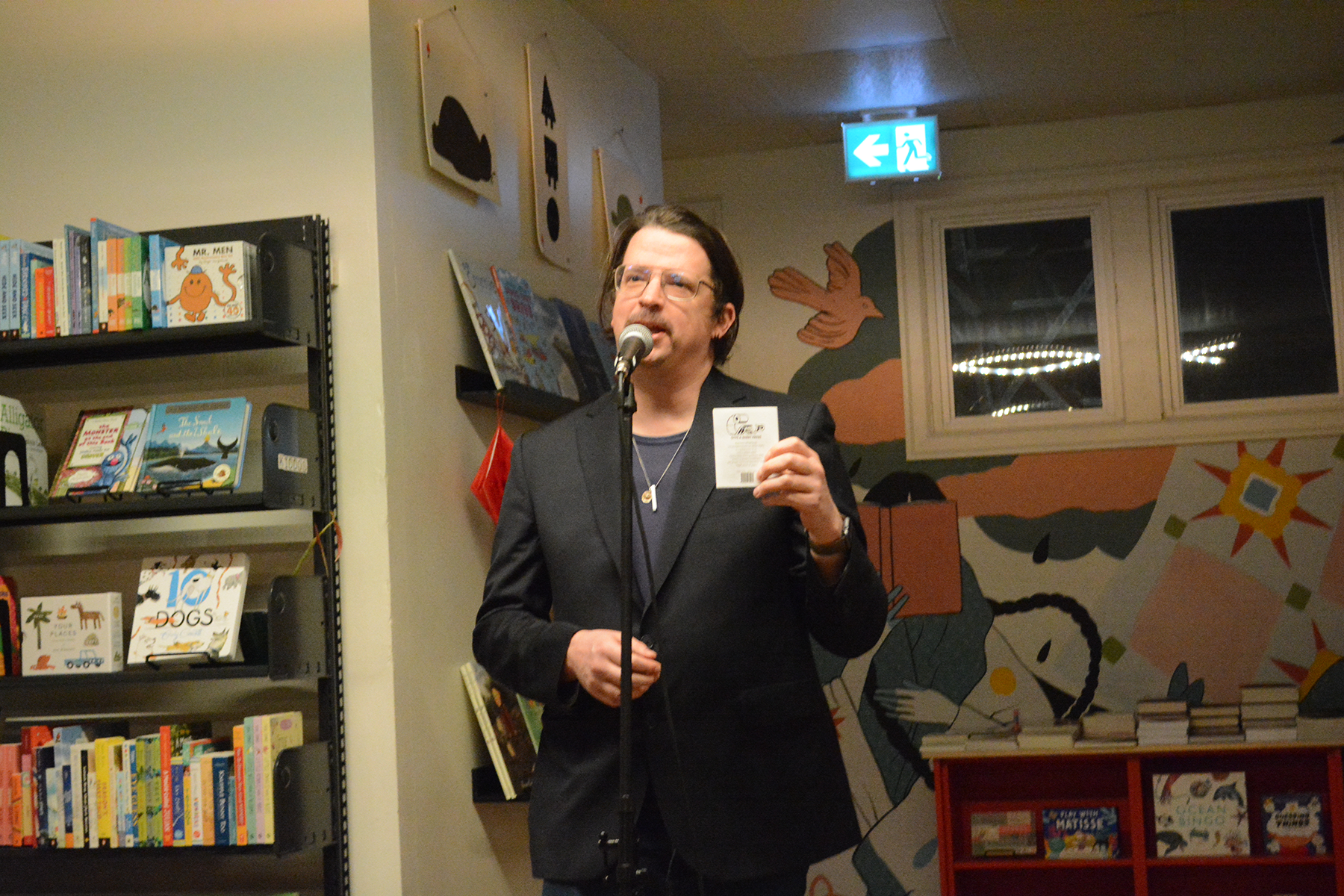
Arthur was able to have a brief conversation with David and asked him about the ideas behind his story.
“I’ve always been writing about all kinds of things in all kinds of ways. Predominately I am a songwriter, which is just a version of storytelling, but in recent years I’ve been interested in exploring different kinds of storytelling,” Newberry told Arthur. “I had a particular story to tell and I was trying to find a way to come at it a little bit indirectly. It was a story about having to come at things indirectly so I wanted to try and do that literally, with the story and within the story.”
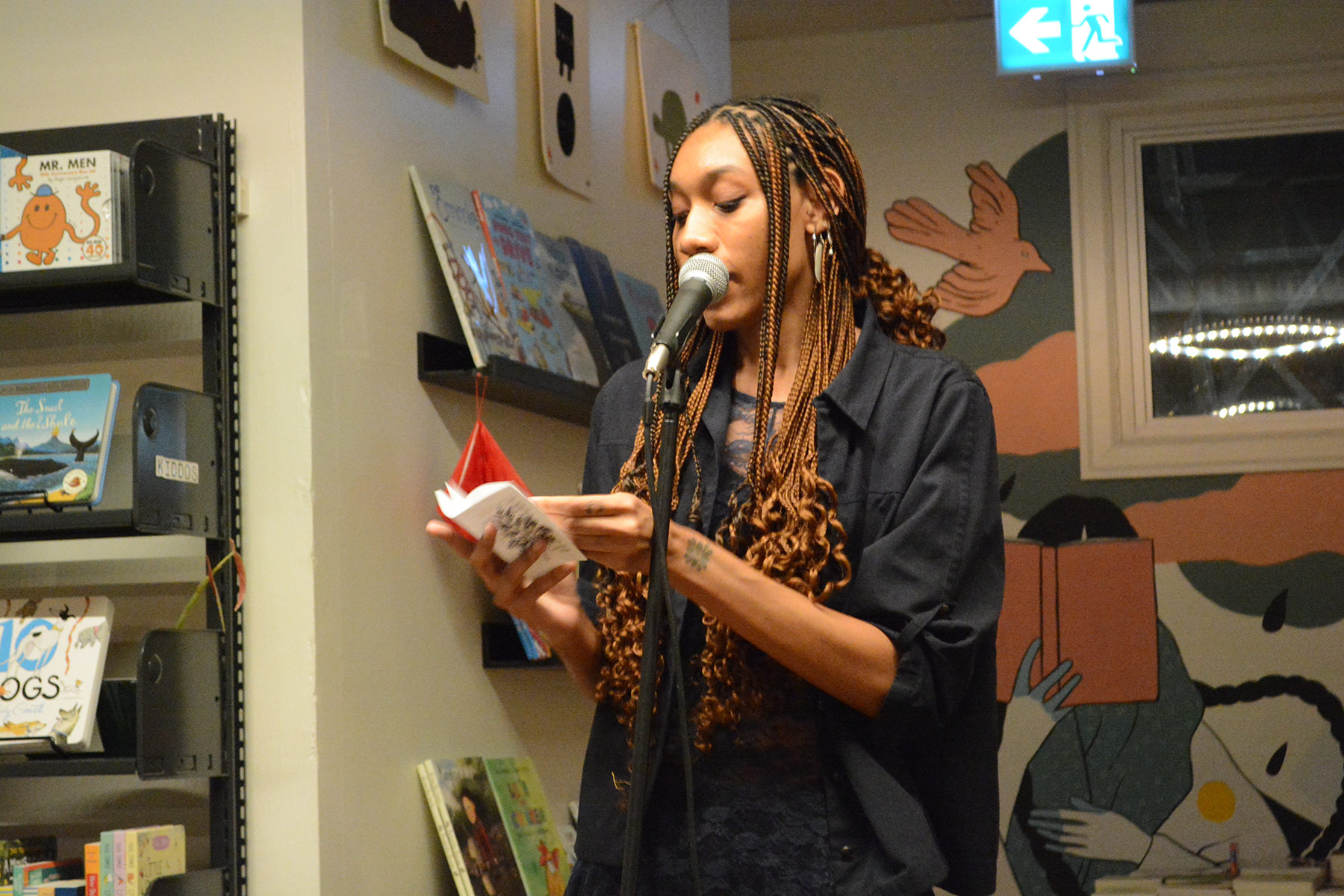
Artist Justine-Marie Williams followed up with a reading of her poem There’s Cedar In My Teeth.
Her short poem touches on the similarities between the natural world where she was born and raised and the home she inhabits now. Williams paints a picture of animacy within the trees, gullies, and rivers that made up her original home.
She imparts a sense of homesickness mediated through the familiarity of nature between the two locations. She uses cedar as a powerful narrative motif, helping her to bridge the divide between place and time and acting as a soothing tool to ground her in belonging. Her poem was incredibly heartfelt, and it brings me excitement to see what she will accomplish next.
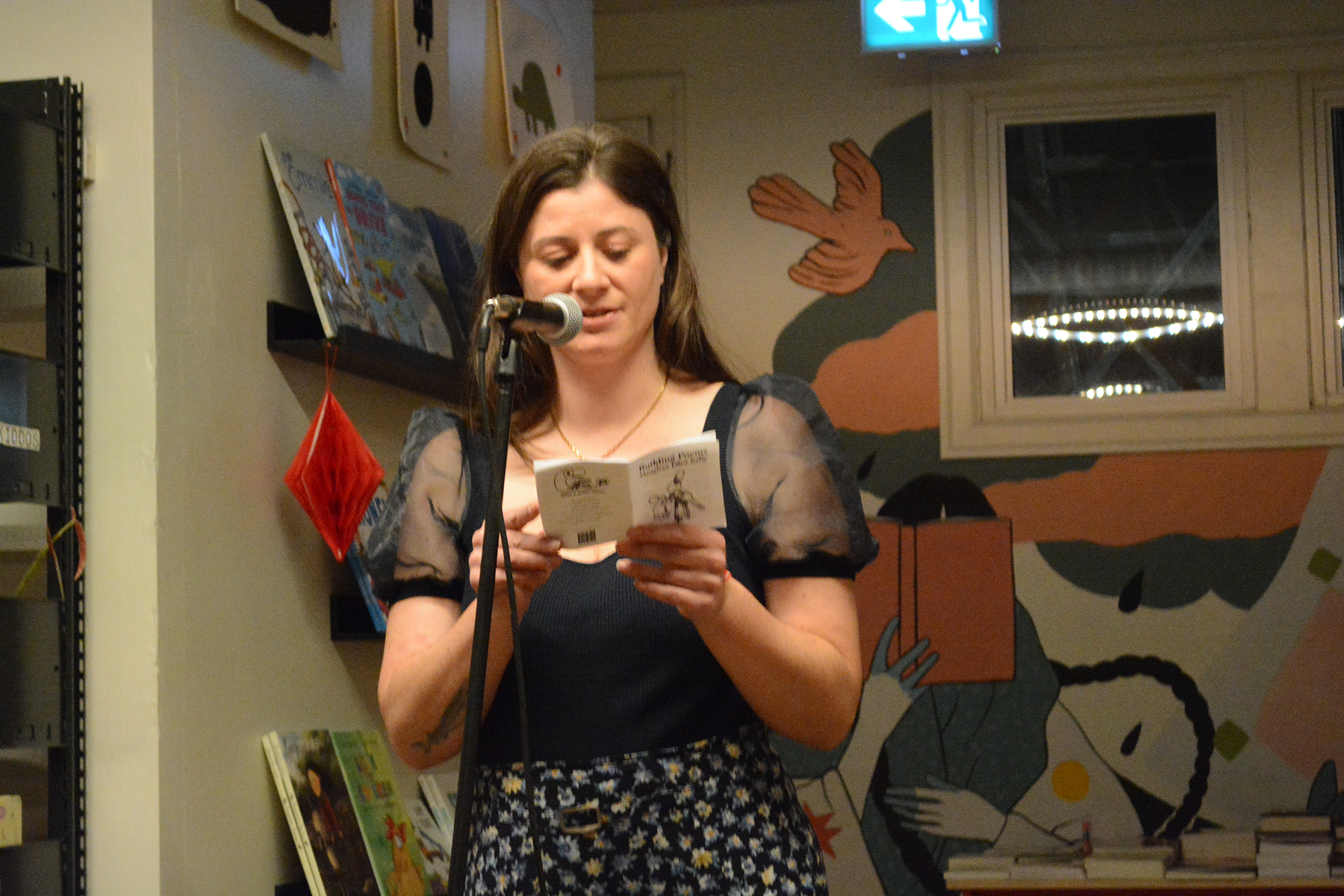
Our final reader was former Arthur editor Meaghan Ellen Kelly, with her collection of poetry Building Poems. Kelly’s series of six brief poems follows the multifaceted experiences that come from someone who has walked through life in many different shoes. The themes of her poems range from motherhood to life as young lovers, the expression of grief from losing a loved one and the worst aspect of life seen thus far, being employed.
In all seriousness, Kelly’s creativity brimmed with each poem she delivered, and each delivery came with the admiration of an audience that hung onto her every word. Kelly opened the door for the audience to explore her well-lived life, and in her vulnerability, she brought forth quite a few spirited chuckles and many teary eyes.
“My collection was motivated by a few different things: They’re all related to love, death, or capital, and office friendship,” she told Arthur.“I wrote two poems about two deceased friends, and I found that poetry is the best way to try and communicate with them.”
Meaghan continued, “I think that if you have experienced loss, it can be really helpful to find stories of grief, especially if they’re kind of weird or funny.”
Author and another former Arthur editor, Evangeline Robins—who was unfortunately unable to attend the event—debuted her short existential-horror story titled Knowing the Nothing. Her ethereal tale was evocative of Lovecraftian frameworks while still managing to supersede his commonly used underlying narrative structure. Robins brilliantly wrote a love letter to Lovecraft's horror while still maintaining her own distinct voice.
Her words held me in a trance as I floated between pages, in a familiar vein to Lovecraft’s stories, yet the ending of her story was open and fresh enough that I developed a desire to continue reading, unlike Lovecraft’s often sharp and ambiguously unambiguous endings.
The readings wrapped up quickly after 45 minutes, however the crowd stuck around for quite a while afterwards to talk amongst each other and catch-up. The event was intimate and sweet, and it was wonderful meeting others who were interested in literature within the community. Arthur even had the chance to interview Chris Magwood, the brains behind the event.
When asked about the history behind Give A Sheet Press’ revival, Chris Magwood mentioned that “It started 30 years ago in 1996.”
“We did six books for our first run, and then I ended up moving out of the country and my life changed, and things happened, so this is the first round of the year,” Magwood told Arthur.
Arthur asked Magwood about how he came up with the idea for single-sheet zines, and was directed to his previous book company, Marginal Distribution.
“We were the national distributor for all kinds of small presses and independent publishers, and so we would get a lot of people coming and asking us to distribute their homemade zines and stuff like that,” he said.
“I knew from being in the book industry that the only way that [publishing] works is if it’s a real book and it has an ISBN number. So it started as a kind of tongue-in-cheek [thing], but also serious, all that makes a real book is an ISBN number, [which] are free to get,” he continued. “We were like, ‘wouldn’t it be funny to do a publishing thing where you just eliminate all these barriers to publishing at the time?’”
“These [zines] cost 8¢ each to photocopy, and a minute to fold them up and staple them, and then you have a book,” Magwood told Arthur. “So, that was kind of the idea then, [you have] a way to publish the no-risk way, but also the system has to take it seriously because now you have the ISBN number showing up.”
“Then when Sean and Andrew [Fitzpatrick] opened the bookstore, I love everything they do, and I thought, ‘Oh, this might be a fun way to revisit this idea.’”
Chris mentioned that he plans on doing the event three times a year, or every four months, and that if you are interested in sharing your beautiful writing then you can visit Take Cover Books' website to find more information about future Give a Sheet Press submissions.
It’s a wonderful season to support local artists, so in the spirit of giving, make sure to give your time and interest to the many artists that live in and around Peterborough.



.jpg)
.png)
The rich text element allows you to create and format headings, paragraphs, blockquotes, images, and video all in one place instead of having to add and format them individually. Just double-click and easily create content.
A rich text element can be used with static or dynamic content. For static content, just drop it into any page and begin editing. For dynamic content, add a rich text field to any collection and then connect a rich text element to that field in the settings panel. Voila!
"Headings, paragraphs, blockquotes, figures, images, and figure captions can all be styled after a class is added to the rich text element using the "When inside of" nested selector system."
The rich text element allows you to create and format headings, paragraphs, blockquotes, images, and video all in one place instead of having to add and format them individually. Just double-click and easily create content.
A rich text element can be used with static or dynamic content. For static content, just drop it into any page and begin editing. For dynamic content, add a rich text field to any collection and then connect a rich text element to that field in the settings panel. Voila!
"Headings, paragraphs, blockquotes, figures, images, and figure captions can all be styled after a class is added to the rich text element using the "When inside of" nested selector system."

.jpg)

.jpg)