.png)

.jpg)

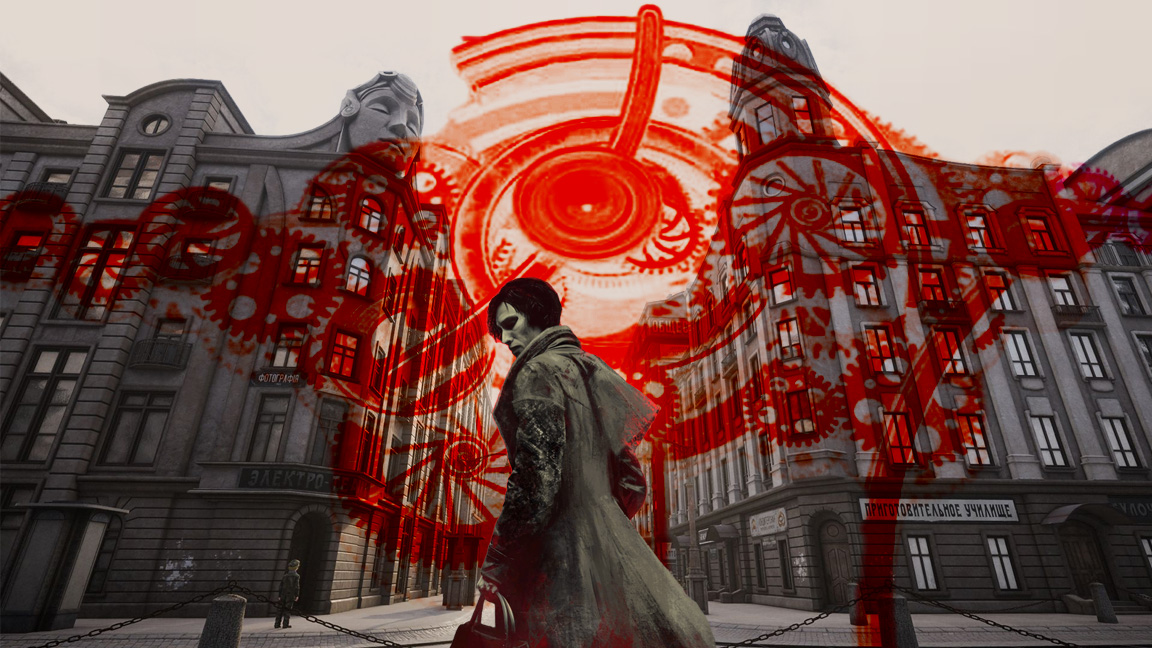
“The deep game possesses the ability to bring out of the gamer what Aristotle called catharsis, which is the purification of emotion through the evocation of pity and fear. This phenomenon is characterized by a powerfully emotional explosion and a psychological shock, caused by the experience of new truths and touching upon hidden aspects of reality.”
“Its result, a person’s moral regeneration. Neither passion nor any narcotic high can be compared to that feeling. Achieving this is difficult, but we believe that sooner or later, it will happen. The game will gain the features and status as that of something sacred. The people will approach the game as an event that will forever change their lives. We believe that we will succeed in making this so.”
In March of 2001, Kazakh video game development studio Ice-Pick Lodge wrote the above as part of their “Deep Game” manifesto. At this point, Ice-Pick Lodge was entirely unheard of, as they were missing something crucial for a game development studio to be discovered: a game.
Their manifesto—filled with promises of “catharsis, and events that will forever change their audience’s lives”—serves as a strong ideological foundation for their vision of game development. Most companies begin with an attempt to make the experience they tailor merely fun for the players, and hope beyond hope that this fun might transcend a mere dopamine high. Ice-Pick Lodge rejects this idea; they instead think it prudent to shoot for the stars and hope they don’t miss. Luckily for them—they did not miss.
Pathologic 3, releasing this January as one of the first notable games of 2026, is the second retelling of the classic Pathologic story that Ice-Pick Lodge released in 2005, just four years after their manifesto.
This newest iteration continues the tradition of being a first-person detective-like horror mystery with a rich narrative set over the course of 12 days and told through the deep conversations you will often be bouncing between as you travel between goals. However, Pathologic 3 differs itself in some key ways from the previous games by dropping the staple survival-horror tight resource management “hobo simulator” gameplay, and the more linear — your choices will shape your future whether you like them or not — storyline, for a more forgiving experience that focuses on character development and the grander narrative, instead of the traditional “this is what it’s like to die wandering the streets as you slowly rot from the plague-simulation” fans are used to.
The game follows Daniil Dankovsky, or “the Bachelor”, a doctor of thanatology (the study of death and immortality) who is lured to the steppe Town-on-Gorkhon by the promise of an undying man who could be the key to curing mortality that Dankovsky so desperately desires.
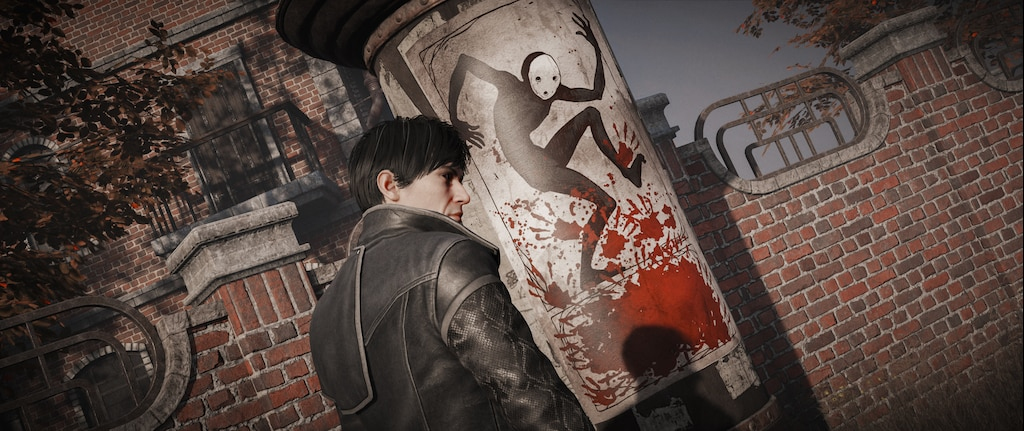
In an ironic twist—and what I believe to be a benevolent moment of divine spite towards Dankovsky—Simon Kain, the immortal man he is looking for, is pronounced dead by the Kain family not even a day after Daniil steps off that train into town.
With his hopes and dreams of a deathless future shattered, Dankovsky is instead confronted by the mysterious deaths of Kain and Isidor Burakh — the only doctor in town, as well as the man who sought out presence. Meanwhile, another existential threat emerges from the steppe: the Sand Plague, “primordial plague of all plagues” as it’s called. An infectious disease that is so deeply tied to Town-on-Gorkhan’s steppe culture that it begins to manifest itself as something with a mind of its own, leading it to become one of our main antagonists symbolized by the folk-monster spirit, the shabnak-adyr.
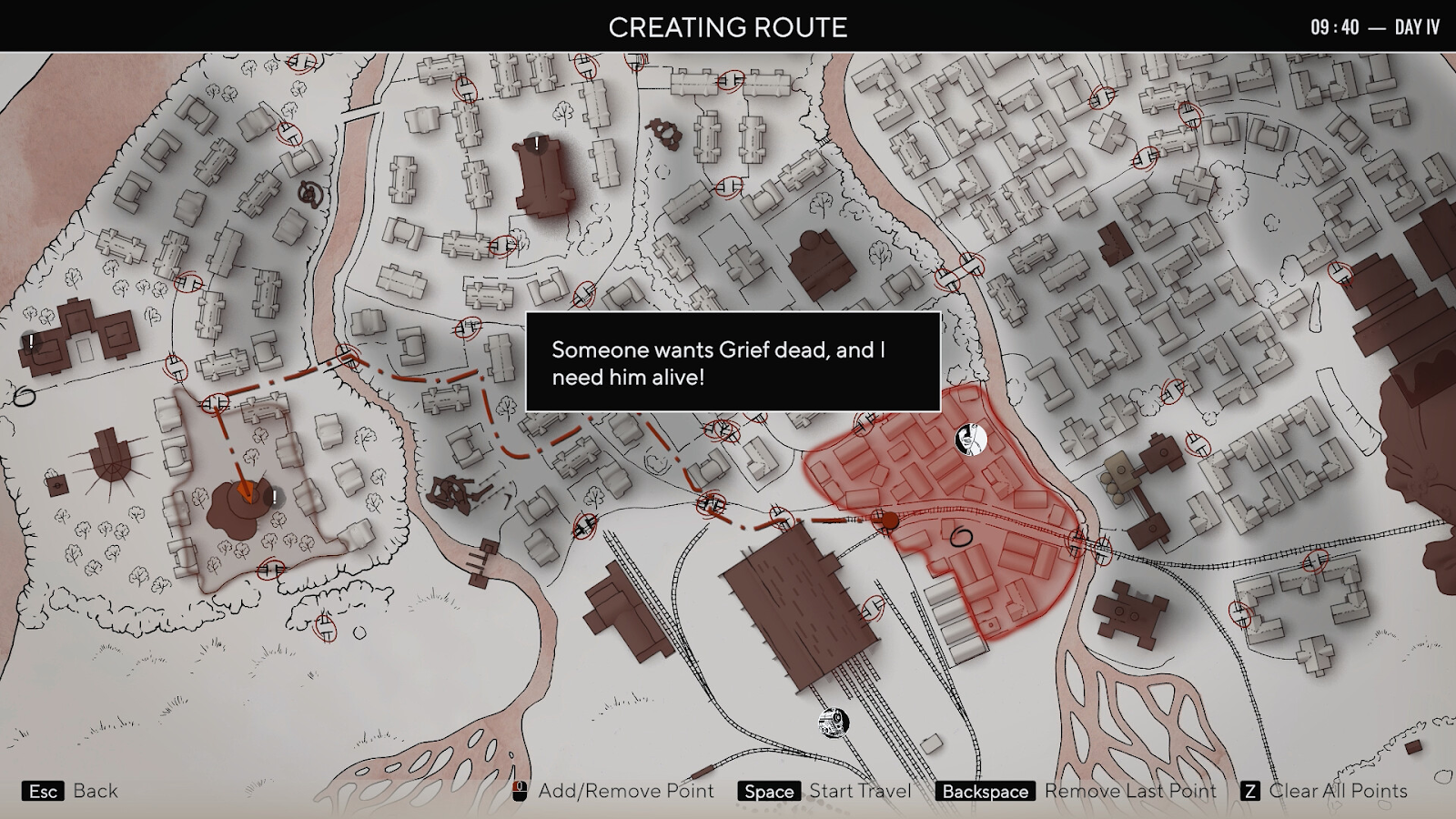
The player, as Dankovsky, is tasked with solving this mystery and saving the town from the Sand Plague as one of the last competent medical professionals left in town. With a town that is fractured like a mirror into many different districts, we trade out the old open world the previous games implemented for a new district traversal system that allows us to set efficient routes that bring us closer to danger, or longer routes that keep us safe. Combing this with the mental battles that comes from conversations with various key characters or families who are not only willing to mislead you but also straight up lie to you, we can only even attempt to accomplish this sisyphean feat by maximizing the utility of each and every tool available to us — including our mind.
Pathologic has always been a series that sacrifices wider audience engagement in the pursuit of realizing an authentic vision. This doctrine of ceding an accessible gaming experience for the sake of a truer narrative alienates potential fans; if you check the second game’s achievement analytics on Steam you can see that only 25% of players have reached the third day of the game. The drop-off for Pathologic Classic is even more stark, with only 14% of players making it to the second day. This is likely a result of the games’ brutal survival horror mechanics.
In contrast to the first two games, Pathologic 3 has a 50% day 2 achievement rate, and upon seeing this, I felt like a proud parent whose kid has just done something amazing after watching the series’ evident improvement over the years. Pathologic 3 has allowed this series to evolve such that it now offers an incredible narrative experience without sacrificing accessibility nearly as much as its predecessors. This was achieved through changing the game from a sadistic resource-based survival horror to a simpler and more fulfilling psychological horror. Ice-Pick Lodge put Pathologic through the pressures of a much needed gameplay evolution and emerged with a product that transcends its predecessors. In an amazing turn of events they have changed, metamorphosizing their concept of how a game ought to be.
The question is: do they end up betraying their original ideology? The answer is again clear from Ice-Pick’s “Deep Game” manifesto:
“Art does not degenerate; it changes. Art is like a wandering soul, moving from old bodies, to young ones. It finds new forms and transforms them according to its own laws. Creative activity emerges from the realm of pure pragmatism, technology, entertainment or services, making a quality leap, and acquires the ability to give shape to phenomena, which had before seemed inexpressible. It wasn’t too long ago that cinematography made this leap. Now it is the turn for the computer game to make the same leap. Its new shape must take its place at the junction where the game meets mystery. We call this new shape ‘the deep game.’”
It’s amazing how consistent this studio’s ethos on game development has remained for over 25 years. In the process of retelling the same story from decades ago, Ice-Pick has evolved hand-in-hand with their original idea, growing and blossoming by implementing new ideas to an already foundation narrative.
Besides the massive change you will see in Pathologic 3 morphing into a psychological horror game, one other massive change you might notice is Dankovsky’s newfound ability to move through space-time and rewind the narrative when you make a choice you don’t quite feel confident in.
Fans of the previous games will remember the struggle of completing each task given for the day; losing their minds as the clock slowly ticks down and inevitably realizing that they won’t be able to complete everything as nightfall approaches..
The evolution of the time management system and the removal of complex resource management mean that players are given a chance to breathe without feeling as if they’re on the verge of a panic attack, and can spend more time paying attention to the narrative than ever before.
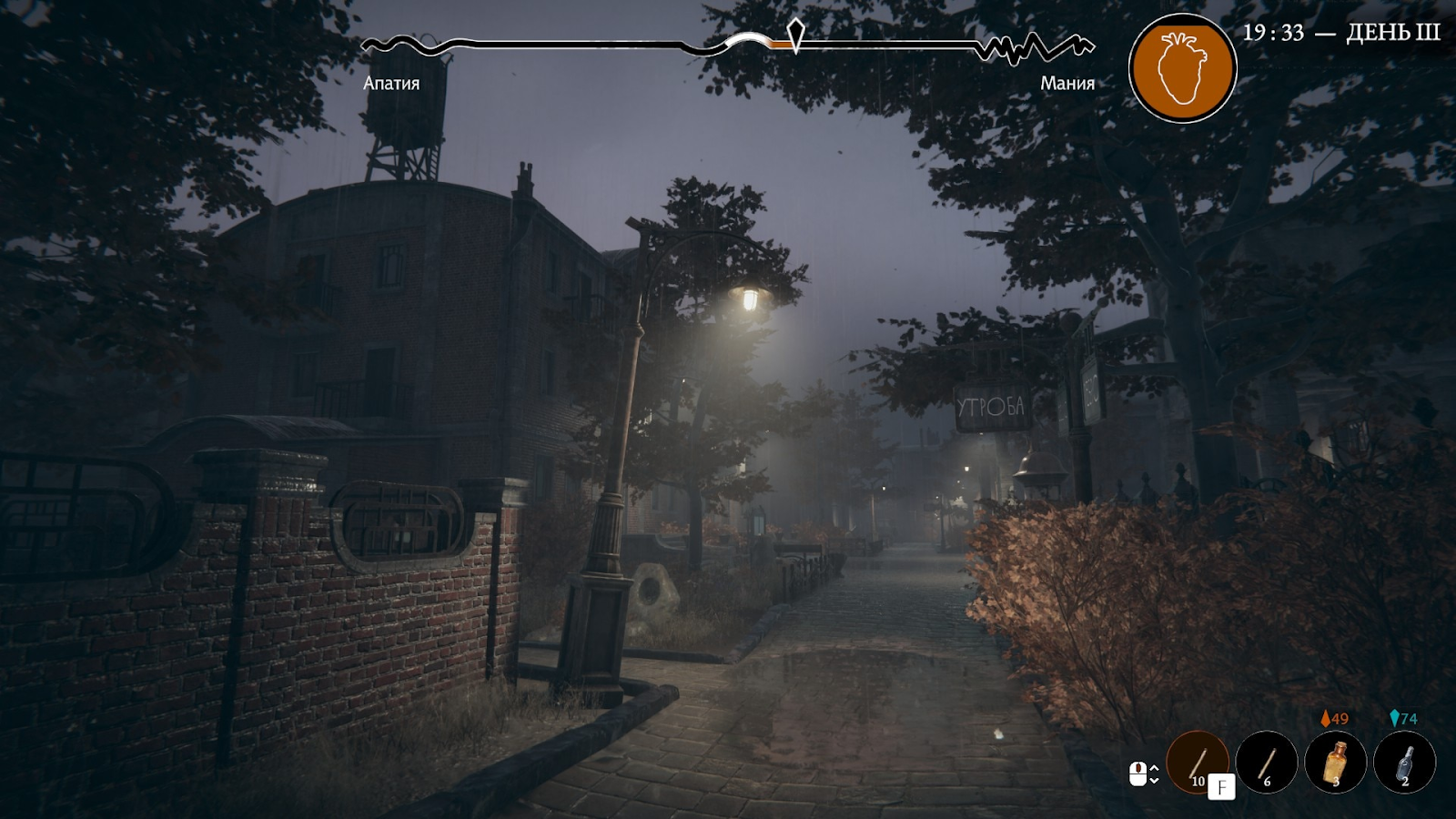
Don’t get me wrong—the clock is still ticking away for dear Dankovsky. However, if you collect enough of the mysterious fluid known as "amalgam" through exploring the world and having nighttime comfort conversations with one Eva Yan, you position yourself as a nigh-immortal being, flowing through time like raindrops rather than a river. Just be certain you don’t run out of amalgam, because the allegations online are that it causes you to lose the entire save file completely if you die without a single drop—no pressure.
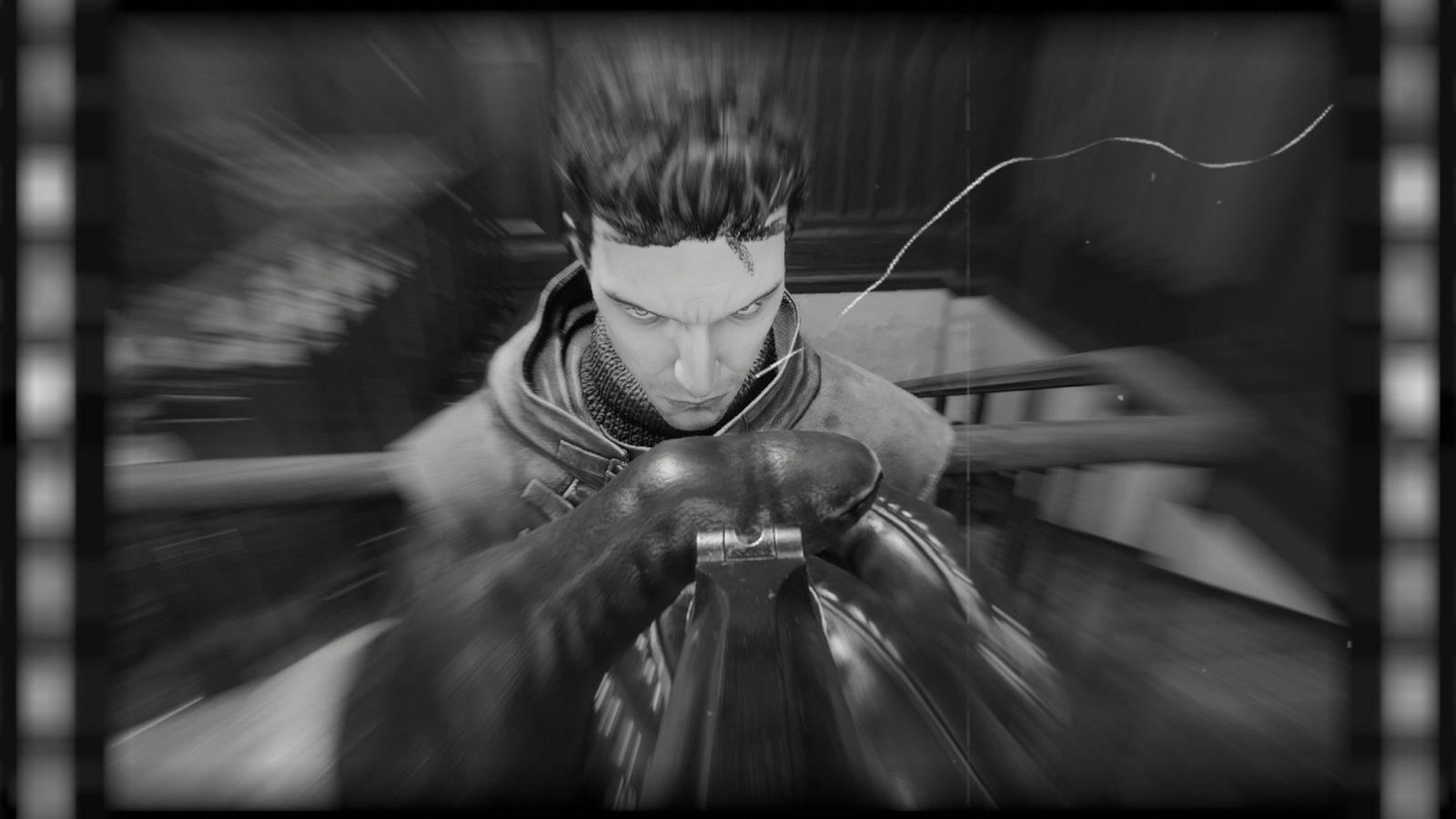
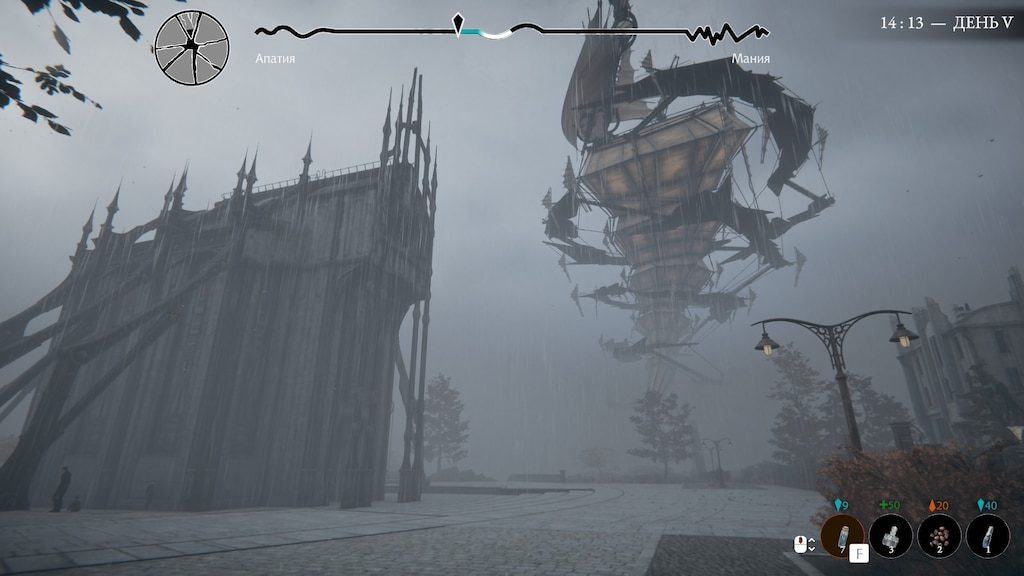
Along with Dankovsky’s introduction to immortality-lite, Pathologic 3 introduces what I like to call the “bipolar system.” One where you must manage our dear Bachelor’s levels of mania and apathy. Players are forced to use the limited resources available and interactable environmental items to teeter your character between extreme states of apathy or mania, and optionally maintain a zen middle ground.
Mania often presents itself as the more useful option, as the higher it is, the faster you can move. This is actually quite handy when you need to blast through the game’s numerous plagued or rioting districts in record time—I’m not kidding, Daniil runs like a train in this game. The downside to mania, however, is that if it gets too high you start to take damage until your inevitable death. Dankovsky’s weak heart evidently can’t handle the rush of mania forever.
By contrast, apathy makes you move slowly and offers no real benefits besides keeping you safe from a manic heart attack. Much like in real life, there is really no reason to be in this state, however if you do inevitably reach the highest levels of apathy, Dankovsky will attempt to blow his own brains out and you get the opportunity to act as a mediator, either saving him or encouraging him to finish the job.
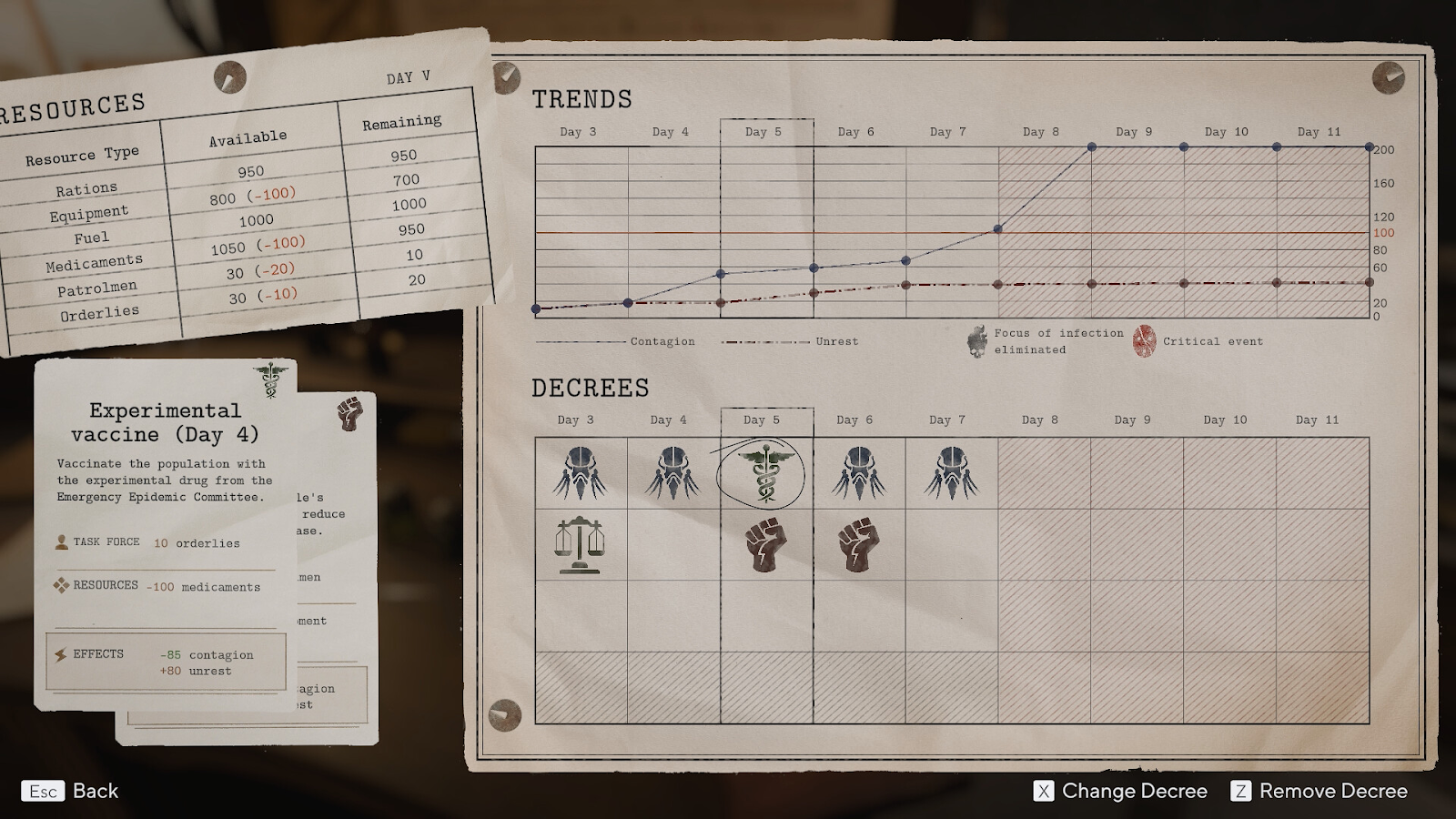
Other new elements in Pathologic 3 include the riveting task of bureaucratic management, allowing you to take on the role of head doctor in town. You can now pass decrees to fight the plague and increase the total number of days the town survives this epidemic, with newer, more effective measures becoming available if you successfully progress through the narrative. Additionally, you can speak to, examine, and diagnose patients in a tertiary doctor simulator befitting our dear Bachelor.
There are a whole host of other features that you can discover through playing the game which I would rather leave unspoiled—trust me, the game is fun and playing it inquisitively is incredibly rewarding to your survivability. Besides the gameplay, another portion of the joy of Pathologic 3 comes from dear old Dankovsky, our narrative guide and pivotal actor in the play that pirouettes through the infested streets of Town-on-Gorkhon.
Daniil Dankovsky’s portrayal paints a portrait of an asshole so lovable you can’t help but smile at his antics. Establishing a medical career as director of the research group of thanatologists attempting to cure death while also being a part of the Tsarist-era intelligentsia, Dankovsky’s ego has been inflated to the point of bursting.
He is self-aggrandizing, full of narcissistic entitlement, and–ironically–deeply misanthropic towards his own patients and the people of the Town-on-Gorkhan he aims to save. Dankovsky monopolizes conversations, exacerbates nuisances, and constantly belittles those he speaks to—going so far as to yell Latin quotations at mildly annoying children. Even with his outwardly hostile outbursts, it is still surprisingly a joy to play as this certifiable mess.
In spite of how deeply troubled Dankovsky is, his caustic characterization never crosses the line into outright unlikeability. He is a morally conflicted and deeply flawed man, yet he still acts with empathy, even towards those he belittles. In a town where ancient steppe folklore bleeds into reality, it can become incredibly difficult and frustrating to ascertain which villager is offering you radical insight on how to fight the plague and which is trying to sell you a pot full of Bos Turokh’s shit. However, despite cultural differences, you can choose to learn about the people you are treating and grow to appreciate their esoteric ways.
Daniil starts to become sympathetic when you realize that–at least in his view–the weight of the world rests on his shoulders. As a 28 year-old Bachelor of medicine trying to cure death, he is simply not old enough to be fighting this fight on his own. His various neuroses about running out of time, letting the town die, and failing to become the groundbreaking, death-curing scientist he feels destined to be puts his callous attitude into perspective. Suddenly, the fact that running around breaking mirrors and kicking trashcans is such a major aspect of the game makes sense.
It is a genuine miracle that someone as unhinged as Daniil Dankovsky is in any way put in charge of saving an entire town from a primordial plague. Yet somehow, every other important citizen puts up with his bullshit just long enough to scratch the surface of the neurotic mess he is, and comes to some sort of ameliatory agreement to put aside their differences.
Given the nickname, “the prickly prick” in the first Pathologic game, Dankovsky really does start his journey as an unlikable fellow. He’s obsessed with immortal man Simon Kain, and the humanity transcending buildings he has created like the Polyhedron and the Cathedral. Which leads to the townspeople throughout the game becoming nuisances to his actual desires, and his siding with the rest of the Kain family over the town itself becoming inevitable.
Unlike Pathologic 3, in the first game Dankovsky tends to grow into an anti-hero more than a protagonist. This stems from his limitations within the game as well as the narrative. He is forced into a foreign situation, where he must keep himself alive so that he can try and save others, fights with the townsfolk and their practices frequently to keep them alive, and is often punished gameplay wise whenever he attempts to do something morally right. The restrictions of the item economy that follows Pathologic Classic’s harsh survival systems lead to extensive resource juggling, which lead to more brutal decisions being made to ensure you can make it to the next day.
Pathologic classic tells the story of a man who is conquered by his neurotic and misanthropic thinking in a tragic tale of the mind beating the man. This time around however, our dearly beloved Bachelor is given the opportunity to change.
With the ability to traverse space and time, the unhinged Dankovsky has the opportunity to actually fix his mistakes. This becomes an incredibly strong thematic touchstone throughout the narrative, allowing him to change and learn to care once again. This growth is most apparent in our home base; an odd little observatory named Stillwater, whose mistress, Eva Yan, acts as a grounding force for Daniil.
Unlike other iterations of Pathologic, the third game gives Daniil a base of operations to which he retires each night, regardless of where you happen to be when the clock strikes 2 am. It’s a cozy little home that fits our character almost as well as his snakeskin jacket. A building shunned by just about every resident of Town-on-Gorkhon, Stillwater serves as a metaphor for Daniil’s impenetrable facade. It’s a building that makes each and every resident slowly grow uncomfortable until they are forced to leave. Every resident except for the Bachelor and Eva Yan.
Created by Farkhad, an “Oneirotect” who worked for Simon Kain, Stillwater was designed, much like Simon’s other buildings the Cathedral and Polyhedron, to transcend humanity, “not vertically but horizontally.” Stillwater, through Farkhad’s eyes, was meant to ground the soul and root it deeply into the earth—thus acting as the perfect place for Daniil’s redemption.
This is where we as players get to build this deep and special relationship with Eva Yan, the mistress of the house. She, alongside Stillwater, acts as a grounding force for the flurry that is Daniil. Due to Dankovsky’s return to Stillwater at the end of each day, Eva becomes one of the few characters we see consistently every morning and night. She is cryptic, she is enigmatic, she often offers profound ideas, and with her ability to exist in that nighttime limbo alongside Daniil, she swiftly becomes a soothing presence for both the player-character and the player.
Eva actively pushes Daniil out of his misanthropic moods and encourages him to be a better, kinder person. Best of all, she is characterized thoughtfully and afforded internality by the narrative, existing as so much more than some manic-pixie dreamgirl who exists solely to further the male protagonist’s character arc; which tends to be a trope common in other malecentric gaming narratives.
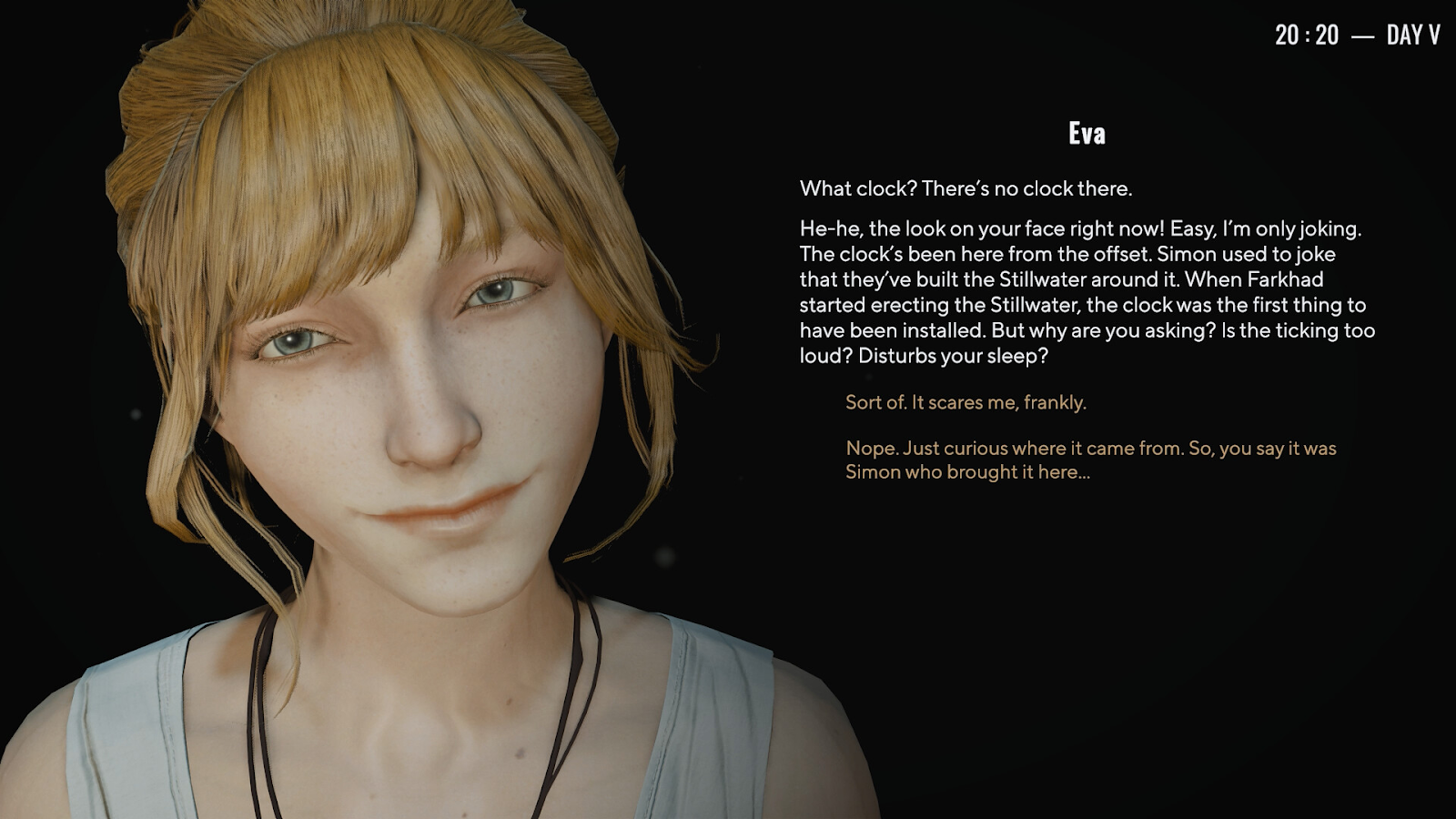
At the day’s end—marked by a dissonant piano melody—I often became giddy at the thought of returning to Eva and having our little chats. This cessation of time acts as the only point where we can surpass the masks of our personae and see each other for the beautiful messes we are.
While Daniil and Eva have been my focus, they are just the tip of the iceberg that is Ice-Pick lodge’s rich character writing. There are over thirty unique major characters, as well as countless nameless non-player characters roaming the streets, with each and every one of them being so distinct and profound that you might start to wonder if the people of Town-on-Gorkhon are the most insightful population of people to ever exist.
Every conversation the game offers you provides an opportunity to expand your consciousness to greater heights. Pathologic 3 is so richly pungent with ideology that I do not have the time or space to even scratch it, for fear that my editors will take me out back and shoot me for the lack of brevity in this article.
Pathologic 3, as mentioned earlier, is a retelling of the original 2005 game Pathologic Classic. One major difference between the two games that I haven’t mentioned yet is that Bachelor Dankovsky is merely one of the three potential playable characters in the classic version, each with their own separate narratives. Featuring Artemy Burakh as the Haruspex—the sole playable-character in Pathologic 2—and Clara as the changeling, Pathologic Classic offers the player a much more complete version of the narrative than either 2 or 3 could do alone.
This begs the question: why have another game dedicated to Dankovsky alone rather than remaking the game with the trio of original characters? Why even retell this story in the first place? Ice-Pick Lodge declares:
“We deliberately refuse to create a comfortable environment for the gamer. The addressee is not the consumer. He is the coauthor. Passing the deep game is a creative process. We write atypical and problematic scenarios, adding a polysemantic visual range and moving music. We put an emphasis on shock. On the extraordinary, on the untraditional, on experimenting, but most importantly, on the consistency in carrying out these experiments.”
Not only do they desire profundity, Ice-Pick also desires profound hostility to the traditional experience of gaming. This is reflected by the challenge most introductory players experience when they play Pathologic Classic: in order to penetrate what I consider one of the greatest stories told using the medium of gaming, the player is subjected to the grueling, unfair, torturous, and often mundane ritual of actually having to play the game. Ice-Pick Lodge does not lie when they say they deliberately refuse to create a comfortable environment for the gamer, because Pathologic Classic and Pathologic 2 can be downright agonizing to the player.
In a great moment of shame, I must admit that I have completed neither Pathologic Classic nor its sequel. Both games offer such a rich, transcendental, and cathartic narrative to their players, yet there are so few people who actually get through them to experience that narrative in the first place. I only know the overarching Pathologic story thanks to gameplay videos on youtube and fandom wiki articles, as each time I attempt to play either game I sink 15-20 hours into them before being attracted by some other more friendly and dopamine-placating game to play.
In an ironic tragedy befitting the reputation of Eastern-European storytelling, Pathologic’s cult following is filled to the brim with people who have often not finished all—or even one—of the games.
Despite this, Pathologic’s cult-like following persists just as strongly as Ice-Pick Lodge persists in retelling their story. With the birth of Pathologic 3 as the most approachable entry to the series so far, it feels as if a collective exasperated sigh of relief has been let out by the community as the bridge between those who played and those who want to play finally becomes manifest.
Pathologic as a series has sunk its claws so deeply into my mind that I feel like every word I write, every thought I have, every fantasy or reality I can think of, is forever tainted with traces of its touch. A game about the transcendence of humanity has transcended itself and become a constant companion to my thoughts. It has branded my soul with its soft touch, often acting as an assuaging voice in the back of my head that encourages me to do better as an artist.
As Ice-Pick Lodge says: “people will approach the game as an event that will forever change their lives.” As someone whose life has been changed by this series, I encourage you to try and find out whether the same can be said about yourself. Ice-Pick Lodge shot for the stars and did not miss—as those stars streak through the sky, you should take a moment to watch them pass.


.jpg)

.jpg)
.png)
The rich text element allows you to create and format headings, paragraphs, blockquotes, images, and video all in one place instead of having to add and format them individually. Just double-click and easily create content.
A rich text element can be used with static or dynamic content. For static content, just drop it into any page and begin editing. For dynamic content, add a rich text field to any collection and then connect a rich text element to that field in the settings panel. Voila!
"Headings, paragraphs, blockquotes, figures, images, and figure captions can all be styled after a class is added to the rich text element using the "When inside of" nested selector system."
The rich text element allows you to create and format headings, paragraphs, blockquotes, images, and video all in one place instead of having to add and format them individually. Just double-click and easily create content.
A rich text element can be used with static or dynamic content. For static content, just drop it into any page and begin editing. For dynamic content, add a rich text field to any collection and then connect a rich text element to that field in the settings panel. Voila!
"Headings, paragraphs, blockquotes, figures, images, and figure captions can all be styled after a class is added to the rich text element using the "When inside of" nested selector system."

.jpg)
.jpg)
.jpg)