.png)



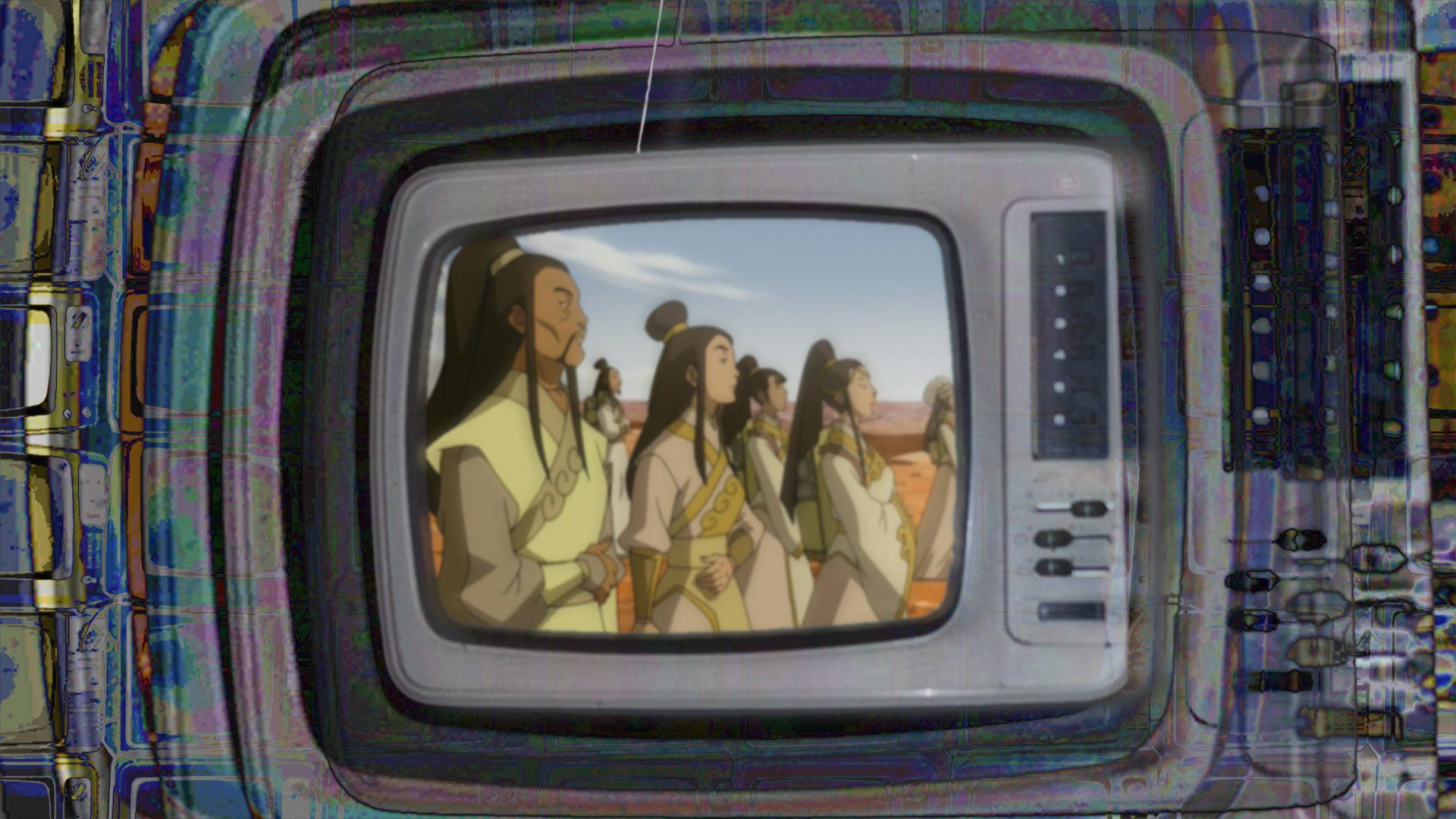
I fricking love Avatar: The Last Airbender. I love the plot, the animation, the sometimes-cheesy dialogue, the critical examination of social hierarchies and how authoritarian regimes sustain themselves through the ignorance of their people’s suffering, and the weird flying lemur named Momo.
This isn’t unusual—the fandom is still pretty big, and when people discuss it online, it’s usually in praise of the show, or dunking on its recent adaptations for not living up to the original masterpiece.
Part of this is nostalgia—Last Airbender is emblematic of a bygone era of television, before streaming, and was a major part of many 2000’s kids’ childhoods. But one thing from the original series that a lot of fans complain about is some of the filler episodes. People will often say that they’re pointless and understandably so—they don’t do much to advance the plot and often take time away from the central conflict, hence the term “filler”.
Season 1, Episode 11, “The Great Divide”, is a fan-least-favourite for this very reason. However, I would like to contest this dismissal. Even if it isn’t half as good, I would argue that “The Great Divide” is just as important as Season 2, Episode 15, “Tales of Ba Sing Se”, or Season 3, Episode 17, “The Ember Island Players” (much more popular filler episodes).
All three do very little to advance the central conflict with the Fire Nation, any squabbles between characters are resolved by the end of the episode, and they often look like something of a character arc braindump from the creators. And that’s what makes them great.
As society has moved away from physical media and towards digital, we have become able to consume media more quickly. It is much faster to watch a YouTube video or read an article online, found through a search engine that yields a result in seconds, than to go to your public library, search the shelves for a book on the topic, and search for the answer to your question in said book.
I’m not saying one method is superior to the other—I think both are important and useful in their own right. However, the prolific use of online sources has set an expectation for how fast we can find and digest information. And the fastest vector for information of any kind is, of course, social media.
Videos on platforms like YouTube are sometimes researched, but more often sloppily produced, short, and legitimised by viewers based on aesthetics rather than corroborating sources. And the new expectations we’ve gained from social media don’t go away when we exit the app (be it YouTube, Reddit or Letterboxd), but permeate other areas of our lives. Attention spans and content expectations have shifted, and streaming companies like Netflix and Amazon have noticed.
In the late 2000s and early 2010s, it was common to see serialized long-form TV shows like Avatar, usually with around 20 episodes per season and multi-season runs. You might not have been introduced to a show until halfway through its run, depending on when you caught it while channelsurfing.
I think that’s part of why Avatar had such a long introduction: creators knew that new fans would be constantly joining their weekly audience, and needed the context for that episode. But in the mid-2010s, Netflix exploded, and suddenly TV shows could release entire seasons at once to a massive audience, rather than on a weekly schedule on a dying network.
That’s part of why Avatar: The Legend of Korra, Last Airbender’s sequel, flopped at the time of its release: television as a medium was dying, and Legend of Korra wasn’t suited to the internet streaming format. As the medium shifted, so too did the expectations placed on production studios. Suddenly, people were binge-watching the series within hours of release, and impatiently expecting the next installment with little understanding of the work that went into them.
Creators and companies observed what type of media people were consuming, and responded in kind. Children’s TV shows started speedrunning what could have been well-developed plots, with many moving from thirteen 24-minute episodes to eight 50-minute episodes. Many shows were cancelled after one season in favour of new projects with similar plots. Even series that began with longer seasons, with multi-year gaps between releases, started being compressed into rushed, concluding seasons with very little time for character development or proper sub-plots.
The Umbrella Academy released their final season in 2024, and I think it sucked for this very reason: it was too short to properly establish any of its character arcs before switching to a new plot, then sloppily ended all of them at the same time. And I don’t blame the writers for this; within the constraints of a much shorter run, they likely didn’t have the time to create anything better unless they started from scratch (which would have kept Netflix and its audience waiting even longer).
It’s a feedback loop of stories being turned into YouTube videos, made for audiences who expect YouTube-like timelines and bingability.
In the age of internet streaming, we have lost the art of the filler episode.
I don’t intend to blame fans alone for the depletion of quality in their favourite media. I think we need to hold streaming companies accountable for putting harsh and restrictive expectations on artists. But we also need to recognize that consumer demand feeds into these unrealistic expectations.
When a show degrades in quality, don’t just dunk on it; take the time to think about why.
Were there cuts to the production team? What deadlines were placed on the staff, and how many extensions were they given? How long did you have to wait? Would it have been worth a longer wait for a better show? And when you next see a filler episode, think about the conditions that gave the creators the time to explore a dead-end concept onscreen, or the space to flesh out characters without blatantly hurling the central plot forward.
Filler episodes aren’t necessarily conducive to a good show, but they’re indicative of much stronger pacing than what we’ve seen from television in years. They give writers a space to develop their ideas, play around with subplots that might not integrate smoothly into the central narrative, or write goofy D&D campaigns for their characters. I have yet to see an alternative providing authors with these opportunities in the format prescribed by digital streaming.


.png)
The rich text element allows you to create and format headings, paragraphs, blockquotes, images, and video all in one place instead of having to add and format them individually. Just double-click and easily create content.
A rich text element can be used with static or dynamic content. For static content, just drop it into any page and begin editing. For dynamic content, add a rich text field to any collection and then connect a rich text element to that field in the settings panel. Voila!
"Headings, paragraphs, blockquotes, figures, images, and figure captions can all be styled after a class is added to the rich text element using the "When inside of" nested selector system."
The rich text element allows you to create and format headings, paragraphs, blockquotes, images, and video all in one place instead of having to add and format them individually. Just double-click and easily create content.
A rich text element can be used with static or dynamic content. For static content, just drop it into any page and begin editing. For dynamic content, add a rich text field to any collection and then connect a rich text element to that field in the settings panel. Voila!
"Headings, paragraphs, blockquotes, figures, images, and figure captions can all be styled after a class is added to the rich text element using the "When inside of" nested selector system."

.jpg)