.png)



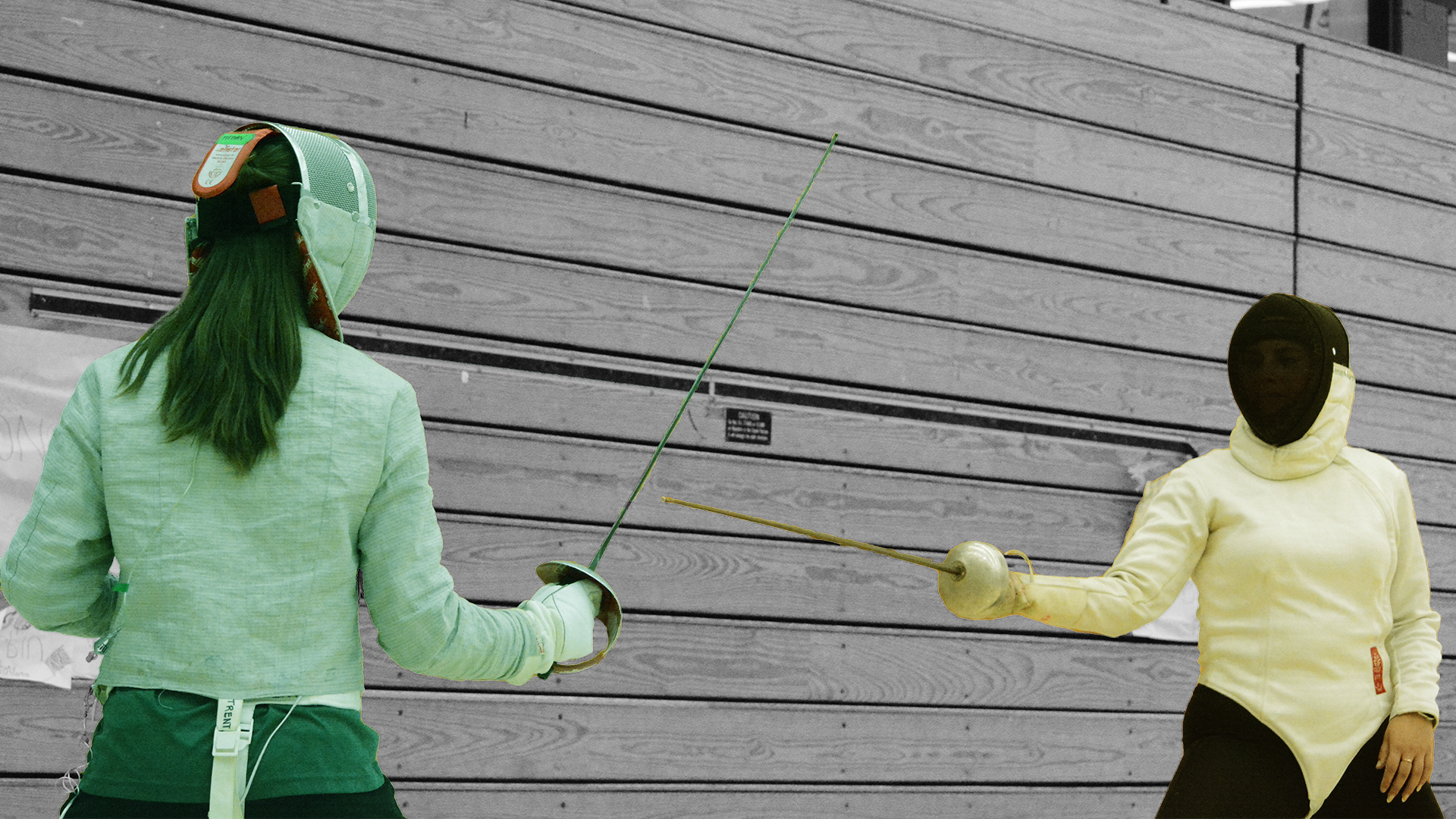
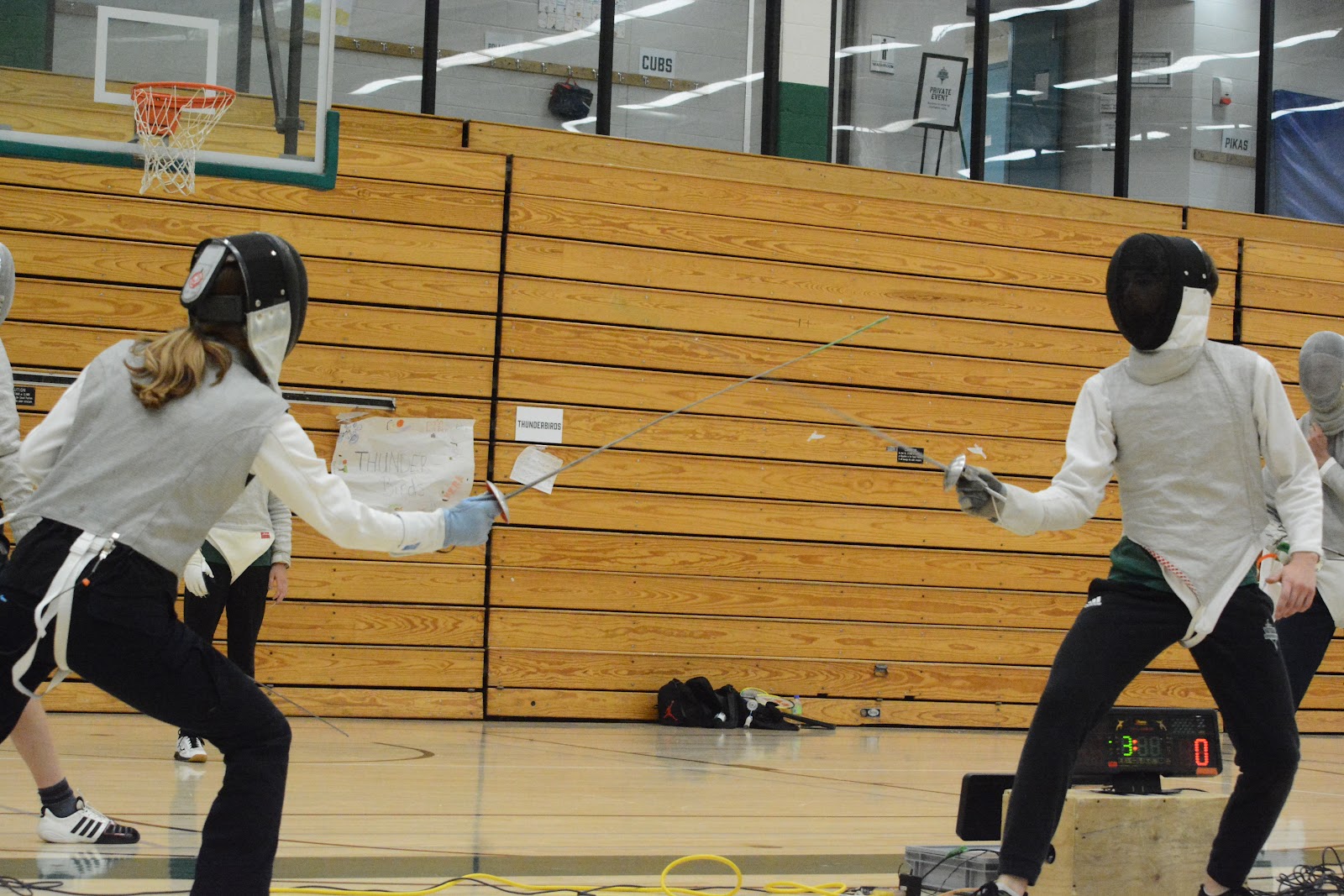
For the first time in its history, Trent Fencing is continuing practices over the summer.
I caught up with them one breezy Wednesday afternoon in Trent’s Athletic Center to chat about their summer experience, their plans for the semester, and what exactly fencing is.
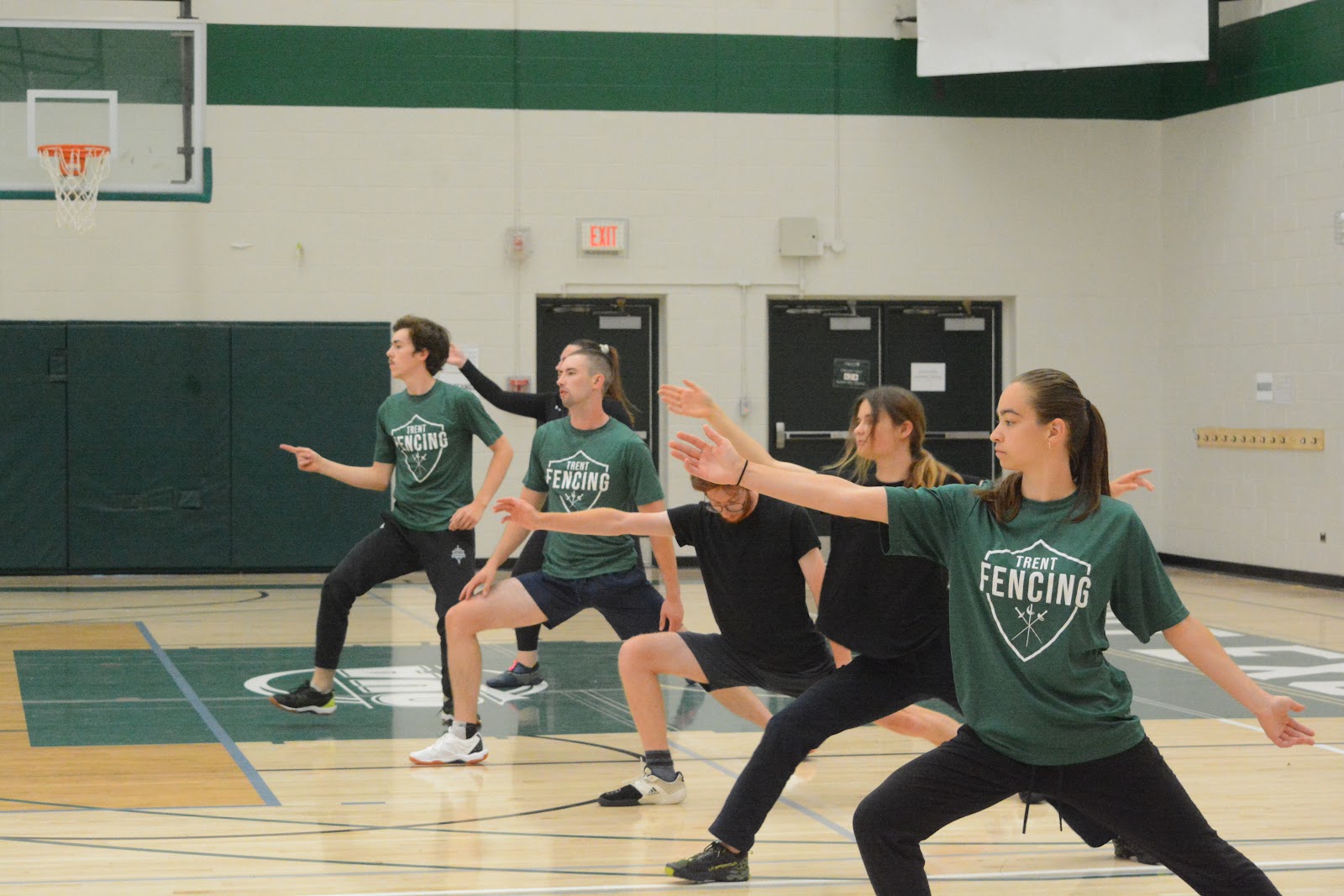
Did you know there’s more than one kind of fencing?
They’ve got foils, épées, and the most dapper, the saber.
“I would say saber is kind of like sprinting, whereas épée is more like long distance," Megan Tapajna, captain of women’s saber said.
“Saber happens very, very fast. That's why we'll sometimes joke about it at competitions; how saber finishes so much more quickly than all of the other blades.”
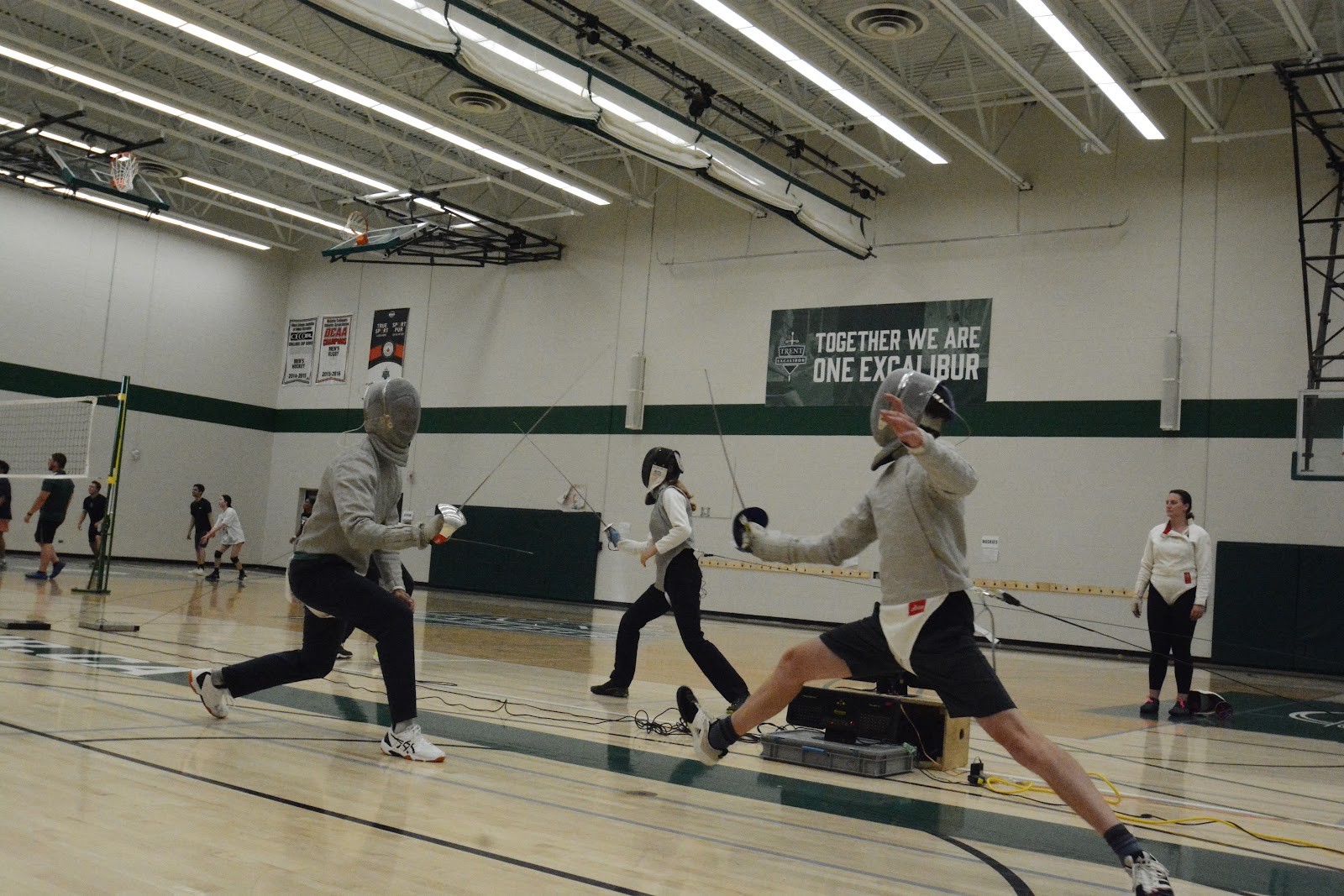
Assistant Coach Evan McDonnell took time out of his day to explain further: “[saber] comes from cavalry saber dueling/fighting. So it's only waist up [to score], including head and arms, because if you hit somebody in the leg on a horse, it doesn't really do anything.”
“The main difference, other than the target area, is that it’s a slashing weapon,” he told me.
“It's just a long piece of steel with a sort of curled end, so that it's not going to impale anyone.”
McDonnell has been with the team for 14 years since he was an undergraduate student. He says the reason he’s been with the team for so long is his “love of fencing and my love of my wife, who is the head coach.”
It’s this love of fencing that seems to drive people to fence all year round—everyone I spoke with seemed far more excited to be there on a Wednesday at 6:30 PM than I would’ve expected. On top of keeping them on their game, for many, it seems that the more casual pace of the summer season is a big factor motivating their participation.
“I would say it's very different,” Tapajna said. “During the school year, we have our regular scheduled practices and then competitions that we're specifically training for. In the summer, it's a little bit less rigid.”
“It's good to keep the team on track and make sure that we understand that we're still working toward a goal, but also balancing it with enjoying our summer,” she said.
Chase Halperd, captain of men’s saber, echoed this sentiment. “It’s actually really nice that we have it this year, because in the past few years, there wasn’t really anywhere for us to practice during the summer. So it was a lot of just being rusty and then having to relearn everything again in the [fall].”
“Because there's not a lot of other fencing stuff running in the summer, it's just a nice, sort of social thing, as well as a bit of exercise… like a nice stress release,” Assistant Coach McDonnell said.
“Even though it's low key, [it’s] still one of those things, like getting the reps in. Practicing at all, will even just kind of maintain, at the very worst,” he told me. “Many other students don't have a chance, just because of where they live or their summer schedule or whatever, to practice over the summers.”
“So instead of having that sort of three, four month, mild decline and then shaking off the rust to get back in,” McDonnell continued. “Everyone here— all the people who do come to the summer practices— are sort of gently maintaining that without (unless they want to) going crazy on the training.”
“It's returning team members who have enough foundation that they can run the whole thing by themselves. All of these practices could run by themselves” he said.
Tapanja described her role as saber captain as having a “responsibility for your other teammates.”
Halperd said that captains “help their team just come together. They help problem solve — get better, basically. [They have] debriefs after tournaments. They're usually more experienced, so they can come and answer questions and stuff like that.”
While at the moment they are a small group, come the school term the rest of the team will be back in action, and they will also be recruiting come September. They will also be present at Clubs and Groups Day at Trent's Student Centre if you want to check them out beforehand. You can find more info on their Instagram @trentfencing.







.png)
The rich text element allows you to create and format headings, paragraphs, blockquotes, images, and video all in one place instead of having to add and format them individually. Just double-click and easily create content.
A rich text element can be used with static or dynamic content. For static content, just drop it into any page and begin editing. For dynamic content, add a rich text field to any collection and then connect a rich text element to that field in the settings panel. Voila!
"Headings, paragraphs, blockquotes, figures, images, and figure captions can all be styled after a class is added to the rich text element using the "When inside of" nested selector system."
The rich text element allows you to create and format headings, paragraphs, blockquotes, images, and video all in one place instead of having to add and format them individually. Just double-click and easily create content.
A rich text element can be used with static or dynamic content. For static content, just drop it into any page and begin editing. For dynamic content, add a rich text field to any collection and then connect a rich text element to that field in the settings panel. Voila!
"Headings, paragraphs, blockquotes, figures, images, and figure captions can all be styled after a class is added to the rich text element using the "When inside of" nested selector system."

.jpg)






.jpg)