.png)



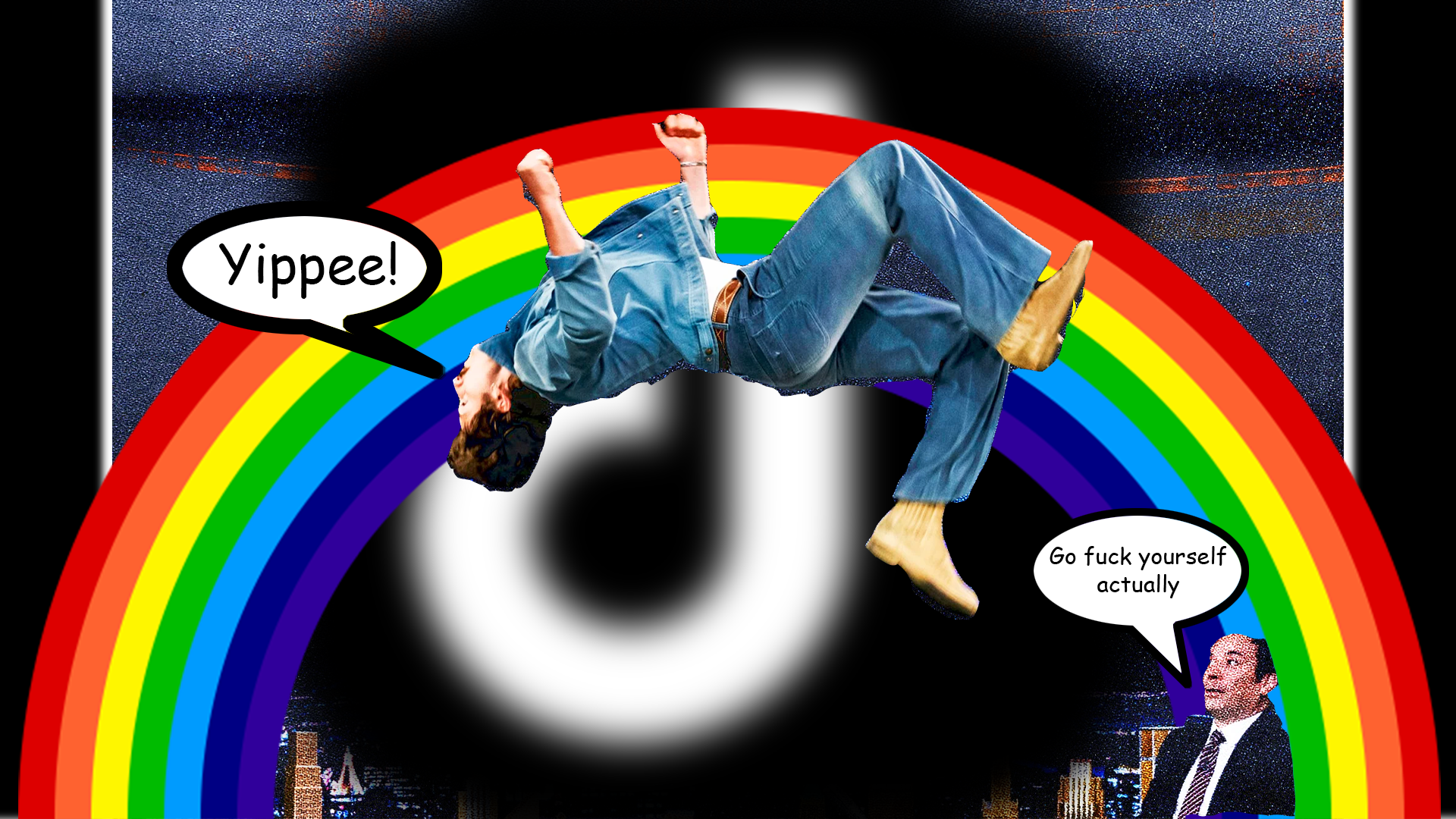
I need to talk about “Moonbeam Ice Cream.”
More broadly, I need to talk about how TikTok has altered the way people perceive, market, and create music, turning it from art to content. A lot of the time, artists will post a short clip of an upcoming song as a teaser, and usually nothing else until the song’s full release, which I have mixed feelings about.
On one hand, artists are likely picking the snippet that best represents their song, similarly to how singles are chosen when artists release albums. You want to showcase what will best represent your art in order to get people excited about its release. I do like that part of it and have found many great songs through this kind of promotion. On the other hand, it makes it far easier to jump onto mass hate trains without taking a moment to really think about what you’re contributing to. This is what happened with “Mystical Magical” by Benson Boone, as well as countless other songs and artists.
In a perfect world, I could’ve gone down to Boone’s show in Toronto later this month to interview people. Alas, deadlines are deadlines, and since Boone decided not to answer the DMs I sent him, I asked everyone I know (who I thought would actually respond) about their thoughts and feelings on both the song and Boone as an artist. I wanted to get a picture of what real, actual people thought, rather than just getting a consensus from what I could find on TikTok.
The consensus was that the song is generally disliked, but many of the people I talked to were like the others I had seen online and had not listened to it in its entirety. Some felt the song was overproduced and disingenuous, while others, with their limited knowledge, assumed the song was meant to be satirical. Everyone I spoke to, even those who did not know much about the song, told me that they had jumped onto the hate train the second it left the station.
Nikita Buenafe, a biology student at Toronto Metropolitan University, said, “Before listening [to the full song], I referred to him like almost a cartoon, and just a name to laugh at – albeit rudely.”
Parker Noble, a journalism student at Centennial (who also gave me very helpful advice on my question-asking), echoed this sentiment, saying that while his opinion on the song did not change once listening to it in full, “[his] first impression was negative… of course it was just that one clip of the chorus, but [he] thought it sounded weird.” It seemed that, both online and in person, Boone’s song wasn’t much of a hit.
What I did not expect to happen with “Mystical Magical” was for people to completely change their minds. As of very recently, I have seen people jump to the opposite side of the discussion, saying that the song might actually be good.
Now, I don’t care if you like Benson Boone or his music. I personally do not enjoy the majority of what I’ve heard from him, but I think it’s great for people to like what they like without feeling the need to hide it. However, the reason people decided that they now suddenly liked the song seems to be a few people, all with high follower counts, posting and praising the song’s outro.
While researching this article, I watched countless videos and read countless comments in support of Boone’s song. One specific video, a shot of the lyrics with various clips of people crying and celebrating in the background, had these comments verbatim: “I take back everything bad I’ve ever said about this song,” “Dare I say song of the summer?” and, my personal least favourite, “I’m tired of pretending this song isn’t good.” The jump from absolute hatred to an apologetic but wholehearted love was very stark, and happened very quickly once people realized that the song was more than one goofy chorus.
I wish I could say I was shocked by this change, and it did catch me off guard slightly due to my personal bias against the song, but this is a consistent pattern on TikTok with songs and even artists: intense, focused hatred for a period of months, then a sudden shift where people decide that they had been a fan the entire time, just secretly. Or, oftentimes, the opposite: love and appreciation becoming utter hatred, seemingly apropos of nothing. People always jump at the chance to let everyone know that they were on the “correct” side of things the whole time.
TikTok’s algorithm is specifically wired to showcase videos that people are responding to. If you have an opinion that people disagree with, you simply will not gain much traction. At the end of the day, engagement is engagement, positive or negative, but not many people go viral for unpopular opinions such as “I dislike Sabrina Carpenter” unless they’re majorly playing it up or saying something that a large portion of people agree with. In Boone’s case, nobody was being extensively attacked for admitting they liked his music before the majority did, but they weren’t highlighted by the algorithm, either.
I believe that because of both the way the TikTok algorithm works, and the way social culture has changed since 2020, there is a huge fear of non-conformity online that has seemed to grow as time has gone on. I have seen the culture of TikTok go from a celebration of individuality and personal freedom to a more confined set of expectations and social rules within the span of a few years, and it has changed the way people respond and react to art.
TikTok as a platform does not encourage critical thought, and despite it being primarily a music-based app, this extends to the music that is promoted and popularized on it. While scrolling, most people don’t take the time to really think about what they’re seeing; everything is short, and everything is content, and everything just blows by for that rush of dopamine that so many crave.
The issue with this, specifically regarding music, is that it turns art into content and nothing more. With the way popular platforms like TikTok have evolved, the promotion and even creation of music has changed. With many recent songs, I have seen instances in which the promoted snippet is incredible, but the rest of the song feels low-effort and uninteresting (i.e. “We Hug Now” by Sydney Rose).
In other instances, people and groups are reduced to being “TikTok musicians”, thus written off and not taken seriously as artists. The rapper Doechii has been on the receiving end of this many times, talking about it in her song “DENIAL IS A RIVER” and experiencing it once again following her release of “Anxiety”. However, if you stray too far from the mainstream, TikTok-approved sound, your art gets pushed to the side, labelled as weird, and/or not spoken about at all, which I saw especially with Ethel Cain’s Perverts. People in real life are going to like what they like, but the influence TikTok has on so many cannot be ignored, especially in an industry where fan engagement is vital to maintain a career.
All things considered, I figured Benson Boone would be fine. At the end of the day, he’s a young, white, charismatic man, who has manufactured himself as a Harry Styles and Brendon Urie-esque musician, and has altered his sound to keep people’s attention and stay on the charts. Despite my bias, his public personality is liked and respected by many people I have spoken to and many people I have seen online.
Other artists who are reduced to content creators haven’t been as lucky, especially women. The culture of music on TikTok does not allow for individuality beyond a strict extent, and it relies on first impressions and mass opinion. Art is devalued via a lack of solid, real opinions. It is treated like a commodified product more than a labour of creativity and love, and tossed aside without a second thought. There are always exceptions, but the cycle can’t be ignored. Art should be art, without needing to conform to mainstream ideals of what music should be, and people should be people, without needing to worry whether their opinion on a subjective art form is “correct” or not.



.png)
The rich text element allows you to create and format headings, paragraphs, blockquotes, images, and video all in one place instead of having to add and format them individually. Just double-click and easily create content.
A rich text element can be used with static or dynamic content. For static content, just drop it into any page and begin editing. For dynamic content, add a rich text field to any collection and then connect a rich text element to that field in the settings panel. Voila!
"Headings, paragraphs, blockquotes, figures, images, and figure captions can all be styled after a class is added to the rich text element using the "When inside of" nested selector system."
The rich text element allows you to create and format headings, paragraphs, blockquotes, images, and video all in one place instead of having to add and format them individually. Just double-click and easily create content.
A rich text element can be used with static or dynamic content. For static content, just drop it into any page and begin editing. For dynamic content, add a rich text field to any collection and then connect a rich text element to that field in the settings panel. Voila!
"Headings, paragraphs, blockquotes, figures, images, and figure captions can all be styled after a class is added to the rich text element using the "When inside of" nested selector system."

.jpg)
.png)

.png)