.png)



.jpg)
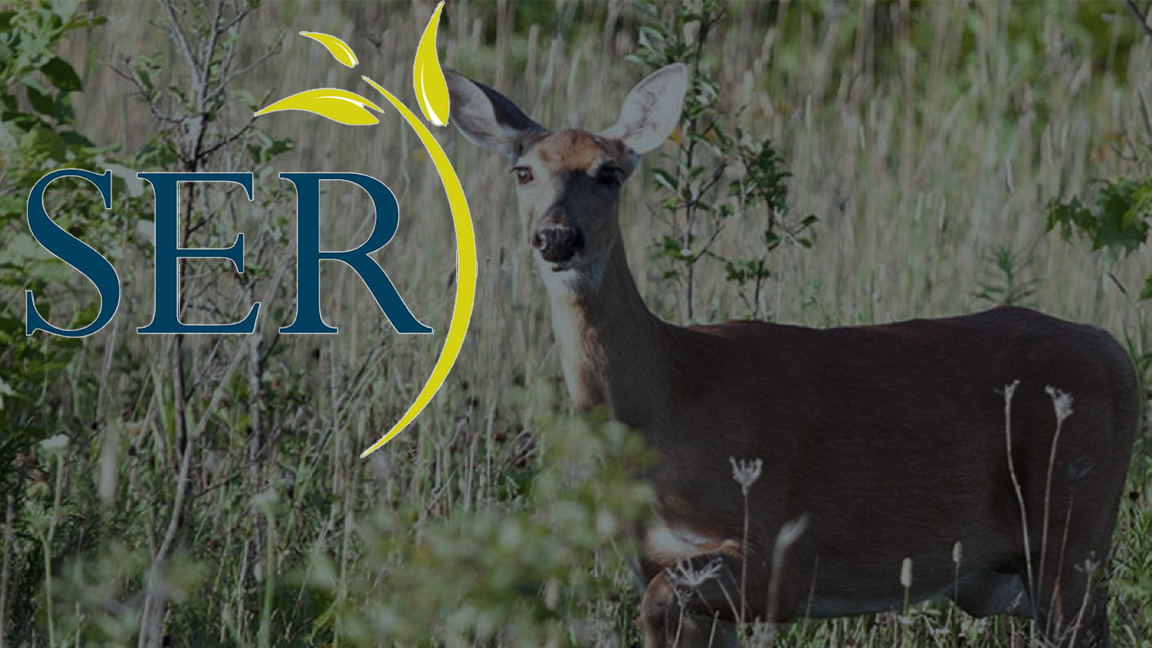
Winter doesn’t arrive in Peterborough all at once.
It eases into sidewalks, shaving minutes off the day, tightening the mud, teaching the river to speak more slowly. Insects disappear first—not gone, exactly, just folded inward, tucked beneath bark and soil as if the land itself has put everything on low-power mode. Photosynthesis tapers off. Productivity collapses. What was once loose and abundant becomes locked away.
The system tightens, and this is when birds begin making decisions. Not emotional or brave ones—accounting decisions.
Winter is not a test of toughness. It’s a test of whether the math still works—whether the energy coming in can still cover the bills going out. If not, eviction is swift.
Some birds look around Peterborough in late fall and recognize the landscape as a place they already know how to live in. Others read the same signals and leave—weeks before winter looks dangerous—because they understand what is coming. And then there are the birds that arrive later, unexpectedly, carrying news from forests far to the north.
If you pay attention, winter tells its story through them.
The Black-capped chickadee (Poecile atricapillus) is usually the first character you notice. It’s hard not to. A bird no heavier than a granola bar, flicking through cedar and spruce as if the cold were a rumour it chose not to believe. But belief has nothing to do with it. Chickadees survive because they have turned winter into a familiar problem—like someone who has lived through enough outages to own a generator, candles, and a suspicious amount of canned beans.
During the day, they eat constantly, converting every usable minute of light into fat. At night, they burn that fuel while lowering their body temperature—facultative hypothermia, the physiological equivalent of turning the thermostat down and putting on three sweaters instead of calling the landlord. Their heart rate slows. Their metabolism tightens. There is no room for inefficiency.
But the real trick happened months earlier.
In autumn, chickadees hide thousands of seeds across the landscape—sunflower (Helianthus annuus), white spruce (Picae glauca), red spruce (Picea rubens), eastern hemlock (Tsuga canadensis), and birch (Betula papyifera, B. alleghaniensis)—each tucked into bark crevices like spare change forgotten in coat pockets. To manage this, the part of their brain responsible for spatial memory—the hippocampus—physically enlarges. Come spring, it shrinks again.
Winter erases the forest visually, but chickadees survive by remembering it.
Their world doesn’t disappear under snow; it simply moves into the mind. Memory becomes infrastructure. The land persists because it is recalled accurately—like navigating a city during a blackout using nothing but muscle memory and vibes.
Nearby, nuthatches (Sitta carolinensis, S. canadensis) move headfirst down tree trunks, unconcerned with gravity or your expectations. Brown Creepers (Certhia americana) spiral upward, skimming dormant arthropods from beneath bark scales. Downy and Hairy Woodpeckers (Dryobates pubescens, D.villosus) drill deep in sapwood, extracting larvae sealed away like vacuum-packed protein bars, designed by evolution’s most efficient nutritionist.
Each bird reads a different layer of the same tree. Ecologists call it niche partitioning—each exploiting different microhabitats on the same trees so no one has to fight at the same lunch counter. Polite. Efficient. Very Canadian.
And then there are the jays.
Blue jays (Cyanocitta cristata) are loud. They are bossy. They are the kind of birds that take over your feeder and dare you to file a complaint. But long before winter arrives, jays are already shaping the future. By caching acorns from oaks (Quercus rubra, Q. alba), kilometers from the parent tree, they perform a service oaks cannot manage alone. Many of those acorns are forgotten. Those forgotten acorns germinate.
Jays survive winter because they plan in the summer. Forests exist because they forgot. They are ecosystem engineers with the energy of someone who absolutely meant to be helpful but got distracted halfway through.
It’s a useful reminder that animals are not background characters. They are collaborators in shaping the land—even if they scream while doing it.
But not all birds choose to stay.
By late summer, warblers and flycatchers are already preparing to leave—not because they are weak, but because they are paying attention. Their bodies are designed for insects: soft, protein-rich, abundant insects. When insects retreat into diapause beneath bark, soil and leaf litter, the entire food web collapses almost overnight, like a restaurant discovering mid-service that the kitchen has closed indefinitely.
There is a moment—precise, unforgiving—when searching for food costs more energy than it provides. At that point, staying is not resilience. It is denial dressed up as optimism.
So birds leave before winter looks serious.
They read shortening day length as a forecast, not a condition. Hormonal changes begin weeks in advance: zugunruhe, migratory restlessness; hyperphagia, intense feeding; rapid fat accumulation; muscles reorganized for endurance flight. Migration is not a panic. It is a pre-emptive evacuation based on excellent data.
Timing matters. Leave too early, and you burn fuel for nothing; leave too late, and you die tired. Migration is not dramatic. It’s spreadsheet-level precision with wings—every gram accounted for, every kilometre justified.
Some species hedge their bets. Yellow-rumped warblers (Setophaga coronata) linger longer than most because they can digest waxy fruits like bayberry. Flexibility buys time. Specialization demands movement. Leaving is not abandonment—it is listening when the land says this deal is no longer good.
Birds arrive.
Pine siskins (Spinus pinus), common redpolls (Acanthis flammea), and evening grosbeaks (Hesperiphona vespertine). They appear suddenly, sometimes in numbers that feel almost unreal, like a pop-up shop you didn’t know you needed. These birds are not following calendars. They are following resource gradients. When cone crops fail in the boreal forest, when birch and alder (Alnus incana) underperform, birds move—not south for the sake of south, but until food density crosses a survivable threshold.
A redpoll in Peterborough is not lost. It is reporting on failure elsewhere.
Waxwings descend on mountain ash (Sorbus americana) and crabapple (Malus spp.) trees like a coordinated smash-and-grab—convert fruit into flight, strip the tree bare, vanish without ceremony. No receipts. No apologies. They are not visitors. They are information, delivered on wings.
Water adds another layer to the story. The Otonabee River, often partially open through winter, becomes a corridor of life. Where water flows, fish gather. Where fish gather, mergansers, eagles, and gulls appear. Ice redraws the map daily. Winter is not uniform—it is patchy, full of loopholes.
Birds exploit everyone.
Eventually, humans enter the system too. Obviously.
A bird feeder looks simple. A tube. A tray. A kindness.
Ecologically, it is anything but.
A feeder is an energy subsidy—a dense, high-calorie, predictable input injected into an already tight system. It can help some birds survive harsh weeks, shift dominance toward seed-eaters, pull birds into urban corridors, and teach predators, like the Cooper’s hawks (Accipiter cooperii), when breakfast is served.
They also increase disease transmission—salmonellosis, avian pox, trichomoniasis—because nothing spreads germs like a crowded buffet. Feeders near windows raise collision risk because birds do not understand glass and never will.
The question isn’t “Should we feed birds?”
It’s “Are we tending a relationship responsibly?”
Because feeding birds is not an act—it’s a relationship.
Relationships require maintenance: cleaning feeders regularly, spacing them out to reduce disease transmission, pausing feeding when illness appears, and knowing when to step back. Winter doesn’t reward excess. It rewards care.
And if you’re ever unsure what that care looks like, you should ask my mama. She’s the person birds seem to trust instinctively. The kind of woman who notices when a chickadee is missing from the morning count, who knows when to pause instead of push. She understands that tending life is not about control. It’s about attention.
Winter respects that kind of care.
By February, the system is stripped to its essentials. Fewer species. Clearer patterns. Winter birding teaches you to read landscapes not by abundance, but by persistence—who remains, who moves, and how honestly they respond to limits.
Some birds stay because winter has become familiar. Some leave because the math stops working, and some arrive carrying news from forests you may never walk.
Winter birds are not inspirational metaphors; they are evidence that survival belongs to those who prepare early, remember accurately, move when necessary, and refuse to romanticize hardship.
Cold clarifies.
Birds show us how to live inside that truth.
They also invite us to pay attention.
If you’re already watching—counting chickadees at the feeder, noticing when the juncos arrive, clocking that sudden flock of redpolls—you’re halfway there. Platforms like eBird turn those everyday observations into real science, helping researchers track winter survival, shifting ranges, and the subtle fingerprints of climate change.
And if you’re ever unsure who you’re looking at, Merlin Bird ID, developed by Cornell Lab of Ornithology, is there to help—no gatekeeping, no expertise required. It’s less “trust your vibes” and more “let’s check politely.”
Citizen science works because knowledge isn’t meant to be hoarded. It’s built the same way winter survives collectively, patiently, over time. Many observers, many winters. One living record of a changing world.
All you have to do is notice—and share what you see.






.png)
The rich text element allows you to create and format headings, paragraphs, blockquotes, images, and video all in one place instead of having to add and format them individually. Just double-click and easily create content.
A rich text element can be used with static or dynamic content. For static content, just drop it into any page and begin editing. For dynamic content, add a rich text field to any collection and then connect a rich text element to that field in the settings panel. Voila!
"Headings, paragraphs, blockquotes, figures, images, and figure captions can all be styled after a class is added to the rich text element using the "When inside of" nested selector system."
The rich text element allows you to create and format headings, paragraphs, blockquotes, images, and video all in one place instead of having to add and format them individually. Just double-click and easily create content.
A rich text element can be used with static or dynamic content. For static content, just drop it into any page and begin editing. For dynamic content, add a rich text field to any collection and then connect a rich text element to that field in the settings panel. Voila!
"Headings, paragraphs, blockquotes, figures, images, and figure captions can all be styled after a class is added to the rich text element using the "When inside of" nested selector system."

.jpg)

.png)