.png)




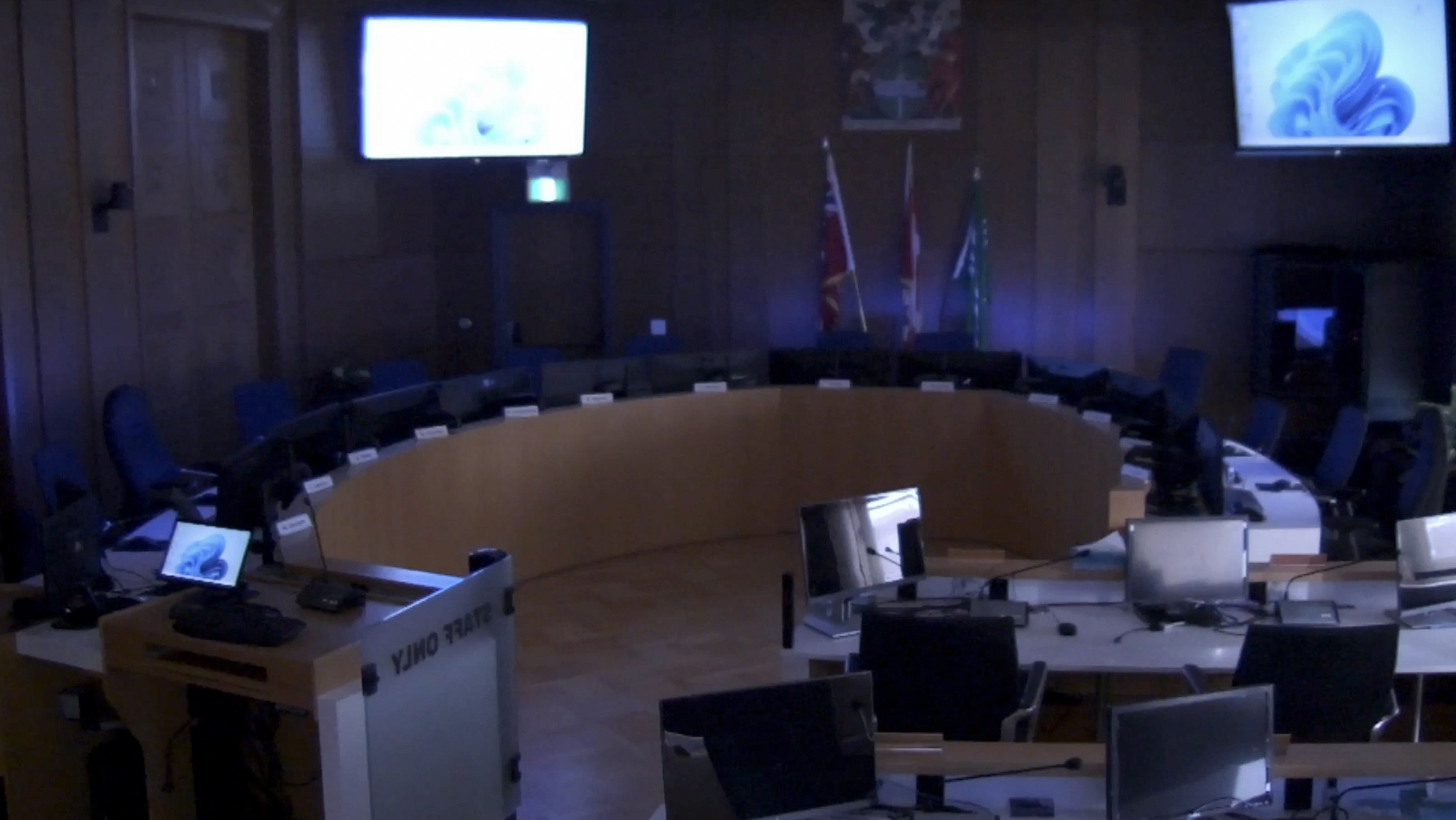
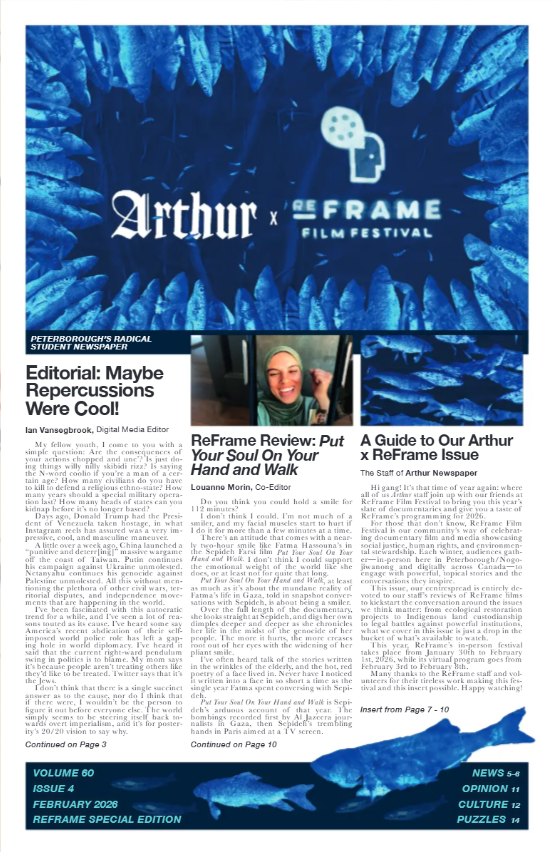
October 25th marked the first Trent Ecological Restoration Conference, a full-day event consisting of seminars, workshops, and networking opportunities for anyone studying or working in restoration in Ontario. The day was preceded by a field trip to the Kawartha Land Trust's Hammer Family Nature Preserve on October 24th, as a form of concrete ecological stewardship.
Speakers included students and professors from Trent University’s School of the Environment, representatives from other universities’ ecology departments, Indigenous knowledge keepers, and employees from conservation authorities such as Quinte Conservation and Nature Conservancy of Canada. Workshop topics included restorative agriculture, aquatic, forest, meadow and urban ecosystem restoration; post-industrial restoration and reclamation; landscape-scale restoration and more. Many presentations concerned students’ undergraduate and master’s theses, but just as many centred youth education initiatives, communications between farmers and ecologists, and research from organizations like the Nottawasaga Valley Conservation Authority.
In an interview with Arthur, co-organizer Sammy Tangir emphasized the importance of incorporating Indigenous and non-academic perspectives into the conference.
“We absolutely cannot separate restoration from working with the first people of this place because caring for the land is something that all of us are entangled in,” Tangir said. “Whether or not we were the ones that signed the treaties, we are subject to them, and we have a responsibility to tend to the land well. I think it’s really good to remember that and have opportunities to connect with people from different perspectives because that’s an obligation we have - we need to do it, and the land is better for it . . . That’s why we invited everyone.”
“There wasn’t a qualification or a need to be a certain way to come to this,” she told Arthur. “There’s lots of people that don’t actively have a job or aren’t academics in this field, and that’s cool too.”
Among the speakers was Ainsley Taggett, Vice President of the Trent branch of the Society for Ecological Restoration (SER) and Master’s student studying under Doctors Eric Sager and Shaun Watmough.
In a morning workshop, she presented her research study titled “What Works Best? An Exploration of Suitable Growth Media for Yukon Biological Soil Crust Propagation.” In an interview with Arthur, Taggett expressed excitement at the opportunity for making connections with others in her field.
“Ecological restoration is relatively a new thing in environmental sciences,” Taggett said. “A big portion of restoration ecology is the community that can be found in it. Both the vegetative community that you get, but also the community that you have within restoration practitioners.”
“Having a conference of like-minded people all join in one area is a better development in this industry of restoration . . . Restoration ecology is often named ‘the science of hope’ . . . and I think that you can feel that [today].”
Keira McMannis, president of the University of Waterloo's SER chapter and Masters’ student, echoed this sentiment.
“Restoration is such an inherently collaborative practice. It can’t be done well alone. It requires collaborations across disciplines and groups of people, and is proven to be most successful with different worldviews and perspectives, so having a conference . . . for people to meet each other and learn from each other is super important in building those relationships that pave the way for more restoration down the line,” McMannis told Arthur.
“It also gets more people interested and involved - we have a bunch of undergrads here today - so [there are] opportunities for them to learn and see what’s out there in the restoration world.”
In addition to workshops and seminars, there were a variety of organizations whose goals aligned with the conferences’ tabling in the Enwayaang atrium. Among them was Turtle Riot Studios, a grassroots game design company with a focus on connecting users to their local environments. Arthur spoke with founder and CEO Maria Cotes about the importance of teaching young people about nature conservation.
“Having kids made me really think about what [we are] doing for our kids and what kind of impact we are leaving for the next generations,” she said. “We are doing this for them, so that they can live in a world that hasn’t been destroyed . . . [children] cannot be left to be passive and accept the status quo. They have the power to take action. That's what this game is about—empowering children to learn about endangered ecosystems, about native plants, [and] inspiring them to take action.”
Another group tabling was Minnow Magazine, which cofounder Alex Sawatzky described as being “about the misunderstood and underloved species that we have here in Ontario and in the Great Lakes region.” Sawatzky expressed excitement for the conference for both personal and professional reasons.
“I just wanted to learn as much as possible," Sawatzky explained. “I’m new to ecology, so I came wanting to absorb as much information as possible, and being open to not knowing everything . . . I was also looking for community, which was huge here - so many people that we know of, and have met either through our magazine or through working or volunteering.”
Cofounder Tasha Sawatzky added, “The magazine draws in the kind of people that would attend the conference, so it was a good trade there. I’m super interested in ecological restoration, but my background is in herpetology, so I’m exploring a new world, learning how I can integrate both [herpetology and restoration] together . . . I was excited to learn new stuff.”
The conference was organized by a committee consisting of Sarah Kotsopoulos, Jess Livingstone, Sammy Tangir, Nick Weissflog, Keira McManus, Tom Whillans, and Calum Palmer. The Trent and University of Waterloo branches of the Society for Ecological Restoration provided logistical and promotional support, while funding was provided by the Symons Trust fund, Cambium Inc. and the Invasive Species Centre.
The conference’s first plenary speaker was Mary E. Gartshore, who spoke about seed-based ecological restoration. She highlighted the extensive work and reward involved in sowing and collecting seed by hand. Gartshore listed numerous reasons for seed-based restoration, including the increase in plant and animal diversity, the creation of new habitats for Species at Risk, increased carbon sequestration and the creation of “a living seed bank of native species”.
Throughout the day, breaks were provided to encourage networking between organizations and individuals. Among the organizations was Sustainable Roots, an ecological restoration company based in the GTA with a focus on native treeplanting and invasive species management. Arthur spoke with cofounder Reid Williamson about the importance of a restoration-specific conference.
“I think this area of the world of environmental studies and work is really important, especially right now in the world. As development is being pushed at an increasing rate in the province, we need to make sure that the spaces supporting us are supported by us as well and that we’re not just forgetting about these things in the name of progress,” Williamson said.
“There’s so many little niche areas of this - all of the different workshops today are so specific and it’s so important to not leave those really important things behind in the name of these broader and more vague ideas around the environment,” she continued. “We need to get down to the nitty-gritty of, [for example,] these specific seeds from this specific place . . . You can’t do that in a broader space.”
Williamson wasn’t exaggerating about the specificity of the conference. Presentation topics ranged from “Impact of non-industrial wood ash application on sugar maple regeneration” (presented by Victor Bewsh, a Trent University Masters student), to “A Model for Socio-Ecological Restoration in Rural Communities” (Cara Steele, Abbey Gardens), and “Non-native Earthworms as Granivores and Seed Dispersers with Implications for Restoration” (Mike McTavish, Rare Charitable Research Reserve).
Autumn Watkinson, an Environmental Science professor at Trent, viewed this specificity as one of the conference’s most important qualities.
“[It allows us to] get people together who are working on similar problems in different contexts and have this cross-pollination of different solutions and ideas. [It lets us] move projects and solutions forward a lot faster and more efficiently when we work together than if we were to just rely on a new paper [coming out]. As most of us [in academia] know, publishing a paper takes a long time, and then it might not happen, and the results often aren’t directly translated to being applied,” Watkinson remarked.
“When you gather like this, you have talks that are geared towards people doing the work [of restoration]. That’s something you can’t get in broader conferences. You don’t get the depth the same way, or the same amount of people working on the same problems.”
In addition to the wealth of information being shared, there was a seed exchange, where participants were encouraged to contribute and collect native seeds for their personal gardens.
Sammy Tangir spoke to Arthur about the importance of tactical restoration being part of the conference.
“It felt so nice to be on the field trip and be connecting with all sorts of folks outside, doing restoration work, getting to meet people in this practical way, where we’re working on something together,” she explained. “I feel more comfortable in a setting where I’m outside. It’s nice to cater to different people in our different ways. I tend to think that people in the restoration and outdoorsy world tend to be more comfortable and be more themselves out there.”
Paul LaPorte, owner of Ephemeral Ark Nursery and Chair of the Ontario Native Plantgrowers Association, also spoke of the importance of practical restoration efforts.
“[Planting a native plant] is one of the few things that you can actually implement in your life as a human being that will have immediate positive results. [It means you’re] instantly seeing that you’ve done something not only for yourself, but for the ecology around you and the future,” LaPorte told Arthur.
“I do feel that people can get overwhelmed by the negativity [of climate change], and it’s nice to have some positive action with clear results . . . The most cynical person who denies climate change [still has] that connection to plants, no matter who they are. I think that when you can demonstrate that to someone . . . there’s a change in their perception of the world.”
Shortly before the conference’s end, co-organizer Tom Whillans announced that the Restoration Ecology program, previously a joint diploma/degree program with Fleming College, would return to Trent University as a four-year degree program in fall 2026. The program would give students the opportunity to earn an accreditation from the International Society for Ecological Restoration in addition to their degree.
With the re-introduction of this program, the number of students interested in the Ecological Restoration Conference will likely increase. While no concrete plans have been shared, many members of SER-TU and conference participants are confident that it will become an annual event. Participation certainly wouldn’t be an issue.
“There were so many talks where people had so many questions that they wanted to follow-up on . . . I don’t know if the conference should be held over a couple more days, so that you have either longer talks or a longer period for questions - I’m not sure what the logistics of that would look like, but maybe it would [involve] having it over a couple more days so that you could have more speakers come in or more questions answered,” Taggett speculated.
The closing plenary speaker was Stephen Murphy, who gave a passionate presentation titled “Sorting Out the Tempest of Restoration Ecology”. He identified current challenges in the restoration field, such as working with novel ecosystems, and the “misaligned policies and politics” of federal and provincial governments. “The core issue is a pervasive cynicism and lack of political reward for good policies or even political incentives beyond election cycles,” he said.
Murphy also pointed out the ways politicians repeatedly lower their commitments to environmental targets, and urged the audience as voters to no longer tolerate this.
“Restoration is political,” Murphy said. “[It turns] intended actions into concertive collective actions.”
Murphy also spoke of powerful tools for restoration he had learned through 50 years of working in the field, such as understanding evolutionary mechanisms, community and landscape ecologists working in tandem, and methods for measuring outcomes of restoration efforts. Crucially, he highlighted the ways restoration is less predictable than other scientific disciplines.
“There are good principles, but every restoration is its own thing,” Murphy explained. “There is no ‘theory of everything’.”
However, according to Murphy, just because restoration is unpredictable doesn’t mean there shouldn’t be a shared framework among ecologists.
“[We must] codify knowledge into methods that anyone can use to make their restoration effective,” he said. “Restoration ecologists must be involved to avoid repeating mistakes. We waste money and effort failing to measure outcomes and trying to devise new measures when we already have good methods. Replication studies and a common database would help, but few [companies] want to fund anything except initial restoration efforts.”
One of the key outcome measurements Murphy described was an ecosystem response ratio, using what he called “Restoration Recovery Completeness”.
“Ecosystems rarely recover completely, and the last stages are the toughest slog,” he said. “[This] quantifies why preventative conservation is much greater than ecological restoration.”
As environmental policy is dismantled by legislation such as Bill 5, "Protect Ontario By Unleashing Our Economy Act", the need for restoration practitioners to collaborate becomes increasingly urgent. However, Reid Williamson, along with many other conference attendees, is optimistic about the future of nature conservation.
“I hope that [Bill 5] has kind of ignited a fire in us at an individual level because we’re no longer being supported by these larger systems,” Williamson told Arthur. “I think we’re kind of seeing that in the lack of funding that’s going into these sort of things, the lack of consultation that’s going into a lot of these projects, so it’s important for us to at the individual level still push for doing things in a way that is healthy for the land . . . we still need to hold these larger systems accountable, and we can’t do that just by becoming complacent.”






.png)
The rich text element allows you to create and format headings, paragraphs, blockquotes, images, and video all in one place instead of having to add and format them individually. Just double-click and easily create content.
A rich text element can be used with static or dynamic content. For static content, just drop it into any page and begin editing. For dynamic content, add a rich text field to any collection and then connect a rich text element to that field in the settings panel. Voila!
"Headings, paragraphs, blockquotes, figures, images, and figure captions can all be styled after a class is added to the rich text element using the "When inside of" nested selector system."
The rich text element allows you to create and format headings, paragraphs, blockquotes, images, and video all in one place instead of having to add and format them individually. Just double-click and easily create content.
A rich text element can be used with static or dynamic content. For static content, just drop it into any page and begin editing. For dynamic content, add a rich text field to any collection and then connect a rich text element to that field in the settings panel. Voila!
"Headings, paragraphs, blockquotes, figures, images, and figure captions can all be styled after a class is added to the rich text element using the "When inside of" nested selector system."

.jpg)



.jpg)
.png)
.jpg)