.png)

.jpg)

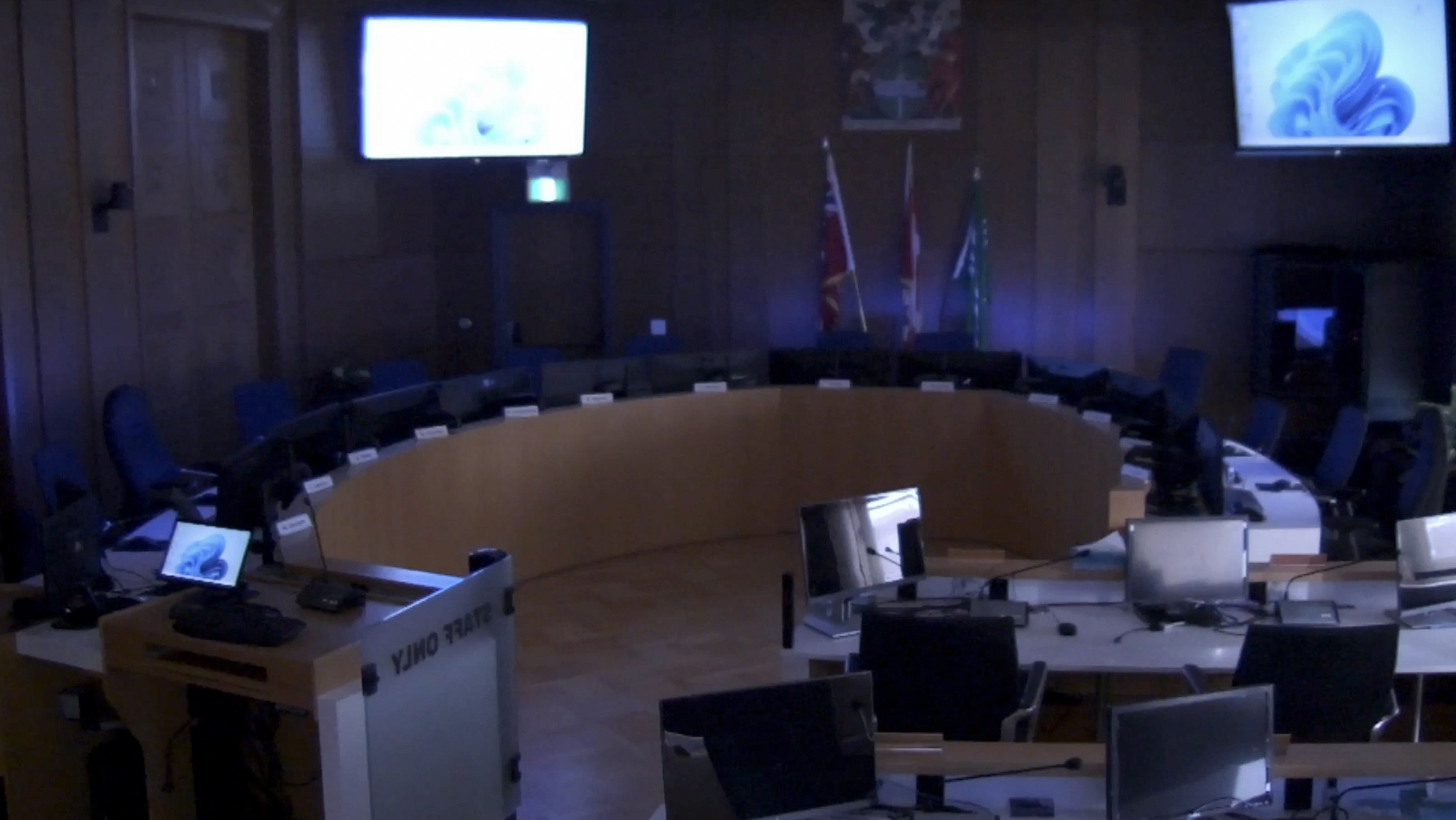
Members of Peterborough City Council will no longer have access to cell phones or other personal electronic devices during council meetings after passing changes to its procedure by-law—the regulations that govern how its meetings are conducted—on February 2nd.
This change was ratified alongside amendments to the amount of delegations per agenda item, with recommendations from its previous general committee meeting to increase the number of questions asked by a member to a delegate and changes to the City’s land acknowledgement.
The initial proposed by-law saw a maximum of 10 delegations per meeting, an unprecedented measure which drew the ire of delegates speaking to the draft by-law, including former mayor Diane Therrien-Hale, who drafted previous changes to how delegations are presented during her term of council.
“I fully understand the mandate of council to review the by-law each term and update as needed,” Therrien-Hale told council.
Therrien-Hale conceded that while some of the amendments are valid and necessary changes, others—like the delegations cap and the controversial ban on “electronic devices”–seem to be at odds with the City’s mandate to make decisions in a public, accessible fashion. Referring back to public criticism levelled against the City and its council that decisions made lack transparency and “forward-thinking decision-making.”
“Passing the by-law with this ban will only serve to further the city and this council's reputation as being stuck in the 20th century, unable and or unwilling to adapt to the current technological reality of how the world works in 2026,” Therrien-Hale said.
Therrien-Hale also spoke to how the ban on electronic devices could further “alienate” young people from the municipal political process, highlighting that this change in how cell phones and personal devices are used in council chambers would be implemented right before the nomination period for the October municipal election and is “highly sus.”
“If you personally don't want to use or learn to use a cell phone, that's fine, but do not police the rest of council and the incoming council with such unnecessary and regressive measures.”
Therrien-Hale then cited how she felt the delegation cap was “deeply problematic” due to the fluctuating nature of council matters during a regular cycle.
“There are often cycles of council where there are multiple highly contentious issues on the agenda, and restricting the public's ability to delegate on those issues is not helpful in building trust and confidence between the public and our elected officials, which at all levels of government seems to be at an all-time low,” she said.
She then suggested a compromise: that the number of delegations be changed back to a per-item basis with a reduction from 10 to “between 3-5,” a measure other municipalities have done, and “is quite in line with how other municipalities in Eastern Ontario handled this issue.”
When asked about the process to change how delegations worked when she was mayor, Therrien-Hale’s iteration of council had to deal with the challenge of unlimited delegations registered or not, which was “wild and unheard of,” according to other municipalities she heard from during her time as chair of the Eastern Ontario Mayor’s Caucus, yet still forewarned of further restrictions due to the nature of council cycles and subject matter.
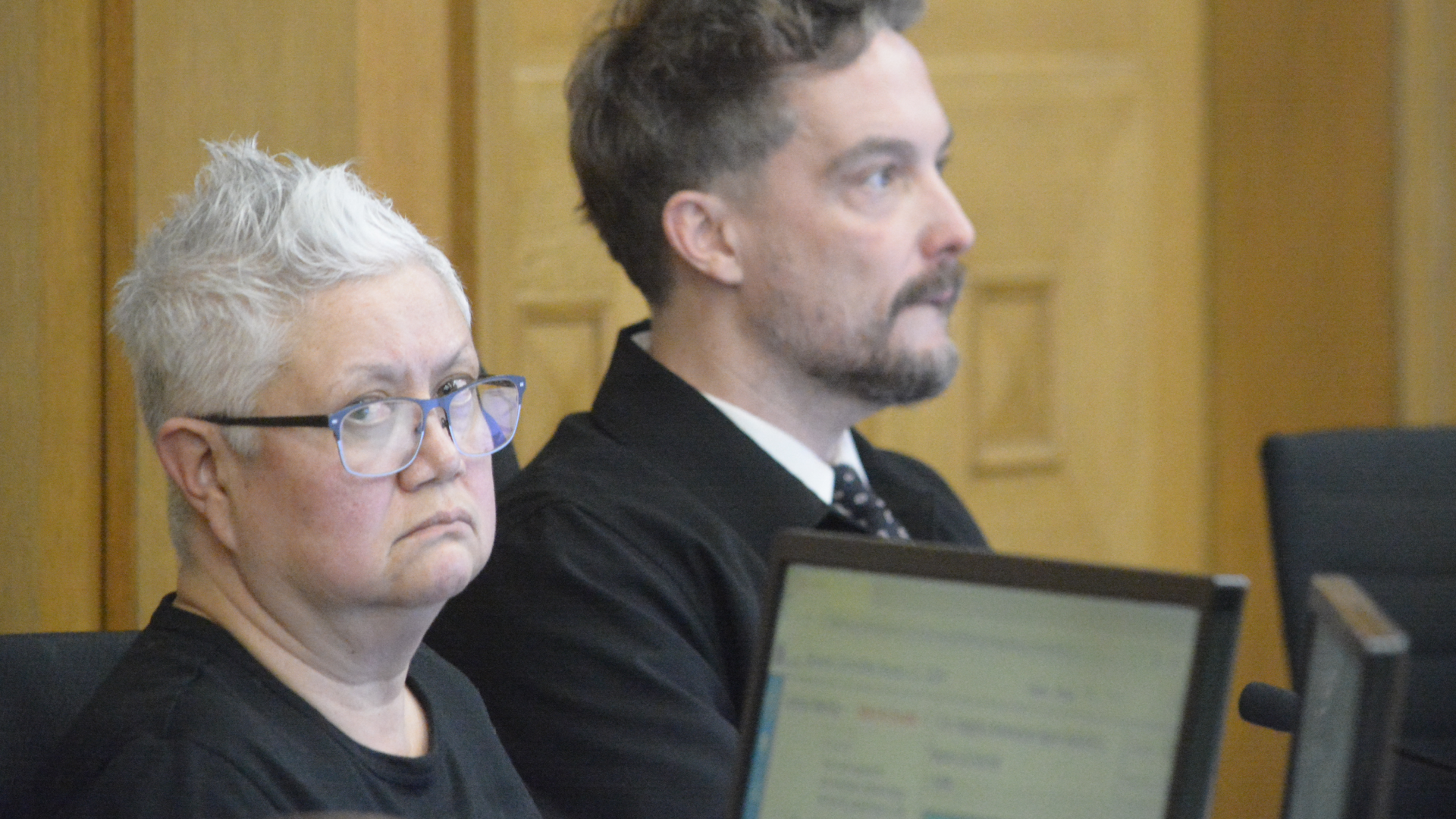
In respect to the electronic device use ban, Town Ward councillor Alex Bierk—a vocal opponent of the change—asked Therrien-Hale about her feelings based on her experience on council.
“Is it absurd to you, like it is to me, that these devices,” Bierk said, gesturing to the computer in front of him, “are electronic devices that have all of the same ways in which we can communicate to each other and the public embedded in them?”
“They have access to the internet. They have access to any app that I have on my phone. This computer is only personally accessible by me via password. Is it not kind of illogical to say that I can't have a phone in my pocket, but I'm allowed to, maybe or maybe not, communicate through this device that we rely on?”
“I feel like it's sort of an unnecessary overreach,” Therrien-Hale replied. “Again, it’s something that just seems to be … taking up time and energy when there's so many other more pressing issues in the community.”
Therrien-Hale was not the only delegate condemning the proposed move to cap delegations: resident Rob Hailman did not mince words when expressing how this slew of changes “goes much too far.”
“I've heard many people say publicly and privately throughout this term of council that it seems like decisions are made behind closed doors, that by the time reports come to council and to these meetings, votes are already decided, and that delegations and debate of council itself is little more than pageantry,” Hailman said.
“I'm not convinced of that, but the changes of this by-law do point to a future [where] that certainly could be the case if it is not already.”
Hailman also reminded council that public comment and debate by elected officials is not just a part of democracy, but is “democracy itself.”
“There is a tension between efficiency and the work of governance, ensuring that voices are heard and that hard decisions are given consideration, and debate—on the record and in public—is time consuming,” he said. “It can be painstaking. It can be profoundly unexcited. It is also the work you are elected to do. If efficiency means doing that work less, then we should welcome and celebrate our inefficiency together.”
Hailman was keen to point to a “simple solution” to meeting inefficiency that didn’t require passage of a by-law.
“There's an election this year, and you're welcome to end your public service. Then if that is too long to wait, there's a door right there, and you're welcome to walk through it.”
As debate began on the procedural changes, Northcrest Ward councillor Dave Haacke immediately moved an amendment to adopt Therrien-Hale’s suggestion of reducing the maximum delegations per agenda item to four, finding the proposed cap "a bit too restrictive.”
“I understand streamlining things. I think most of us do, but on different items, I think it is very important that the public does have their say,” Haacke told the horseshoe.
Coun. Bierk agreed, pointing out how Haacke’s amendment proves that council can incorporate public input into decision-making.
“We're presented with some changes, and we're able to make those changes. And look what happened tonight,” Bierk said. “We're actually adopting a change that was presented to us by one of the delegates that came to speak to this. So that's a beautiful thing.”
“It shows that the process does work, and it feels to me like a good compromise,it doesn't freeze anyone out from a specific item.”
Despite the good will around this particular amendment, discussion circled back to the more contentious aspect of the draft by-law: the ban on using personal electronic devices during meetings. The bylaw now prohibits any outside communication “...except through and pursuant to any direction by the Chair; and … not be in possession of any electronic device that could facilitate a communication that does not comply with” communicating through a meeting chair.
Speaking to this section, Councillor Bierk moved an amendment to change the by-law to deter device use rather than outright prohibiting members from having a personal electronic device during meetings. Bierk later suggested that this change in member conduct was arguably more suitable a change to the Council Code of Conduct.
“It gives me the option, as a grown man, to understand the rule, and so I am changing the wording which would allow us… to have our personal cell phones on us, but it will very clearly and straightforwardly stipulate that we are not to communicate on that device to facilitate a communication that does not comply with [the section pertaining to member conduct],” Bierk said.
Bierk’s wardmate Joy Lachica sought to move an additional amendment to Bierk’s, adding language to the amendment to enshrine exceptions to device use on the basis of family status and disability, arising from concerns she had with the by-law and a perceived infringement to the Ontario Human Rights Code.
“There are people that want to engage in perhaps a campaign to run for council in upcoming years, who may have children, who may have a very ill or close-to-death parent or loved one … and it is a family status issue not to be able to have two-way communication for emergency purposes,” Lachica said. “There are single parents with infants who should not be excluded from participating in municipal government because they are not allowed to have a cell phone on their body.”
City solicitor David Potts clarified more about the process behind the proposed changes and how shifting legislation behind closed session meetings drove an informal consultation from the Ontario Ombudsman’s Office.
“It was a discussion about the risk of the perception [of changes], which is as important as reality… [T]he procedure by-law on how council conducts its meetings is not about its relationship with staff. It's about council's relationship with the citizens that it serves,” Potts told council.
“The overriding policy objective in the drafting of the by-law [is] that the citizens that this council serves should be able to believe their eyes and their ears when they watch decisions being made.”
Some councillors in the by-law’s working group, like Otonabee Ward councillor Lesley Parnell, doubled down on the criticisms around the scope of the changes and how the work behind them—a result of over two years of review starting in February 2024.
“We're not on an island in the middle of nowhere, and we do have to try and remember that one of the main focuses was to make the procedural by-law easier for everybody,” Parnell told council. “We make our meetings more transparent for everybody in the public to see what is being said and what questions are being asked, and the answers to all of that, and not through any type of devices.”
After a lengthy debate on the amendment to Bierk’s amendment, that amendment was successful, but did not carry in the end, as Bierk’s initial amendment was lost 5-6.
Further discussion of the by-law then reoriented back to disagreement with the lack of involvement from other councillors, especially from Ashburnham Ward councillor Keith Riel.
“These changes restrict the public's ability to engage with their elected representatives and limit the opportunity for residents to be heard on matters that directly affect their lives,” Riel told council. “Public participation is not an inconvenience to be managed. It is the cornerstone of democracy and local government. Council chambers should be a place where residents feel welcome, respected and encouraged to participate.”
Riel condemned the “cherrypicking” behind the by-law instead of fulsome consultation despite low public engagement with municipal process.
“If we would have … had open dialogue on how the procedural by-laws are, how we conduct our business on behalf of the public here in our workplace, that we wouldn't be going through this, we would have some procedural by-laws that account for everybody and make this work.”
The motion as amended—with the reduction to the amount of delegations per agenda item, the increase to the number of questions asked by a member to a delegate and changes to the City’s land acknowledgement—carried 8-3, with councillors Bierk, Lachica, and Riel voting against.



.jpg)


.png)
The rich text element allows you to create and format headings, paragraphs, blockquotes, images, and video all in one place instead of having to add and format them individually. Just double-click and easily create content.
A rich text element can be used with static or dynamic content. For static content, just drop it into any page and begin editing. For dynamic content, add a rich text field to any collection and then connect a rich text element to that field in the settings panel. Voila!
"Headings, paragraphs, blockquotes, figures, images, and figure captions can all be styled after a class is added to the rich text element using the "When inside of" nested selector system."
The rich text element allows you to create and format headings, paragraphs, blockquotes, images, and video all in one place instead of having to add and format them individually. Just double-click and easily create content.
A rich text element can be used with static or dynamic content. For static content, just drop it into any page and begin editing. For dynamic content, add a rich text field to any collection and then connect a rich text element to that field in the settings panel. Voila!
"Headings, paragraphs, blockquotes, figures, images, and figure captions can all be styled after a class is added to the rich text element using the "When inside of" nested selector system."

.jpg)