.png)




This review contains sensitive topics regarding anti-transgender policy within the United States and features references to graphic imagery. This is to best convey the film’s goal to Arthur readers: to illustrate an environment of escalating legal and social violence against transgender people living in the US. Reader discretion is advised.
Almost a month after the presidential re-election of Donald Trump, the United States Supreme Court heard the oral arguments of United States v. Skrmetti, a case where the US Department of Justice under the Biden administration sought to injunct the state of Tennessee over its controversial Senate Bill 1 (SB1), which prohibits all minors in the state from seeking gender-affirming care, on the basis that it violates the equal protection clause in the US Constitution’s Fourteenth Amendment.
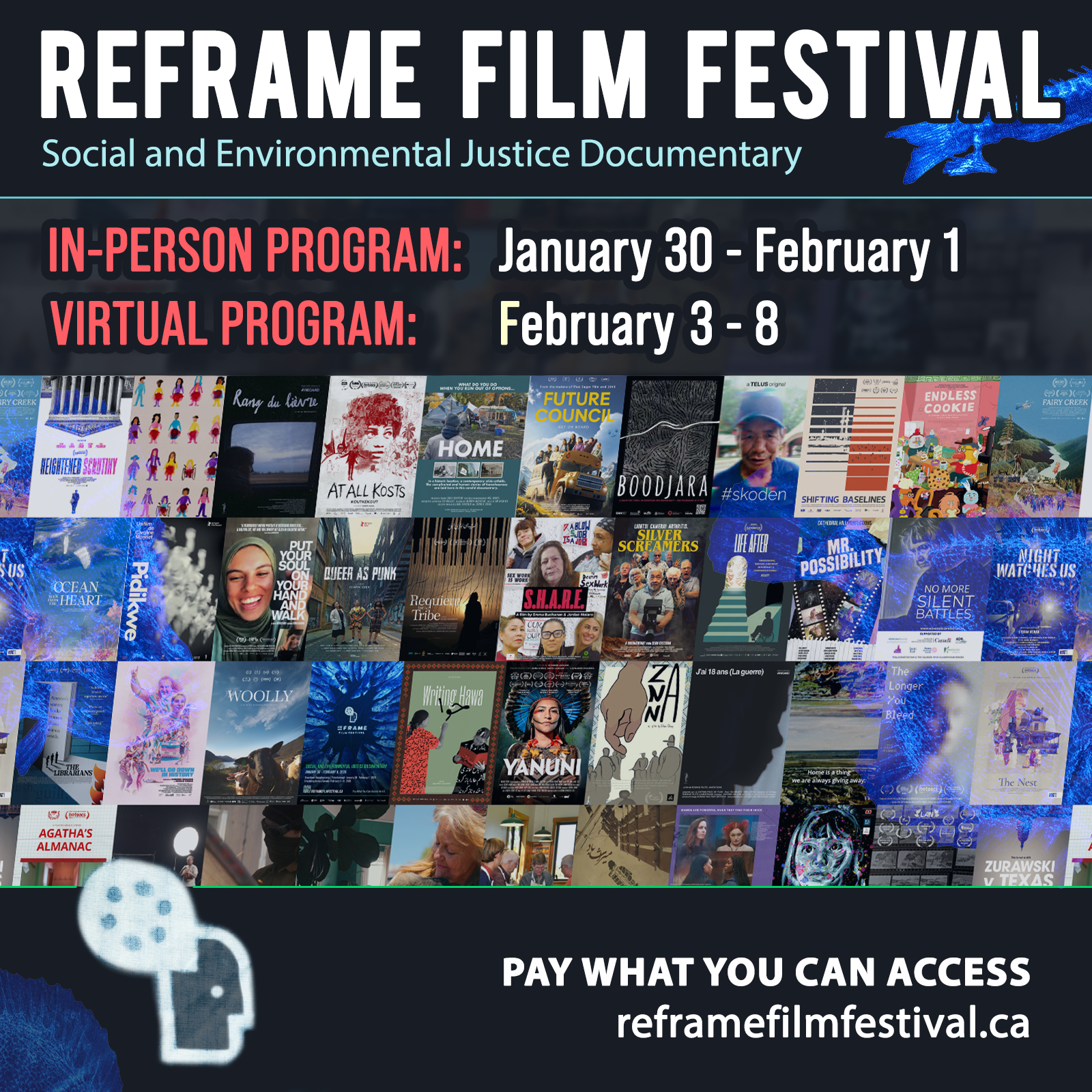
Heightened Scrutiny is a feature-length documentary film by Disclosure director Sam Feder following ACLU attorney Chase Strangio in the months prior to his appearance before the Supreme Court. There, Strangio would argue that Tennessee’s SB1 comprises a form of sex-based discrimination against transgender youth, as the law allows minors to seek medical intervention to affirm sex assigned at birth, but not to treat or mitigate the very serious effects of gender dysphoria.
The legal basis behind SB1 is that gender-affirming care for youth, like the prescription of puberty blockers and hormones, is “experimental” and detrimental to “parental rights.” In June 2025, the US Supreme Court elected to uphold SB1 under the majority assertion that the ban is based on age and medical reason for treatment, rather than on sex.
This film follows Strangio’s preparations for his Supreme Court appearance, especially monumental as the first transgender attorney to appear before the Supreme Court, but also explores the hostile political environment that bills like SB1 and a slew of other anti-trans legislation are borne from.
Heightened Scrutiny is incredibly effective in its illustration of the dominant political and cultural attitude towards transgender people within the US: one based on widespread misunderstanding fueled by a media environment full of skepticism, misinformation, and even open calls of eradication by right-wing politicians. It gets to the near-centre of the issue through its focus on the legislative attacks on trans life and the media which enables it.
“There is a direct link to how our care is discussed in the media, how the laws are passed, how they’re defended in court, and how they’re upheld in court,” Strangio attests. “I’ve never quoted a newspaper article for some sort of evidentiary proposition about medicine or science.”
Strangio is joined by a cast of transgender journalists, like Defector staffer Sabrina Imbler and Semafor editor Gina Chua, to give testimonial to the hostile environment they operate within as professional, public-facing figures.
A startling point in the documentary is when Imbler, a previous contributor to the New York Times, describes the difference in fact-checking between two opinion pieces published in the Times.
Imbler recalls how their guest essay about a deep-sea blue blob was rigorously fact-checked, a process they were “honoured” to be a part of, while entries penned by former NYT columnist Pamela Paul use a multitude of erroneous sources, namely of a retracted journal article about “rapid onset gender dysphoria”—a widely debunked hypothesis that frames gender dysphoria as an internet-based social contagion.
The publication of intellectually dishonest articles has created a pernicious narrative that frames trans people as a threat to others, namely children, centres stories of detransition, and presents transitioning as undesirable.
One especially jarring montage of major news sources features newscasters discussing transition as “mutilation” or “castration;” alluding to “vulnerable children” being susceptible to the “social contagion” of transness; “trans activists” who speak from experience or science deemed “mentally unstable” or “delusional.”
Experts claim this dominant coverage obsfucates the harsh reality of trans life in the United States: a life full of societal instability and disproportionate violence inflicted through social and legal means.
Strangio, however, uses the media to push awareness around the Skrmetti case and its implications for transgender Americans, regardless of age, as the decision sets a legal precedent for a slew of other anti-trans bills like it and enshrines a form of discrimination with the potential to be used against access to gender-affirming care for transgender adults.
Heightened Scrutiny gives voice to people affected by a political landscape dominated by fear, hatred, and violence. The hope and resiliency of transgender Americans, especially transgender children, is to be lauded in such bleak, oppressive times, and the endurance of such hope shines through this documentary’s sobering tone.




.png)
The rich text element allows you to create and format headings, paragraphs, blockquotes, images, and video all in one place instead of having to add and format them individually. Just double-click and easily create content.
A rich text element can be used with static or dynamic content. For static content, just drop it into any page and begin editing. For dynamic content, add a rich text field to any collection and then connect a rich text element to that field in the settings panel. Voila!
"Headings, paragraphs, blockquotes, figures, images, and figure captions can all be styled after a class is added to the rich text element using the "When inside of" nested selector system."
The rich text element allows you to create and format headings, paragraphs, blockquotes, images, and video all in one place instead of having to add and format them individually. Just double-click and easily create content.
A rich text element can be used with static or dynamic content. For static content, just drop it into any page and begin editing. For dynamic content, add a rich text field to any collection and then connect a rich text element to that field in the settings panel. Voila!
"Headings, paragraphs, blockquotes, figures, images, and figure captions can all be styled after a class is added to the rich text element using the "When inside of" nested selector system."

.jpg)
.jpg)
.jpg)