




.png)



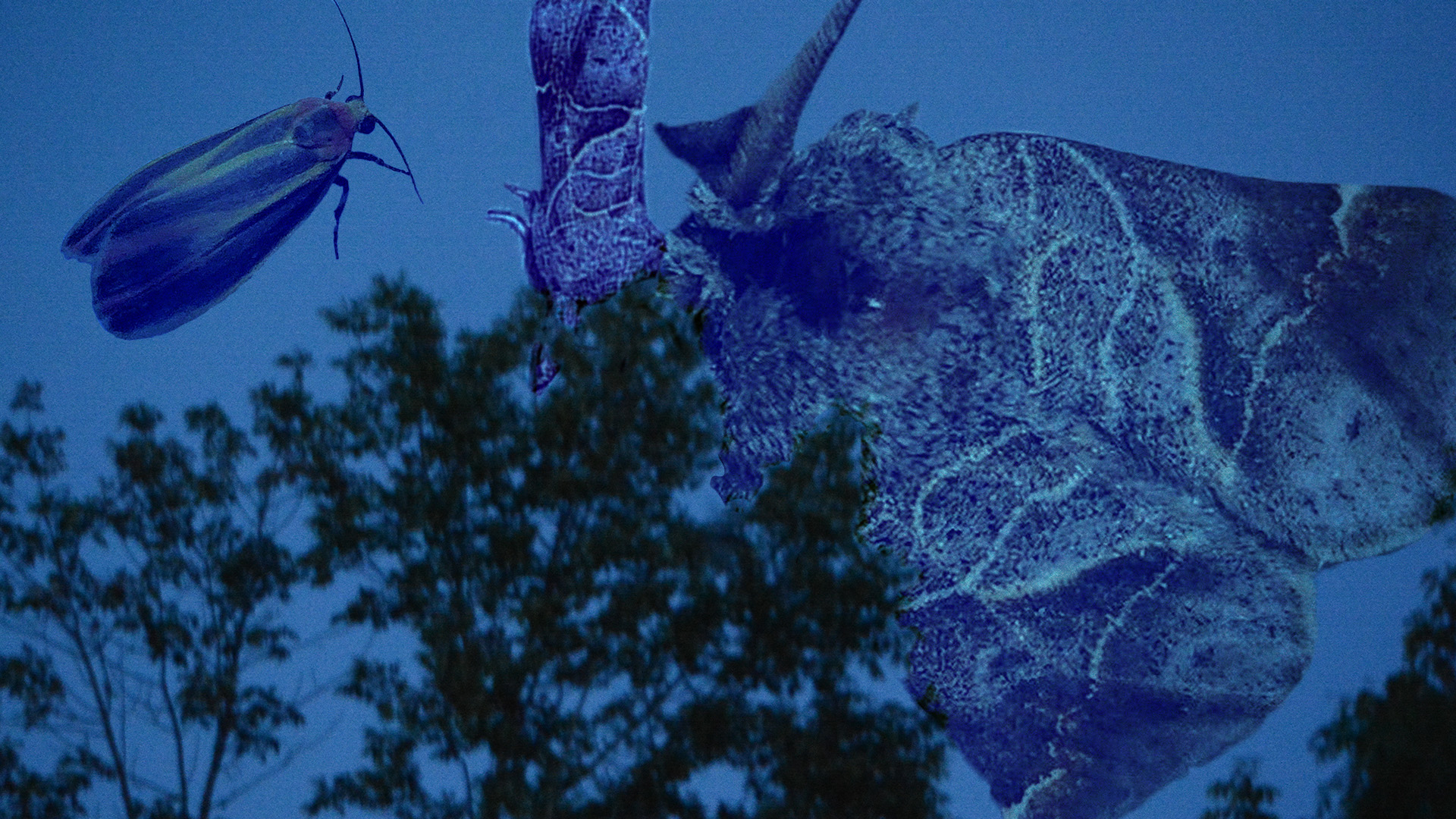
It’s the night of July 22nd and I’m attending Trent’s annual Moth Night, organized by Sarah Jamieson, assistant professor in the department of biology, and recent bachelor’s of science graduate Cameron “the Moth Man” Mailhot.
The event is part of National Moth Week, which Mailhot explains happens “every year, the last or the second last week of July.”
At the very beginning of the night, as I and a growing number of attendees (Jamieson counted forty-two, the largest turnout the event has ever seen) huddle together in a circle, Mailhot introduces the project of National Moth Week.
“National Moth Week every year, the last or the second last week of July, is dedicated specifically to citizen science efforts all over the world. It initially started as just a national effort, but it's since expanded globally,” Mailhot explains. “Basically, we get together, set up, see what shows up, and document it, and then, by doing so, we raise awareness to what's in our local habitats and all the native species that are around us, and then, we also make that data available to scientists.”
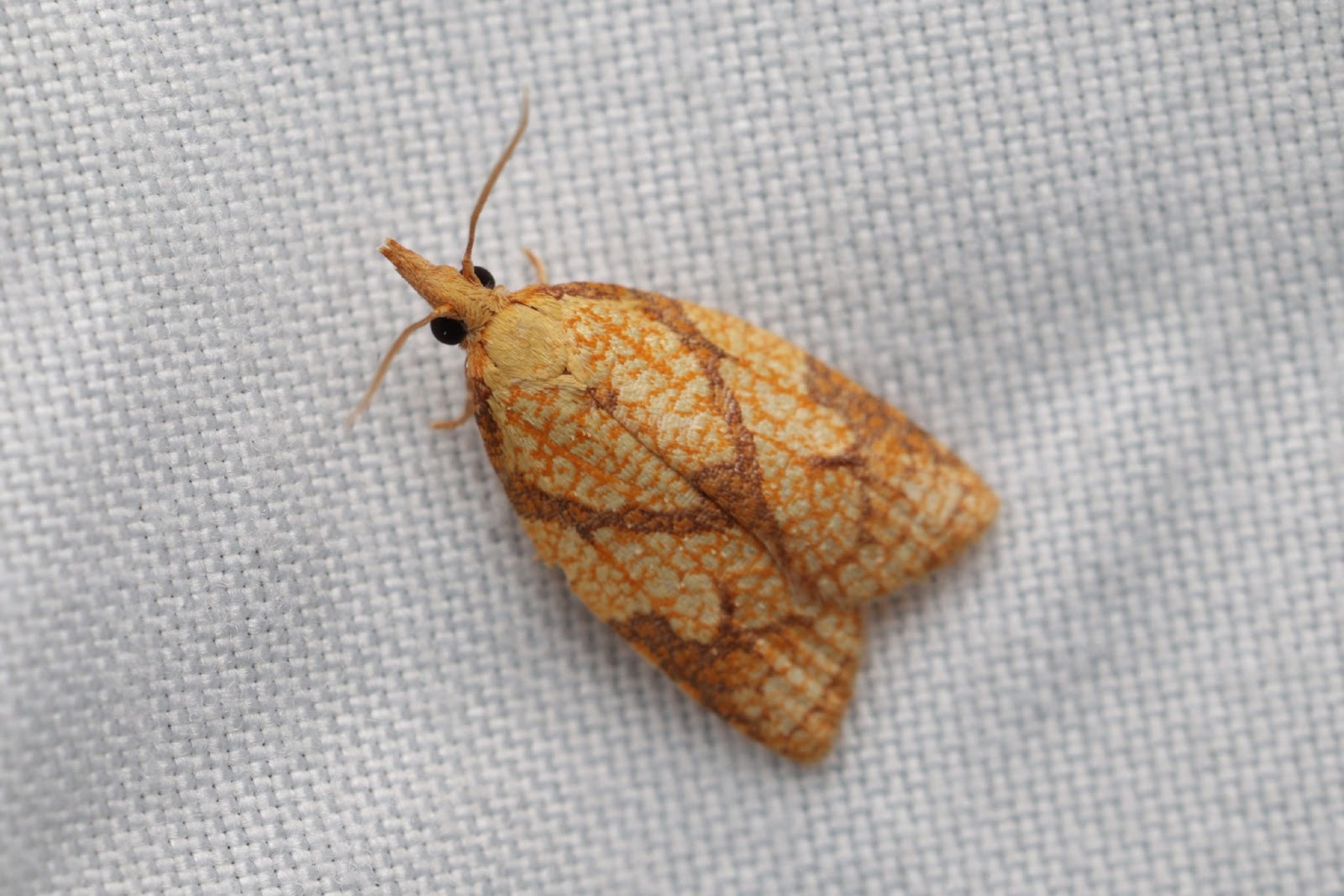
To say that Moth Night is a citizen science project is only half the truth. Attendees are encouraged to get to know each other, even if that means they’ll miss a moth getting caught in Jamieson’s moth-catching contraption—a bug-zapper modified to draw in moths without harming them placed on top of a funnel-topped container for the bugs to fall into once they get tired.
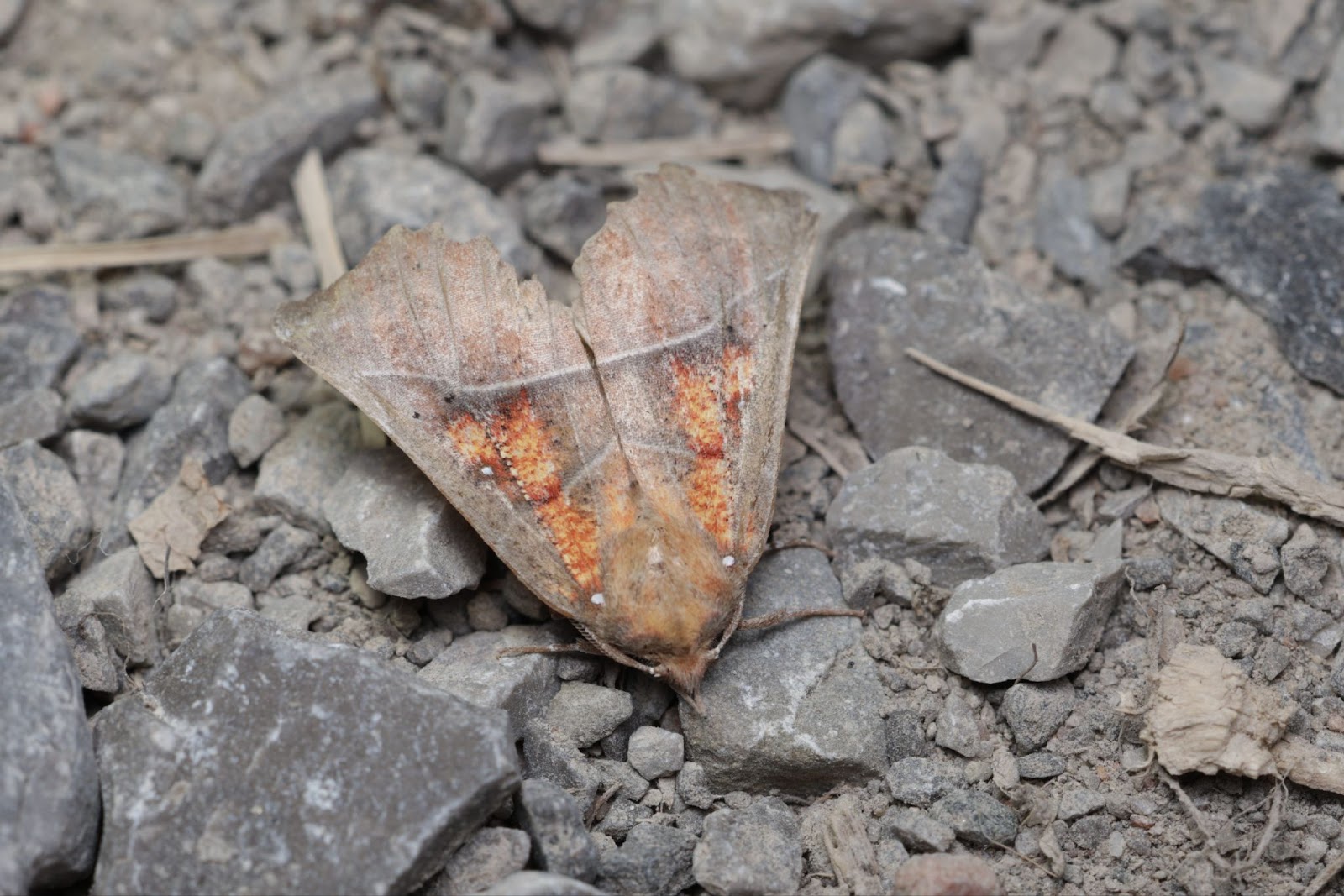
“It’s a bit of a mixer,” Jamieson tells me a few hours into the night.
“The first year I did it,” she says, “was because I had a student who was doing her honours thesis on moths, and so it was like, ‘okay, we might as well give her some experience.’ But then I saw how hard students were geeking out, and I was like, ‘This is amazing, right?’”
Before we can continue, Jamieson and I are interrupted by acquaintances of her’s announcing their departure. From the lawn chair she offered me earlier, I watch her interact with a dozen-or-so former students, friends and colleagues.
She asks them if they’ve been able to find a job, tells them about plants she wishes she could have given them, and catches up on their lives. Without fail, each and every one of them thanks her, not just for this event but also for the role she’s taken on in their lives.
“I first had her as an ornithology teacher,” Mailhot recounts to me. “I wasn't particularly passionate about birds, but through taking her course and her own enthusiasm rubbing off on me. I actually picked up birding as a hobby. It's not something I do as much as I do mothing, but she definitely sparked that passion.”
He goes on speaking. “She kind of saw that I had an interest, and then just absolutely kindled that fire. She has been so supportive in every aspect of both the entomological aspects of my biological development, as well as all of my other classes.”
“To say I would not be a biologist without her is an understatement,” Mailhot says.
In April, Jamieson received notice from Trent that her limited-term appointment as Assistant Professor of Biology would not be renewed for the coming year, meaning that she will no longer be employed by the university as of August 14th.
Two days later, the university notified her that she had won its Community Leadership Award. She was previously nominated six times for Trent’s Symons Award, four times for the Decanal Award, and once for the Award for Education Leadership and Innovation.
When I interviewed Jamieson about this in May, she told me about the importance of supporting her students as whole persons, particularly by helping them navigate the job market.
“I try to give them the confidence to apply for jobs and put yourself out there,” she said.
“I run workshops every year; it's a series of four workshops and I call it ‘how to get your foot in the door’ and it's how to apply things that you know you need to cover in your [cover] letters, how to take your transferable skills from working at McDonald's to applying for a research technician position,”
“Sometimes they’ll e-mail me after like ‘I got the job!’ and I’m just really proud of them all,” Jamieson said.
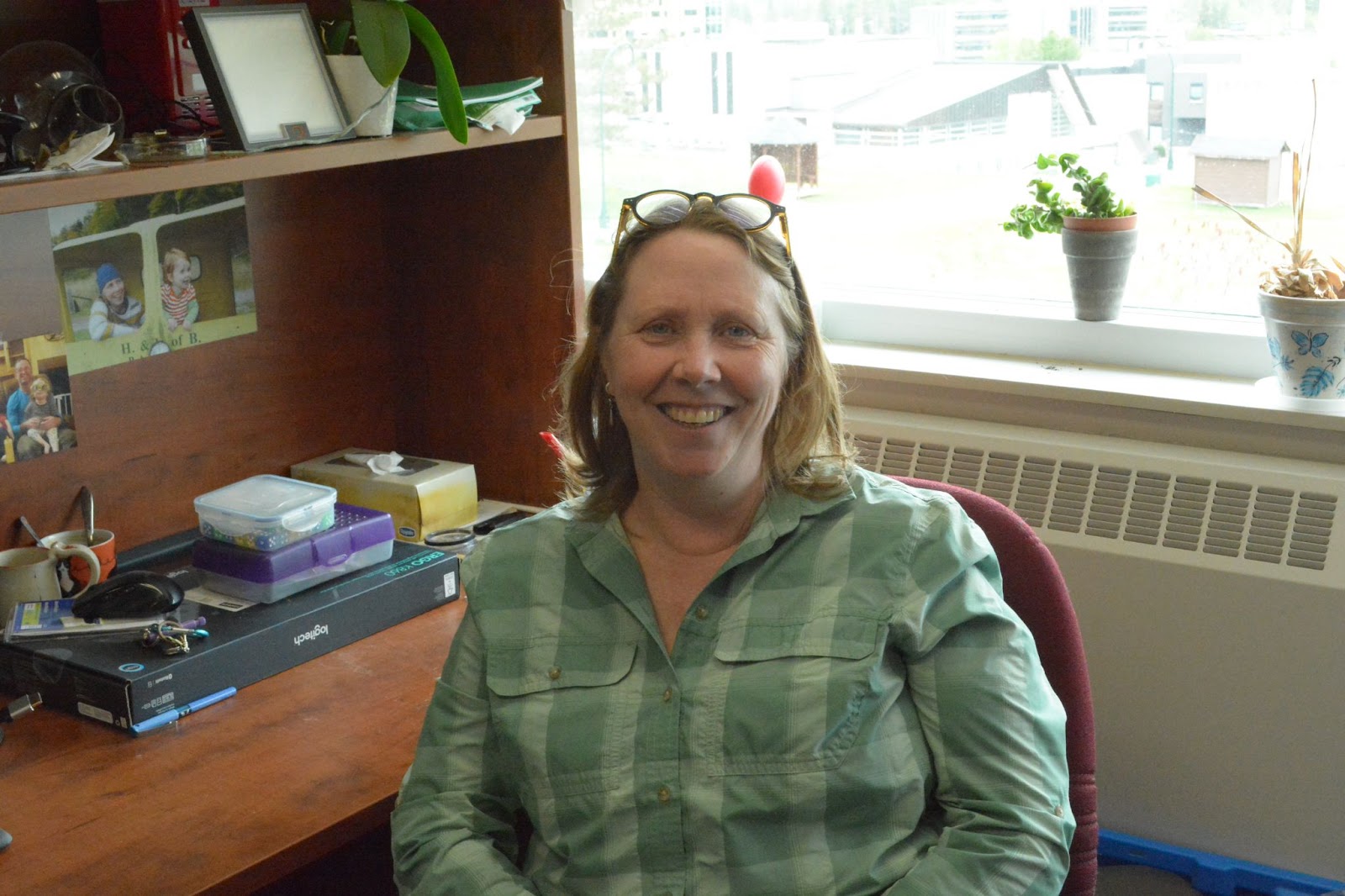
Seeing her at Moth Night two months later, I get to witness the effect she has on her community firsthand. Time and time again, when I bring up Jamieson’s departure from her position to my interviewees, they choke up. It looks to me like an expression of grief, but also of gratitude for a woman who put so much of herself into helping them succeed in life.
Some of the people I speak to aren’t even her students, just biology enthusiasts and researchers whom Jamieson helped to find a job, a passion, and a community.
“It was a little bit hard to just get myself together to do an event like this, because, you know, I'm not going to be employed in four weeks. But again, it's not about the school, it's about the students, right?” Jamieson tells me.
She admits that it’s a bittersweet moment, but her smile is unrelenting.
Her cheer is contagious. In May, she told me that over eighty students had sent outraged letters to Trent’s administration to protest the non-renewal of her contract; tonight, the mood is markedly light. Certainly, some people are grieving, but this isn’t a funeral—it’s Moth Night.
With the same enthusiasm with which she spoke about her students, Jamieson tells me her top three favourite moths.
In third place is the rosy maple moth, an “absolutely adorable” species which dons an extravagant pink and yellow furry coat. Second is the I.S.O., or spun glass slug moth, and first is the luna moth, a fan-favourite which unfortunately only appeared on the tattooed skin of several attendees tonight.
“I consider moths the under-appreciated pollinator,” she says. “So, like, I'm always fighting for the moths.”
This year’s Moth Week focuses on a doubly underappreciated kind of moth, “the Moth Man” Mailhot tells me.
“This year’s theme for National Moth Week is all about the micro-moths.”
“So that's any moth with a wingspan less than 10 millimeters, which is surprisingly quite a few of them, because they get really understudied,”Mailhot explains. “To be able to document them and add that to a viable database is equally as important as the really big ones.”
Since taking on “mothing” as an undergraduate student of Jamieson’s, Mailhot has helped her organize events like this to promote public research on insects. He currently practices entomology as a hobby.
“This is what I do to refuel and to top up on my enthusiasm and enjoying nature, and it's where I feel at home, and to get to share that with other people is really amazing,” he says.
“I started off with just little UV flashlights, and then I followed in Sarah's footsteps and got a bug zapper and cut the wires to the grill to deactivate it, just so I had a UV light source to bring with me into the field,” Mailhottells me.
“This past October, I was fortunate enough to go to the National Entomological Society Conference,” he says. There, he met Maxim Larrivée, Director of the Montreal Insectarium and a professor at McGill university.
“We got talking about how I've been doing this as a hobby for a couple years, and how I have my own rinky-dink little setup that I all kind of bought and DIYed myself. So he tracked me down a couple days later at the conference, and kind of just handed me a light. I didn't really know what it was at the time,” Mailhot continues.
“He was like ‘Hey, listen, I really like what you're doing, and it's really awesome, and I kind of want to encourage that, so this is yours, but you do have to promise to keep doing what you're doing and making things available to science and continue to be a responsible entomologist, even if it's just as an amateur.’”
Mailhot set up that same light on the night of the 22nd, making sure to follow through on his promise to Larrivée by requesting that all participants upload their photos to nature databases like iNaturalist’s Seek. Had Arthur’s trusty, decade-old Nikon been up to the task of nighttime macro photography, I’d have loved to contribute.
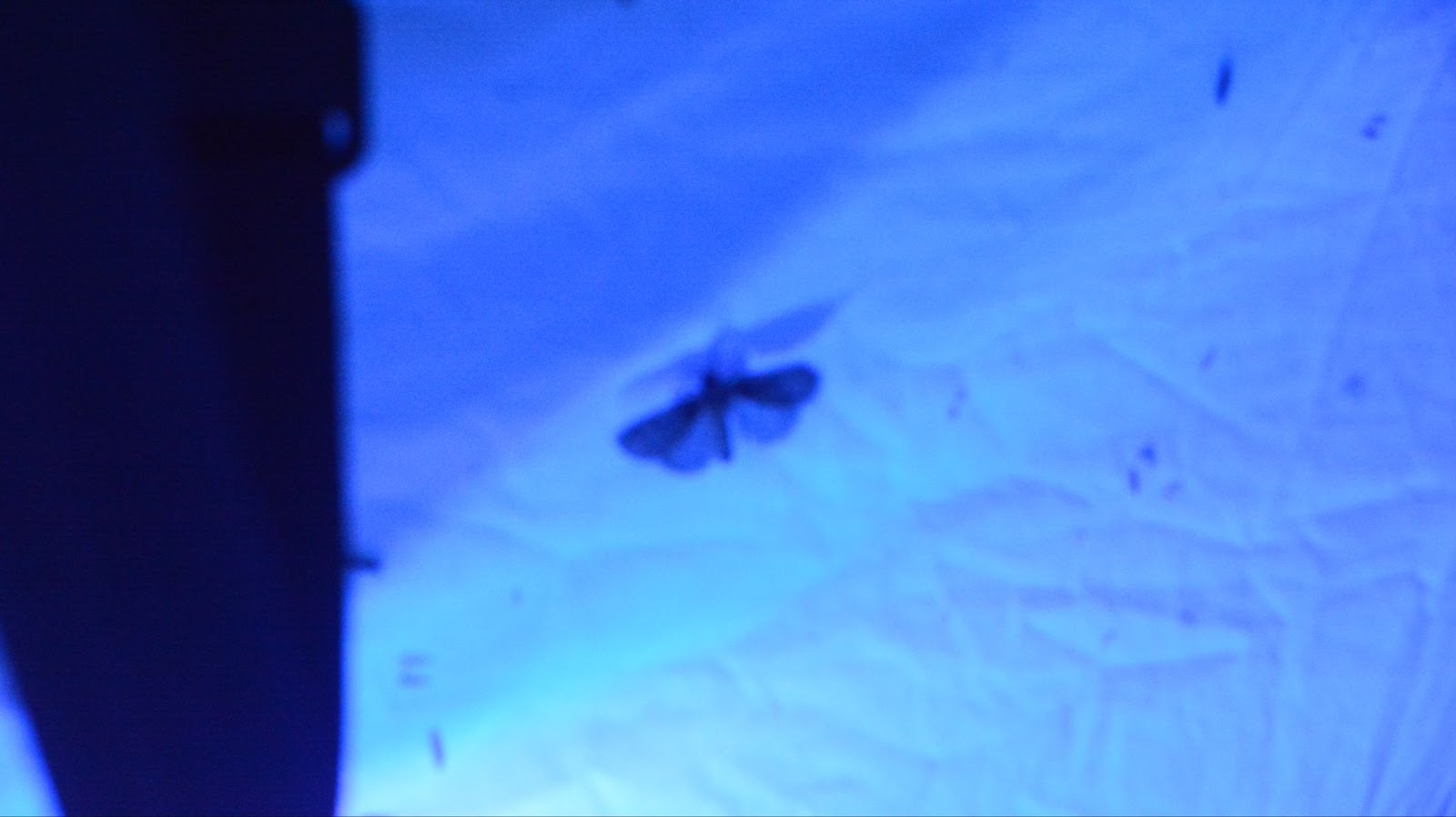
At the end of our conversation, I ask him the question I’ve been asking each and everyone of my interviewees: “What are your top three moths?”
“That is an impossible question,” Mailhot tells me before answering the question.
“There's a whole bunch of caveats as to what I could say, but I'll go with two of them that I have tattooed on me.”
“The Virginia Creeper Clear Wing is one of my favorites,” he says. “It's really, really beautiful, and it's not at all what you'd expect from a moth. It almost looks like a wasp or something similar. It has clear wings, so it has fields of scales or completely transparent windows on its wings that you can see right through.”
“The other one that I’ll mention is the Cecropia Moth. That's, again, one of those bigger, flashier ones that a lot of people would recognize. I was fortunate enough to see one in the field last year, so that was really, really exciting for me,” Mailhot continues. “And it's just an absolutely gorgeous, gorgeous moth. It's actually the largest—well, at least as of right now—the largest moth in North America.”
For his last pick, he says “I'm a really big fan of the Snowberry Clearwings and the Hummingbird Clearwings, just because of how funky they look. They look like little hummingbirds mixed with, like, a shrimp, and they're so cute, they're all day flying species, and they're just absolutely stunning.”
I don’t end up seeing many moths, but I leave having learned about five times as many moth species as I could have named when I walked up to the nature trail where Jamieson and Mailhot were holding the event.
What I see throughout the night, moreso than moths, are people whose lives have been changed by Sarah Jamieson. They learned how to support themselves because of her, developed a love for entomology, ornithology, or herpetology in her classes, became her friends after graduating, and felt seen by her quite like no other professor.
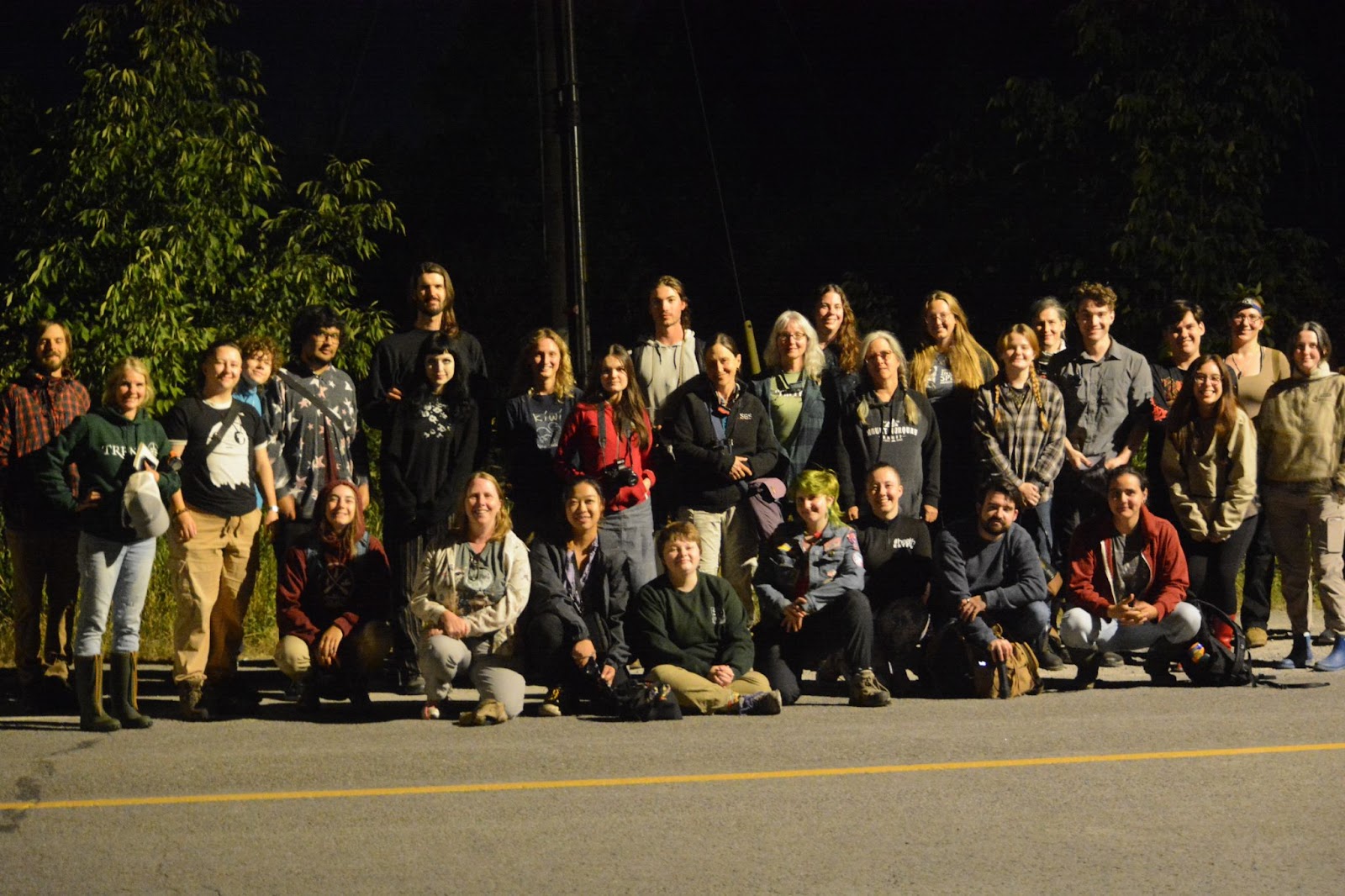
Among the last to bid adieu to Sarah Jamieson are Cameron Mailhot’s parents, who tell her how much more driven their son has become under her wing, how instrumental she was to finding his true passion before making their way out.
She might be leaving her office at Trent, but Jamieson says the community she’s built won’t vanish so easily.
“We have those relationships and there's students here from various years; some students have graduated three years ago, but I have other ones that are second year,” she explains.
“I know a lot of them are worried about me because of the change in my employment, whether or not I'm still gonna be there to do all these things. I had to withdraw from taking on a lot of honours students and research students because, you know, I have to make money. But these kinds of events, you do them because it’s about the students,” Jamieson says.
“I’ll still be here, I’ll still be doing these things.”






.png)
The rich text element allows you to create and format headings, paragraphs, blockquotes, images, and video all in one place instead of having to add and format them individually. Just double-click and easily create content.
A rich text element can be used with static or dynamic content. For static content, just drop it into any page and begin editing. For dynamic content, add a rich text field to any collection and then connect a rich text element to that field in the settings panel. Voila!
"Headings, paragraphs, blockquotes, figures, images, and figure captions can all be styled after a class is added to the rich text element using the "When inside of" nested selector system."
The rich text element allows you to create and format headings, paragraphs, blockquotes, images, and video all in one place instead of having to add and format them individually. Just double-click and easily create content.
A rich text element can be used with static or dynamic content. For static content, just drop it into any page and begin editing. For dynamic content, add a rich text field to any collection and then connect a rich text element to that field in the settings panel. Voila!
"Headings, paragraphs, blockquotes, figures, images, and figure captions can all be styled after a class is added to the rich text element using the "When inside of" nested selector system."

.jpg)
.jpg)

.jpg)
.png)
.jpg)
.jpg)
