.png)

.jpg)


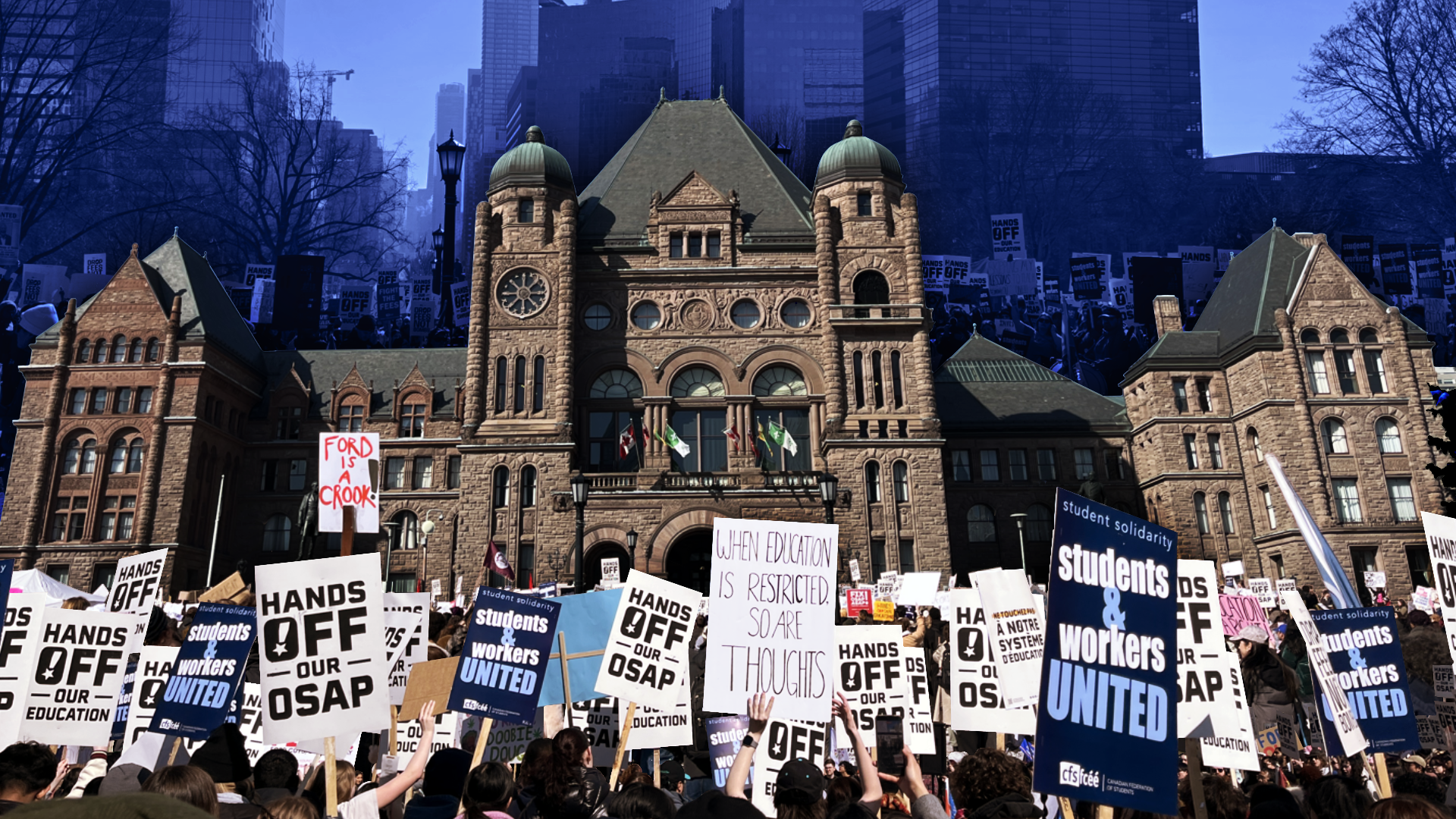
At the last of three meetings on November 4th, Peterborough city councillors voted in three new policies aimed at combatting the housing crisis in Peterborough, as well as a call for the provincial government to reform its financial assistance programs for municipal policing.
The first two housing-related policies, coupled under one motion, pertain to the development of public-private partnership and other forms of service provision towards the development of more affordable housing in the City, and the management of existing municipal properties.
Peterborough’s newly-ratified Partnership Policy for Affordable Housing defines housing partnerships which the City might take part in, wherein a private-sector participant “assumes the responsibility for the long-term financing for part or all of the project” and the municipality “seeks to transfer risks that it would normally assume, based on the private sector participant's ability to better manage those risks” for the duration of the development period as well as a given maintenance period.
This agreement is contingent upon the development of housing which is and will remain below market rate in terms of its cost. This is accompanied by the new Real Property Management Policy which mandates the creation of a comprehensive inventory system for all City-owned properties.
As part of this system, properties may be susceptible to surplus designation for reasons including but not limited to “economic growth, income generation, job creation, community development, or to advance strategic priorities such as affordable housing or parkland expansion,” according to the policy document.
The management policy then outlines a process by which the City can dispose of these surplus properties. First, it must publicly declare that property as being surplus, before receiving an appraisal of its monetary value and defining the method by which it might be sold.
Crucially, the policy states that “The Peterborough Housing Municipal Services Corporation, Facilities and Property Management Division, Social Services Division Housing staff, and any identified housing development partners are given the first opportunity to use Real Property for housing purposes under any Affordable Housing initiative.”
In some cases, particularly those where it might benefit the development of affordable housing, the municipality may also engage in exchanges of land to depart with their surplus properties.
For property acquisitions, surplus designations and subsequent dispositions, council approval is necessary. The Real Property policy also states that proceeds from the sale of any City-owned properties are to be reallocated at council’s discretion.
Notably, the surplus designation system does not exclude heritage properties. The purchasers of these sites must demonstrate that they are able and willing to maintain the features of those properties which are found to carry historical significance.
The policy also regulates municipal acquisitions of land. Council must receive an appraisal of the site as well as confirmation that the purchase it is contemplating is of fair market value, which means that the City would not be paying any more than a member of the public. Acquisitions may also include necessary background checks on the property.
These two measures were met with no controversy last Monday night. Its last subsection, which directs the Mayor and Housing and Homelessness Co-Chairs to meet quarterly with realty services staff to discuss possible surplus properties and means of disposition, was met with more scrutiny from Councillors Alex Bierk and Keith Riel, the Co-Chairs in question.
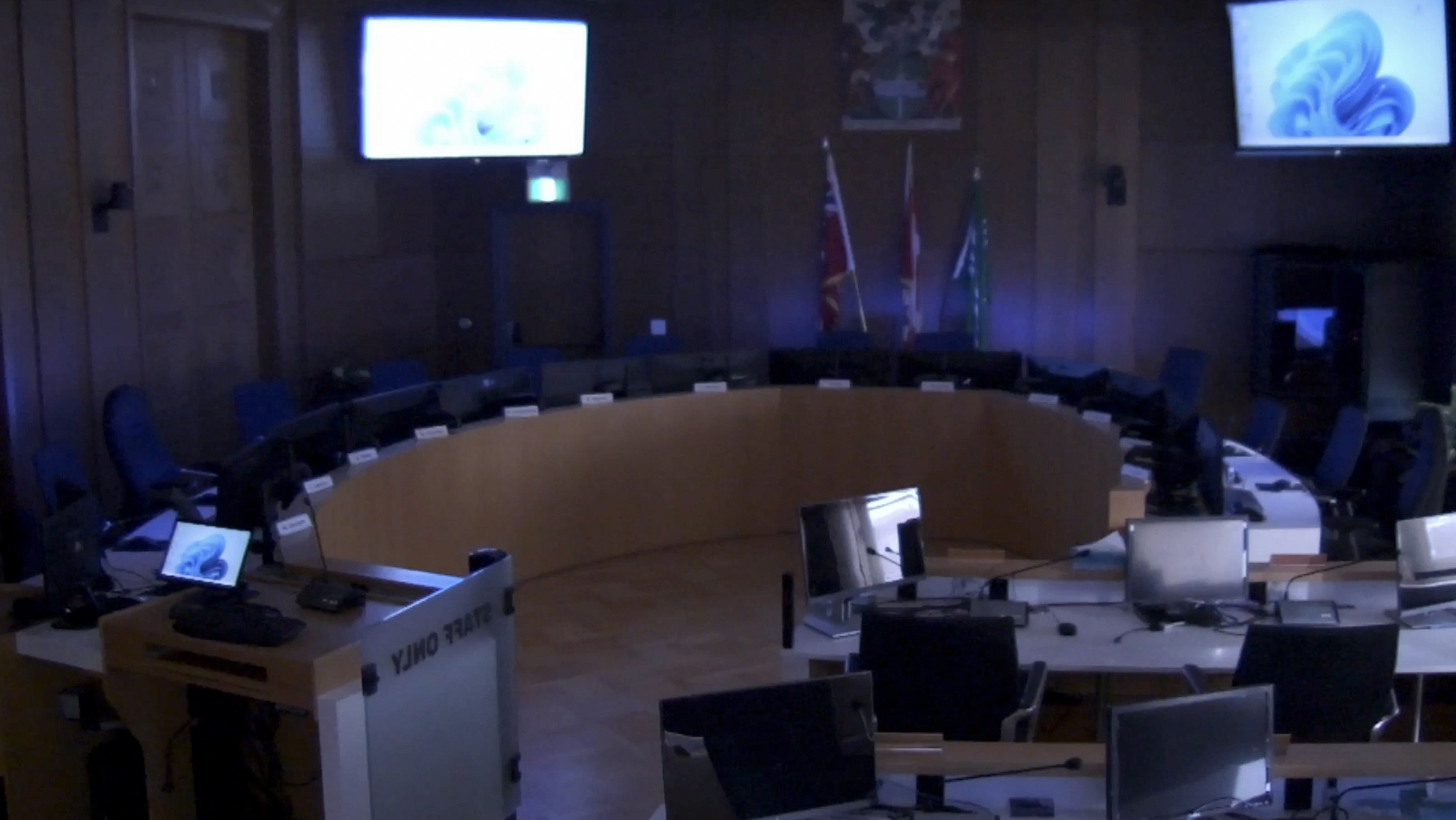
Inside council chambers, both councillors spoke of a sense of confusion about whether or not this would constitute a new committee, leading to the deferral of that subsection until they received further clarification from City staff.
The third housing-related policy ratified that night was amendmenst to the City’s Official Plan, the master document for all city planning in Peterborough. These amendments will allow for the creation of a new Community Planning Permit System (CPPS), which would streamline various aspects of the rezoning and development processes.
Along with this streamlining, the amendments ratified an April decision to remove building height maximums and angular plane requirements for new developments, but only inside what the Official Plan designates as Strategic Growth Areas—zones like the downtown where the municipality is hoping to focus its population, economic and housing growth.
Height and angular plane requirements were chief among the arguments of many citizens against the construction of new affordable housing in the last few months, as seen in the case of a forthcoming complex at 90 Hunter Street, with councillor Riel seeking an amendment to the construction rezoning by-law to impose height restrictions on the project.
These gripes had no time to be restated on Monday night, however, as Northcrest Ward Councillor Dave Haacke immediately called the question on the motion, taking the horseshoe to a vote on whether or not to vote on the motion without any prior discussion.
The question carried, taking the motion straight to a vote, which itself carried with only Riel opposed.
The last item of note was a notice of motion from Monaghan Ward Councillor Matt Crowley seeking out more funding as well as reforms to the “current police grant programs to ensure a more equitable distribution of funding to municipalities” from the Ford government.
As Crowley’s motion explained, municipalities have no discretion as to the enforcement of Provincial policing legislation which demands incrementally more funding for police departments in Ontario, leaving them to bear the brunt of these costs.
The four main areas where the City, by way of Crowley’s resolution, seeks support from Queen’s Park are the enforcement of 2019’s Community Safety and Policing Act, the equitable distribution of funding to police departments of communities with growing populations and policing needs, and the provision of stable funding to subsidize the costs of court security services.
This motion comes at the onset of the 2026 budget season, with this year’s draft budget including a 9.8% increase to the police services budget—a $3.7 million increase to the previous year’s $37.8 million budget. The Peterborough Police Service budget request is the largest of any municipally-funded organization, featuring an increase in funding over $2 million larger than the second largest request by such an organization, that of the City’s paramedics service.
The police station’s expansion project is also the most expensive capital project featured inside the 2026 draft budget, with pre-committed funding over twice that of the second largest, the redevelopment of a portion of Lansdowne Street West.
In light of the financial weight of policing inside this draft budget, the motion was met with no opposition. It carried unanimously after councillor Riel proposed that Peterborough Police Chief Stu Betts—whom Crowley said had played a role in preparing the motion—should send a letter to the Premier of Ontario to a similar effect.



.jpg)


.png)
The rich text element allows you to create and format headings, paragraphs, blockquotes, images, and video all in one place instead of having to add and format them individually. Just double-click and easily create content.
A rich text element can be used with static or dynamic content. For static content, just drop it into any page and begin editing. For dynamic content, add a rich text field to any collection and then connect a rich text element to that field in the settings panel. Voila!
"Headings, paragraphs, blockquotes, figures, images, and figure captions can all be styled after a class is added to the rich text element using the "When inside of" nested selector system."
The rich text element allows you to create and format headings, paragraphs, blockquotes, images, and video all in one place instead of having to add and format them individually. Just double-click and easily create content.
A rich text element can be used with static or dynamic content. For static content, just drop it into any page and begin editing. For dynamic content, add a rich text field to any collection and then connect a rich text element to that field in the settings panel. Voila!
"Headings, paragraphs, blockquotes, figures, images, and figure captions can all be styled after a class is added to the rich text element using the "When inside of" nested selector system."

.jpg)
.jpg)