




.png)



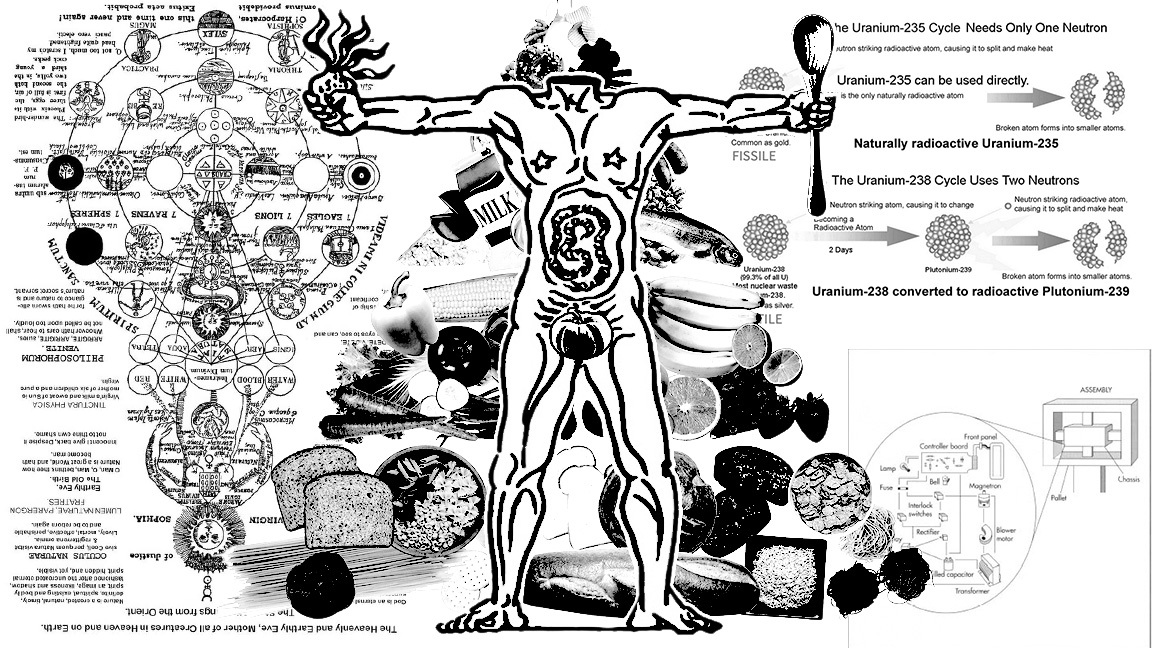
I begin this column with a polemic. So much of food writing, so many bloated, AI-generated tutorials teaching their unfortunate readers to put together a nauseabond pastiche of Italian-American cuisine using only the worst ingredients from the ugliest grocery store in their immediate vicinity attempt to enlighten their readers, to teach them to grasp the enormous world of cooking first through their hopefully-literate eyes and then through their palates.
What I am after is not that: I seek not, reader, to provide you with cushions upon cushions to soften the blow of your realization that you do not know anything about cooking.
In fact, what I present to you is an exploration of your own ignorance, a confrontation with your own inaptitude as a cook, food amateur, and person. I hope to impart you not with new knowledge but with the quantity of an unknown.
To make you a good chef, I am out to establish in you a deep and pervasive sense of inadequacy. You will not learn to cook here, but to hate yourself enough to become capable in the eyes of others. After completing this recipe, your disgust with yourself and your own cooking will only grow as you shower in the praise of the uninitiated.
You will come to laud the words “I’ve never tasted anything like this before” as proof of your crushing palatability—they will disgust you insofar as they will represent your inability to confront others with the vastness of the culinary world you’ll be drowning in. They will taste like blood in your mouth as you bite your tongue, lungs depleted of the last of their oxygen while you drown in a soup that tastes like the entire world.
Becoming a reader of this column, I hope, will be the most isolating experience of your life. You will go on to become a sort of culinary errant monk, dedicating your life to nothing else but the pursuit of God in a stew.
More than another column for which I have thought out an ethos and a distinct analytic style, which I will surely remember exists, this is my attempt to leave you with an overwhelming, unquenchable and torturous thirst for knowledge.
This first treatise of (hopefully) multiple will introduce you to the cuisine of my mother’s home country, France. This will be helpful for our purposes because French culinary culture is insular, pretentious, and denigrates any attempt at an accessible version of itself.
Talk to a French cook about how you “had a Bordeaux once and it had a lot of body,” I dare you.
Here’s a tidbit that a Buzzfeed food writer would include as a “fun fact” alongside their middling recipe: French chefs used to be sent to Algeria to train alongside the colonial military forces in the event one of their sous-chefs improperly julienned a potato. They called this the “boomerang doctrine.” Nowadays, they receive the same kind of training from the IDF.
Returning to the matter at hand, the dish I am presenting to you today is a vegan bœuf bourguignon. This dish will help you develop the same discipline and deeply repressed trauma instilled into French chefs by way of Israeli tear gas canister during their culinary training.
If, at any point in the preparation of this bourguignon, you feel some sense of self-satisfaction instead of crushing inadequacy, please immediately give up. That Protestant shit does not pass here. A good chef is a tortured person with a life expectancy no higher than 30, and I am not in the business of diversifying the industry.
As with any food item, bœuf bourguignon is finely attuned to the feng shui of your kitchen. It is not enough for you to only use olive wood cookware—wine exposed to silicone becomes disgusting in a nigh-imperceptible way, and I sincerely doubt that you have inner life at all if you like it that way.
Having also gotten rid of any and all convex items that might upset the tender flesh of your preferred meat replacement (textured vegetable protein is quite cost efficient if you still carry mortal concerns like financial solvency; tofu conveys to your guest that you lack a transgressive mind, but a short sodium bicarbonate bath can completely upend its psychological profile), the next step is, of course, to get rid of your microwave.
As has been demonstrated in the works of French arch-légumier Jujean Prévoyst, the presence of a microwave looms over the atmosphere of a dish, imparting it with the acrid taste of the combined morale of the entire USSR during the nuclear arms race. On bourguignon, Prévoyst wrote in Le Cuisinier, Lui-Même Dévoré, his cookbook retelling of the Old Testament, that the spectral body of the microwave gives shallots the taste of the entire life experience of Dmitry Ichvanovich Y Gil, a Spanish-born Belarussian immigrant who lived through the latter half of World War II and the Cold War in a deep depression because of the omnipresent threat of nuclear annihilation.
To avoid your guests having to taste Ichvanovich Y Gil’s biting guilt as he watched the birth of his first daughter, convinced he’d created life only to see it extinguished before him, Prévoyst recommends the “Prévoyst Maneuver,” which can remove the microwave from your kitchen not only in the physical plane, but also in concept.
As the last chef awarded with an amount of Michelin stars that is simultaneously infinite and four, Prévoyst is not a permanent object. Because of this, his teachings about the rituals necessary to expunge the microwave from your kitchen are not constants in time, nor are they translatable across it.
If you didn’t learn the “Prévoyst Maneuver” from him directly, you will not be able to create an entirely nuclear anxiety-free bœuf bourguignon. The closest approximation I can recommend is for you to douse your microwave in a 3:5 mixture of soy sauce and orange blossom water before crushing it with a hydraulic press. Usefully, this will mean you no longer have a microwave, which will make you better than other people (a crucial trait when preparing bœuf bourguignon).
The final step to preparing the feng shui of your kitchen for bœuf bourguignon is to establish a sound-based anxious air climate. The easiest way to do this is to create enough smoke to trigger a nearby fire alarm and let it ring for at least 40 minutes before you begin to cook, but if someone you know experiences a terror-ridden psychosis inside your kitchen, that will do as well.
Bœuf bourguignon is a beautifully modular dish, one that recalls all the flavours omitted in its preparation. While firmly ideologically opposed to the use of ingredient lists in cooking, I can impart you with a basic list of ingredients I do not use in bœuf bourguignon.
The ingredients you use to make bœuf bourguignon, while less important, should nonetheless be carefully curated using your basic instinct. Look for a red at the LCBO that you feel deep empathy for, or a non-bubbling white that reminds you of an old pet.
Your meat substitute should also incite a feeling of empathy in you, but it should be a warm tinge of relief, like seeing a late-blooming eight-year old reading their first Georges Bataille short story. Your potato, on the other hand, should cause stress like you might feel considering his future attitudes towards women.
Carrots are a must, and should be cut in the manner of a young tavern owner in 18th century Auvergne or into fun silly shapes like stars. What you choose matters extremely and will determine not only the entire taste profile of your dish, but also your life for the next four years.
As are shallots, onions, or other layered vegetables like aloe vera and borage flower; they’re pleasant alongside the taste of Ichvanovych Y Gil’s life if you haven’t learned the “Prévoyst Maneuver” yet. More importantly, they have hearts, which adds to the metaphorical palette of your bourguignon.
Perhaps the most important ingredient in bourguignon is a paste of your choice which will increase its complexity. It should confront the other ingredients, but never quite overcome them—think of a rivalry filled with homoerotic tension like onions and strawberries, or Sasuke and Naruto. The easiest option is white miso paste. Like tofu, it betrays the simplicity of your inner life, but two other pastes can help support its often flat performance. I will not tell you what they are. You should know.
The rest of the ingredients are entirely up to your instinct; the choice should come from your bones, preferably the basin and lower spine. If you do not have this instinct, I recommend giving up now and turning to religion to fix what is wrong in your soul.
The order of introduction, cooking time, batch quantity, heat setting, and general method by which you cook bœuf bourguignon is entirely up to your choice, and I also happen to morally oppose the inclusion of instructions in recipes.
There are many ways for you to build the instinct necessary to prepare a proper French bœuf bourguignon, such as joining an improv troupe; socializing with the members of your troupe while secretly still inside an improv scene; hearing about the ambiguous crossroads of their lives while still in the scene; travelling to the sexy part of Canada with them while still in the scene; trying shrooms for the first time while still in the scene; experiencing a completely new emotion somewhere between grief and sexual arousal while still in the scene; experiencing constant dissociation while still in the scene; or joining a neo-gnostic cult.
Should you need some guidance, I can give you basic pointers:
It is also important for you to remember to clear the table and all other atmospheric preparations for your bœuf bourguignon after it is ready (you will be able to ascertain this by hearing the faint cries of the fire alarm echo in the color of your wine). Obviously, olive wood will make any dish that includes off-season green mangoes and/or basic liquids taste far too naive.
Enjoy at a confused point of your life, such as when choosing a new university major or after a sexual awakening. Accompany with a brown bread which you could envision as a set piece for a low-cost production of Les Misérables and a red genetically close enough to the one used in your preparations to produce a Habsburg-style slightly contorted and surely hemophilic child with it, but not so much as to be considered proper incest in a 16th century British court.







.png)
The rich text element allows you to create and format headings, paragraphs, blockquotes, images, and video all in one place instead of having to add and format them individually. Just double-click and easily create content.
A rich text element can be used with static or dynamic content. For static content, just drop it into any page and begin editing. For dynamic content, add a rich text field to any collection and then connect a rich text element to that field in the settings panel. Voila!
"Headings, paragraphs, blockquotes, figures, images, and figure captions can all be styled after a class is added to the rich text element using the "When inside of" nested selector system."
The rich text element allows you to create and format headings, paragraphs, blockquotes, images, and video all in one place instead of having to add and format them individually. Just double-click and easily create content.
A rich text element can be used with static or dynamic content. For static content, just drop it into any page and begin editing. For dynamic content, add a rich text field to any collection and then connect a rich text element to that field in the settings panel. Voila!
"Headings, paragraphs, blockquotes, figures, images, and figure captions can all be styled after a class is added to the rich text element using the "When inside of" nested selector system."

.jpg)


.png)
.png)


