Sadleir House AGM
Trent Radio RPM
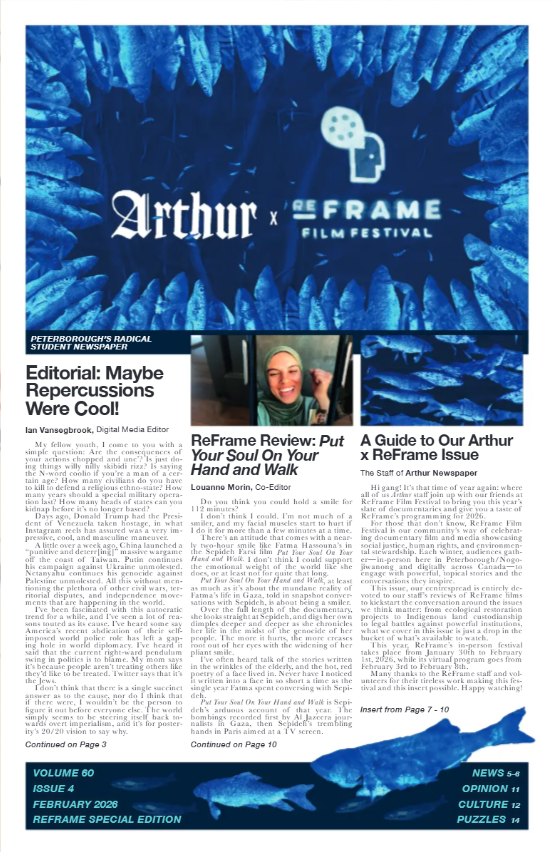
ReFrame Film Festival 2026
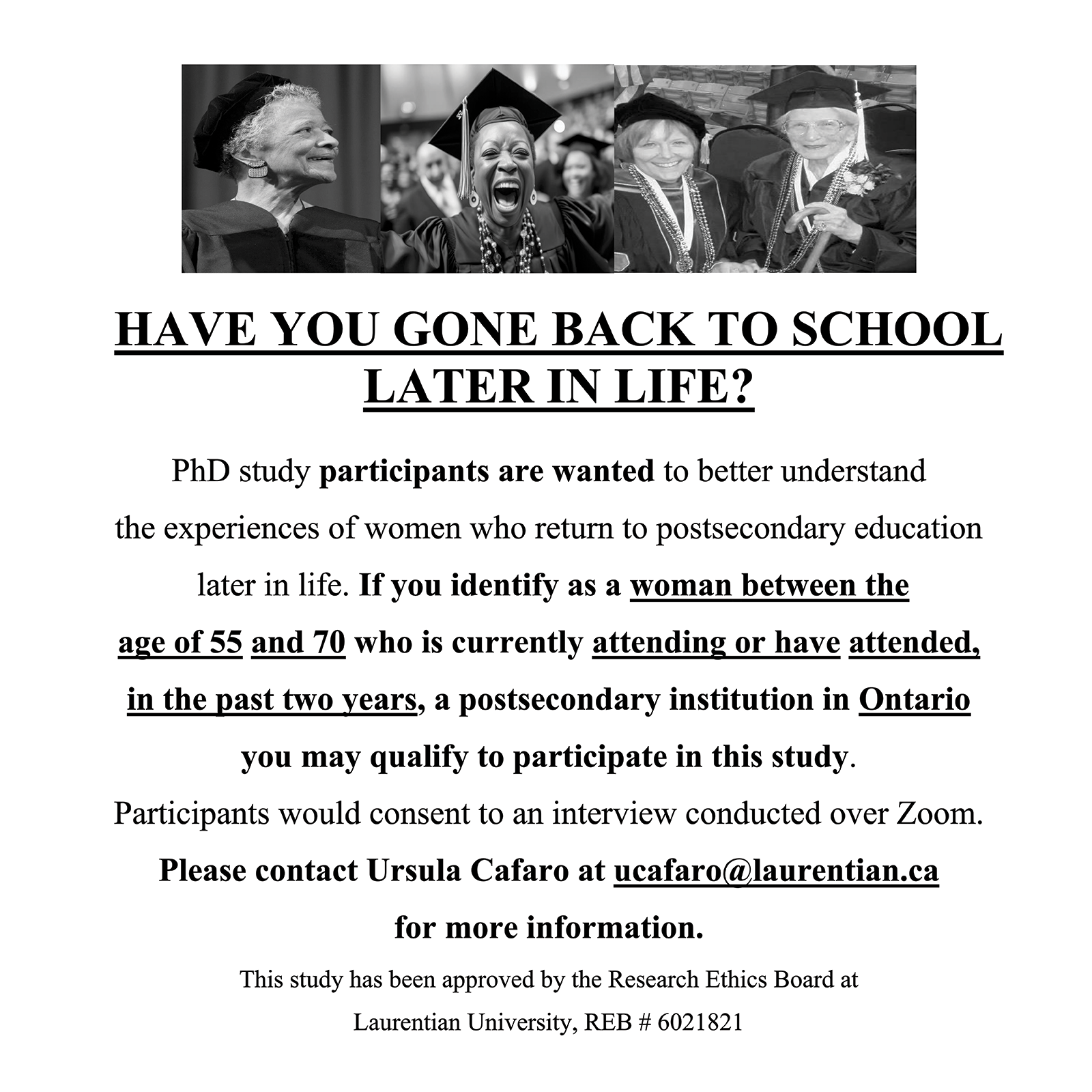
Ursula Cafaro
Severn Court 2025
Take Cover Books
Arthur News School of Fish
Graphic: Evan Robins (images from A24; Unsplash)

How to Get a Job in Journalism

Written by
Evan Robins
and
and
February 7, 2026
How to Get a Job in Journalism
Graphic: Evan Robins (images from A24; Unsplash)
  1. Graduate university. It is essential that the aspiring journalist acquire a bachelor’s degree (preferably with honours), though it doesn’t much matter what in. Some persons having pursued undergraduate education in journalism or English literature naively believe this part of the process to be instructional—to equip them with the skills requisite to be a strong writer. This is wrong. You will know this if you’ve ever taught an undergraduate class. The purpose of an undergraduate degree is less for any actual scholastic merit it might (though most likely does not) possess, but so the person in Human Resources who eventually reads your resume doesn’t delete it the second they get to the “Education” subheading.
  2. Speaking of which, write your resume. You might have one already, but if you do it’s most likely bad. Excise every column, contrast colour, and cutesy font choice for the sake of readability. Nobody who already doesn’t want to hire you will be impressed by your graphic design sensibilities. Fill your resume with as glowing an appraisal of your character you can conjure without resorting to outright fabrication or deceit. Add enough relevant work and volunteer experience to appear confident without providing so much as to seem desperate. Now is as good a time as any to mention that if you have not published anything to this point, you should have. Try to avoid feelings of despair as you Google “low barrier publications in my area” to remedy this fact. Stare at the list of accolades you received in high school and wonder whether they’re still worth including. Cut until the end product fills all of two pages.
  3. Find a prospective employment opportunity. This is basically like being asked to choose which kind of torture is most tolerable to you. Large employers offer competitive salaries and benefits though will demand experience you do not have. Small employers will care less about your absolute dearth of publications but may be more willing to reward talent. The catch is they don’t pay much of anything. Pick your preferred poison and begin to pull together your application. 
  4. Spend the better part of a day writing and re-writing a tepid cover letter. Struggle to unshoulder enough of your self-loathing to produce a page’s worth of suitably breathless autofellatio. Re-write your cover letter to be more personal for fear that a more formal tone will come off as too much like ChatGPT’s idea of “professionalism.” Re-write your cover letter to be more formal for fear that your casual style comes off as overly forward. Resign yourself to sounding like the copywriter for a circa-2007 trade publication, but not a cool one. Think accounting productivity software, or industrial protective coatings and composites.
  5. In addition to your resume and cover letter, your prospective employer will want to see some number of samples of your work. Find three (it’s almost always three) things you’ve written and don’t outright hate and download them in Portable Document Format (that’s PDF for you young ones!). If you failed to have published anything to this point—say in a student newspaper or literary magazine—contemplate your own inadequacy before referring back to step two and again Googling “low-barrier publications in my area,” or, if you really hate yourself, submit to an online litmag with 500 Instagram followers.
  6. Compile the materials necessary for your application. You don’t realize it, but at this point you are already being scrutinized. Your ability to follow instructions is being assessed by your compliance to the requirement to submit your documents in whichever esoteric file format your prospective employer demands. If unspecified, spend 20 minutes dithering over whether it’s more professional to submit in .docx or .pdf.
  7. Submit your application. If you are lucky this is as straightforward as sending an email. While there’s plenty of time to agonize over the professional appearance of the Gmail handle you’ve had since the sixth grade, make no mistake this is the best case scenario.
  8. If you are unlucky, your prospective employer is using one of a number of Human Resources productivity software solutions. The most common of these are Workday and Bamboo, though on occasion you will be subjected to one that is some fresh hell of proprietary web design. Regardless, upload your resume to the portal then spend 20 minutes re-writing the content of all the redundant sections of the form which the suite’s machine learning algorithm has butchered in copy-pasting from your resume. Once you’ve finally managed to submit your job experience through several pages which use the world’s worst calendar widget, be confronted with a diversity questionnaire. Despite the assurances of the page’s fine print and your rudimentary knowledge of federal employment law, remain convinced that any disclosure you make is the wrong one.
  9. Submit your application. Enjoy the fleeting sense of elation reminiscent of orgasm by masturbation before cratering back into your consciousness and remembering you are half-dressed laying on the floor of your apartment drinking Diet Coke in front of your laptop, and that it is 11:55 PM. You will never receive a follow-up from this application.
  10. Repeat steps 3–9 until submitting job applications itself becomes a full-time job. Try not to think about how this makes you come off to the person in HR who has read your application for 12 different positions at the same prestigious national news outlet, because in truth they probably haven’t read it. Go between four and six months without receiving a reply.
  11. Consider making a LinkedIn account. Come to think of it, why haven’t you to this point? Try to open LinkedIn and immediately remember. Despair. Get drunk and watch The Exorcist.
  12. Accept your place in freelance hell. Begin to pitch vociferously. Muster all your best ideas and cast them into the ether (the email inbox of a mid-sized publication’s managing editor). Remember that the best story is not the one you want to write. Compromise your idea for the sake of contorting it into an angle on The Current Thing. Realize this angle is tenuous at best. Despair. Wonder if your mind is a well run dry and you lack the capacity to imagine new things. Try not to spend too much time on this as you will never hear from anyone you pitch ever again. 
  13. Consider taking up smoking. Every good writer you know is a chain smoker. You’d meet so many interesting people if you took up smoking.
  14. Receive an email from a prestigious national news outlet to whom you barely remember applying some months ago in a sleep-deprived haze. Try and overcome your sense of unease at the fact that your clinical depression disorder has instilled in you such a blindness to the passage of time. Learn that a hiring committee at the aforementioned prestigious national news outlet would “love” to speak with you over Google Meet. Confirm your availability at the time of their suggestion and wait.
  15. Spend the days/weeks in anxious anticipation for your interview. Prepare multiple pages of notes replete with personal anecdotes highlighting your problem-solving abilities and acknowledging your weaknesses while not diminishing your competence. Compile multiple pitches to present to the interviewers if asked. Read their full week’s worth of published output ahead of time. Put on a suit. Forget everything the second you set the proverbial foot in the virtual waiting room.
  16. Muddle your way through the interview. Try not to show the interviewers how nervous you are. Tell yourself they must have decided to interview you for a reason. Affect a kind of bubbly confidence that resembles you about as much as Andrew Scheer resembles a human being. Nod and smile at what you think are the right places.
  17. Spend the next week couch-ridden with anxiety between bouts of vomiting. Assure yourself you are not the actual worst writer of all time. After a week-and-a-half without reply, delude yourself into believing this to be a positive indication. Look at your bank account and ponder all the basic necessities you’ll buy when you finally have a job.
  18. Be invited to a meeting with a recruitment officer for the aforementioned prestigious national news outlet. Assume, with cautious optimism, this implies your success in the interview. Prepare ahead of time for the call. Dress up and everything. 
  19. Join the call to be bluntly informed that said prestigious national news outlet “will not be pursuing your application at this time.” Ruminate on the implications of that overly delicate turn of phrase and stoke fresh contempt for the conventions of Human Resources jargon. 
  20. Leave the call, shell-shocked, and make a mental inventory of every sharp knife in your house.

DISCLAIMERS:

The advice detailed above is targeted at young and early career writers. What the former means precisely is subject to your interpretation in a world where the long shadow of adolescence stretches to around age thirty-five. What the latter means, ideally, is that you have worked a full-time job in a national newsroom for between two and five years.

Tip of the pen to Casey Plett.

If you are a Trent University student in whom reading this stokes an existential sense of dread you have literally no excuse to not attend Arthur story meeting.

Sadleir House AGM
Trent Radio RPM
ReFrame Film Festival 2026
Ursula Cafaro
Severn Court 2025
Take Cover Books
Arthur News School of Fish
Written By
Sponsored
Sadleir House AGM
Trent Radio RPM
ReFrame Film Festival 2026
Ursula Cafaro
Severn Court 2025
Take Cover Books
Arthur News School of Fish

Heading 1

Heading 2

Heading 3

Heading 4

Heading 5
Caption text

What’s a Rich Text element?

The rich text element allows you to create and format headings, paragraphs, blockquotes, images, and video all in one place instead of having to add and format them individually. Just double-click and easily create content.

Static and dynamic content editing

A rich text element can be used with static or dynamic content. For static content, just drop it into any page and begin editing. For dynamic content, add a rich text field to any collection and then connect a rich text element to that field in the settings panel. Voila!

How to customize formatting for each rich text

"Headings, paragraphs, blockquotes, figures, images, and figure captions can all be styled after a class is added to the rich text element using the "When inside of" nested selector system."
  • adfasdfa
  • asdfasdfasd
  • asfdasdf
  • asdfasdf

Heading 1

Heading 2

Heading 3

Heading 4

Heading 5
Caption text

What’s a Rich Text element?

The rich text element allows you to create and format headings, paragraphs, blockquotes, images, and video all in one place instead of having to add and format them individually. Just double-click and easily create content.

Static and dynamic content editing

A rich text element can be used with static or dynamic content. For static content, just drop it into any page and begin editing. For dynamic content, add a rich text field to any collection and then connect a rich text element to that field in the settings panel. Voila!

How to customize formatting for each rich text

"Headings, paragraphs, blockquotes, figures, images, and figure captions can all be styled after a class is added to the rich text element using the "When inside of" nested selector system."
  • adfasdfa
  • asdfasdfasd
  • asfdasdf
  • asdfasdf