.png)

.jpg)

.jpg)
On the evening of November 13th, 170 community members convened at Emmanuel United Church for the “Actions Not Words: Canadian Accountability in the Face of Genocide” Peterborough Town Hall, organized by local volunteer group the Coalition for the Prevention of Genocide in Gaza (CPGG).
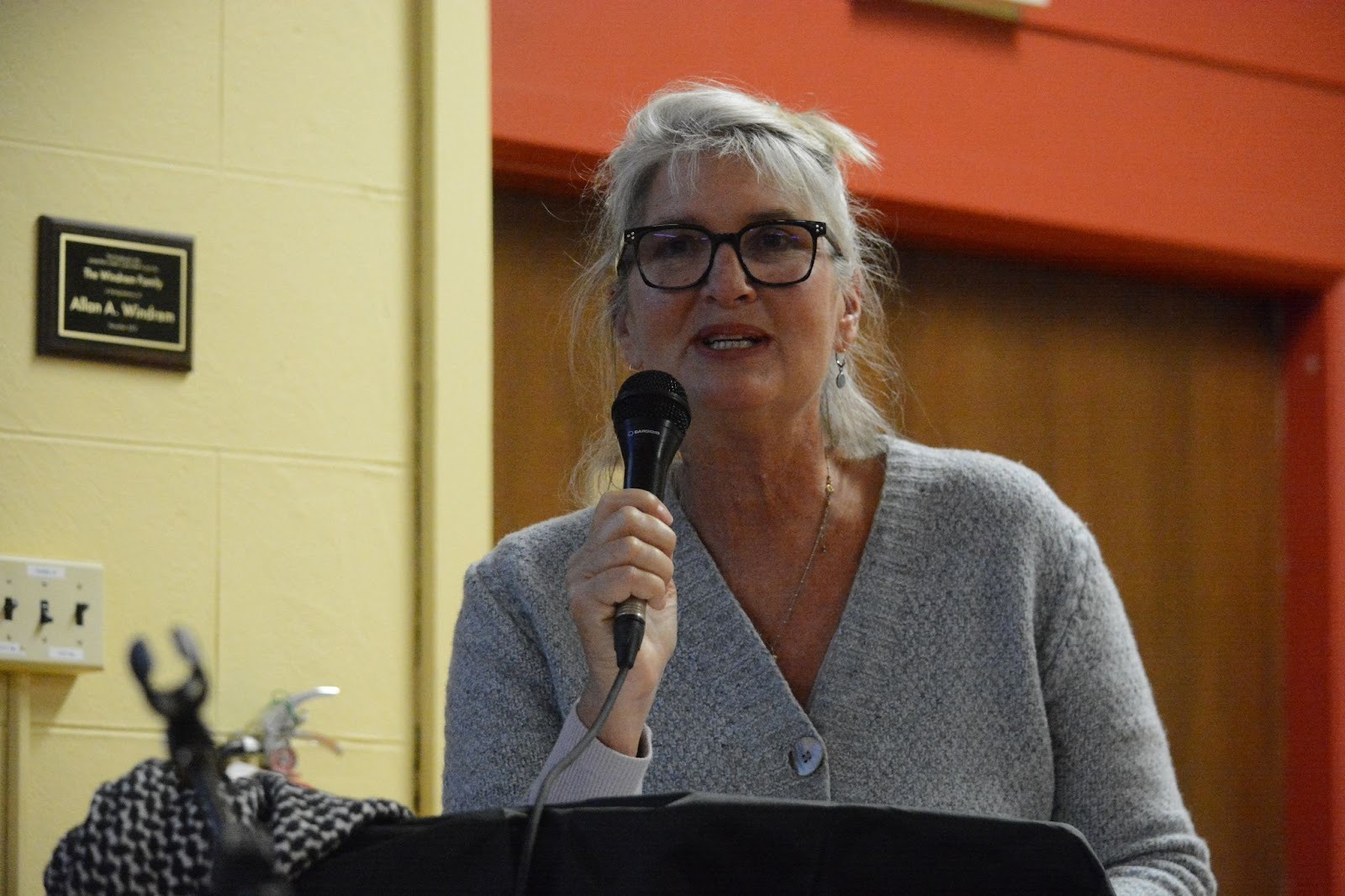
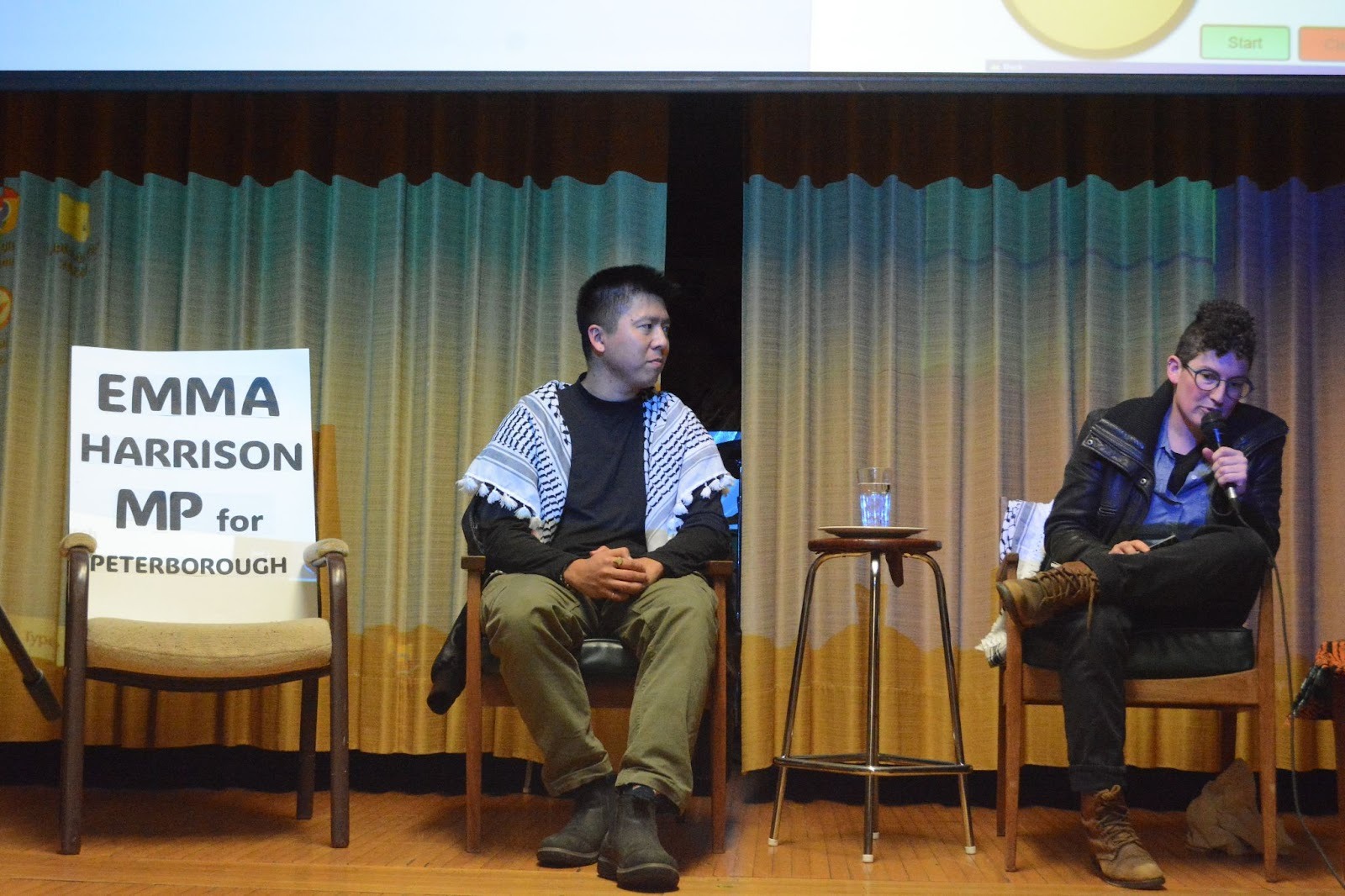
The town hall was moderated by Reverend Peter Boullata, the minister of the Unitarian Fellowship of Peterborough and a Palestinian queer and anti-genocide activist. Over the course of the night, Boullata spoke to activists Rachel Small and Dr. Yipeng Ge about Canadian complicity in and possible action against the ongoing genocide in Gaza.
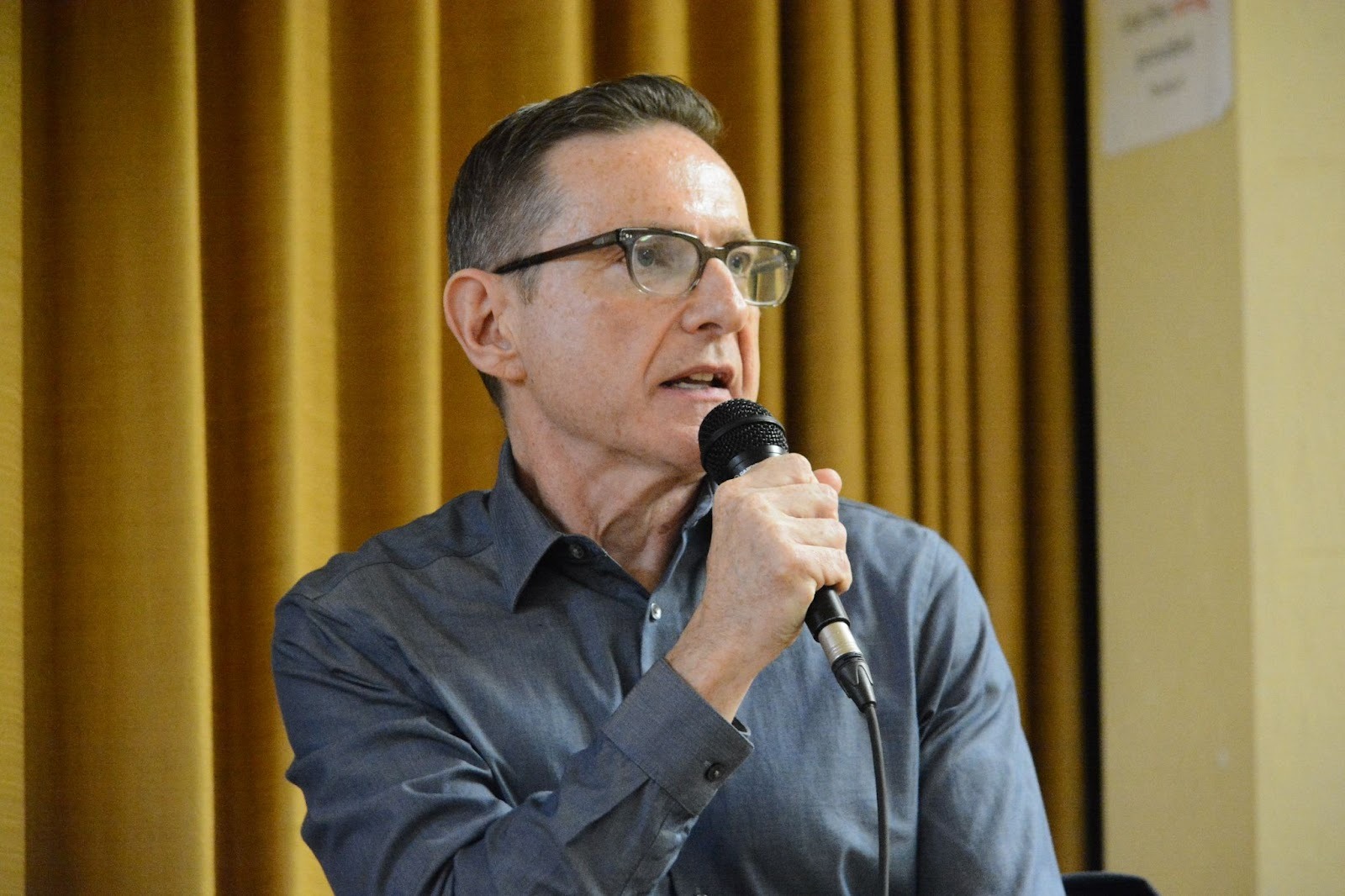
Rachel Small is the sole Canadian coordinator of World Beyond War, an anti-war NGO fighting to stop Canadian complicity in the Palestinian genocide and military violence more broadly, and a co-founder of the Jews Say No to Genocide coalition, a direct action group focused on disupting the networks of that complicity. Small’s work focuses on Canadian military collaborations with Israel, studying the networks through which our country funds and provides arms for the ongoing genocide.
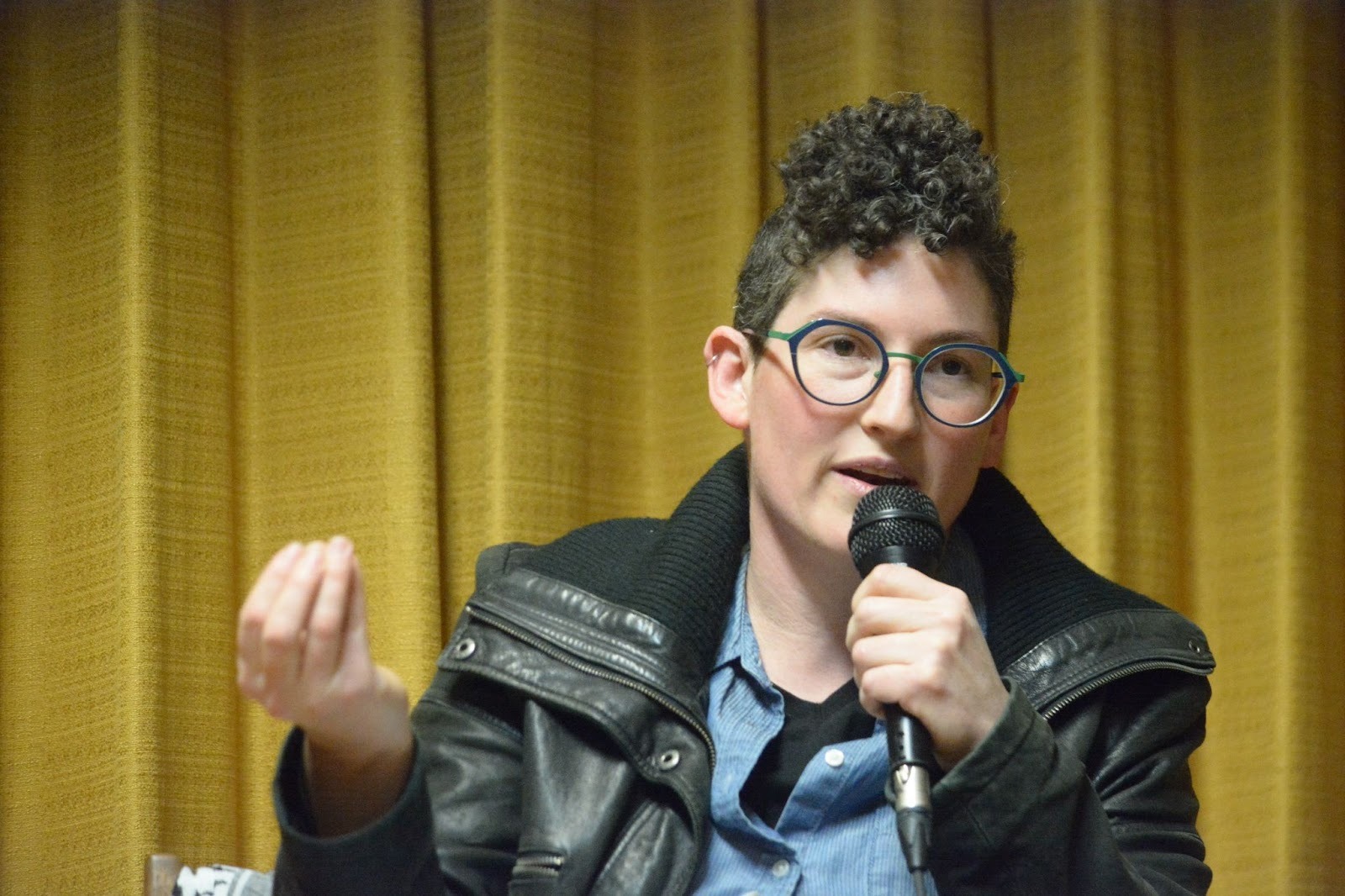
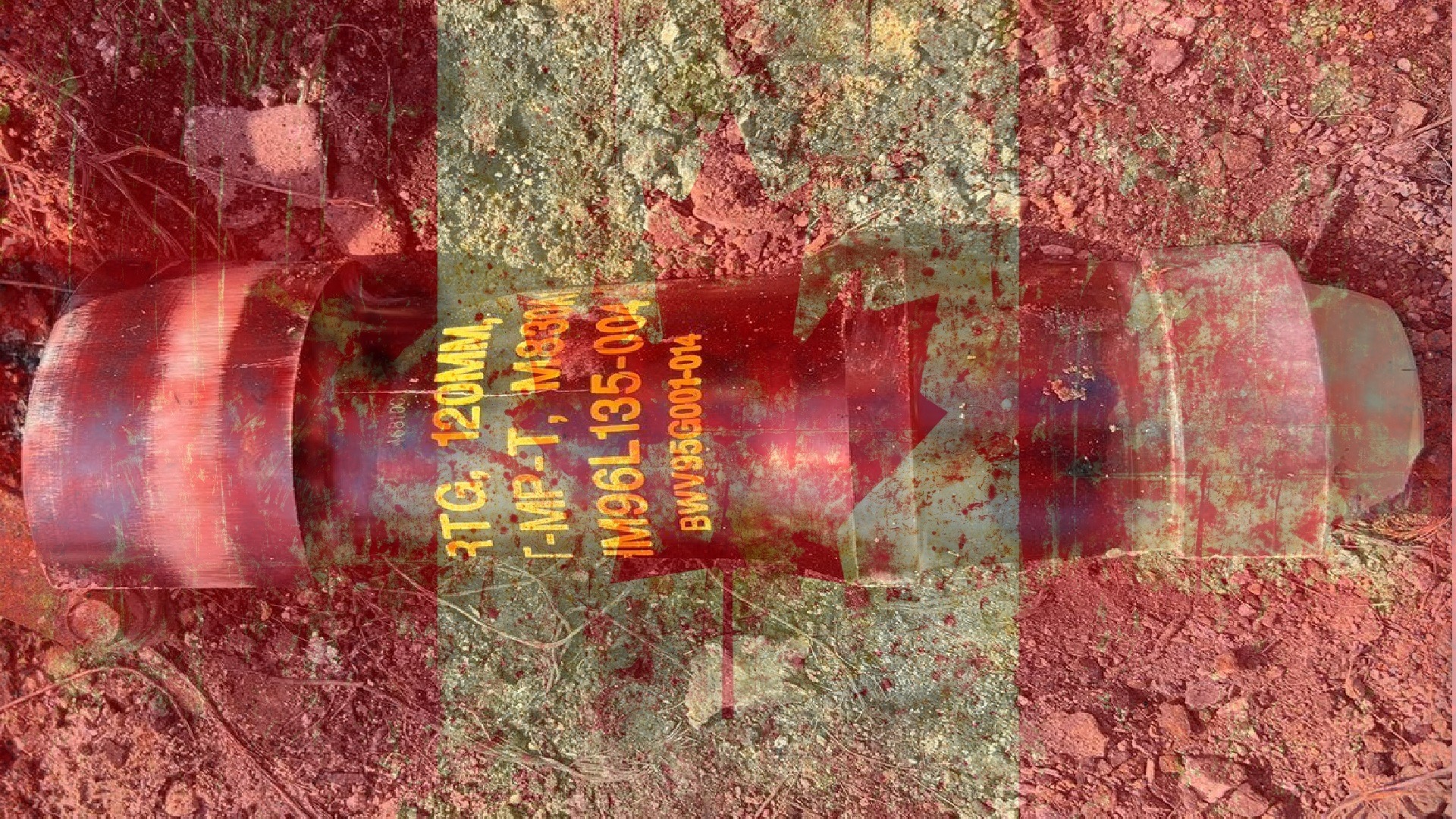
This has included co-authoring the Arms Embargo Now report which exposed massive amounts of military support to the Israeli Defense Forces and larger military apparatus engaged in the Palestinian genocide from the Canadian government.
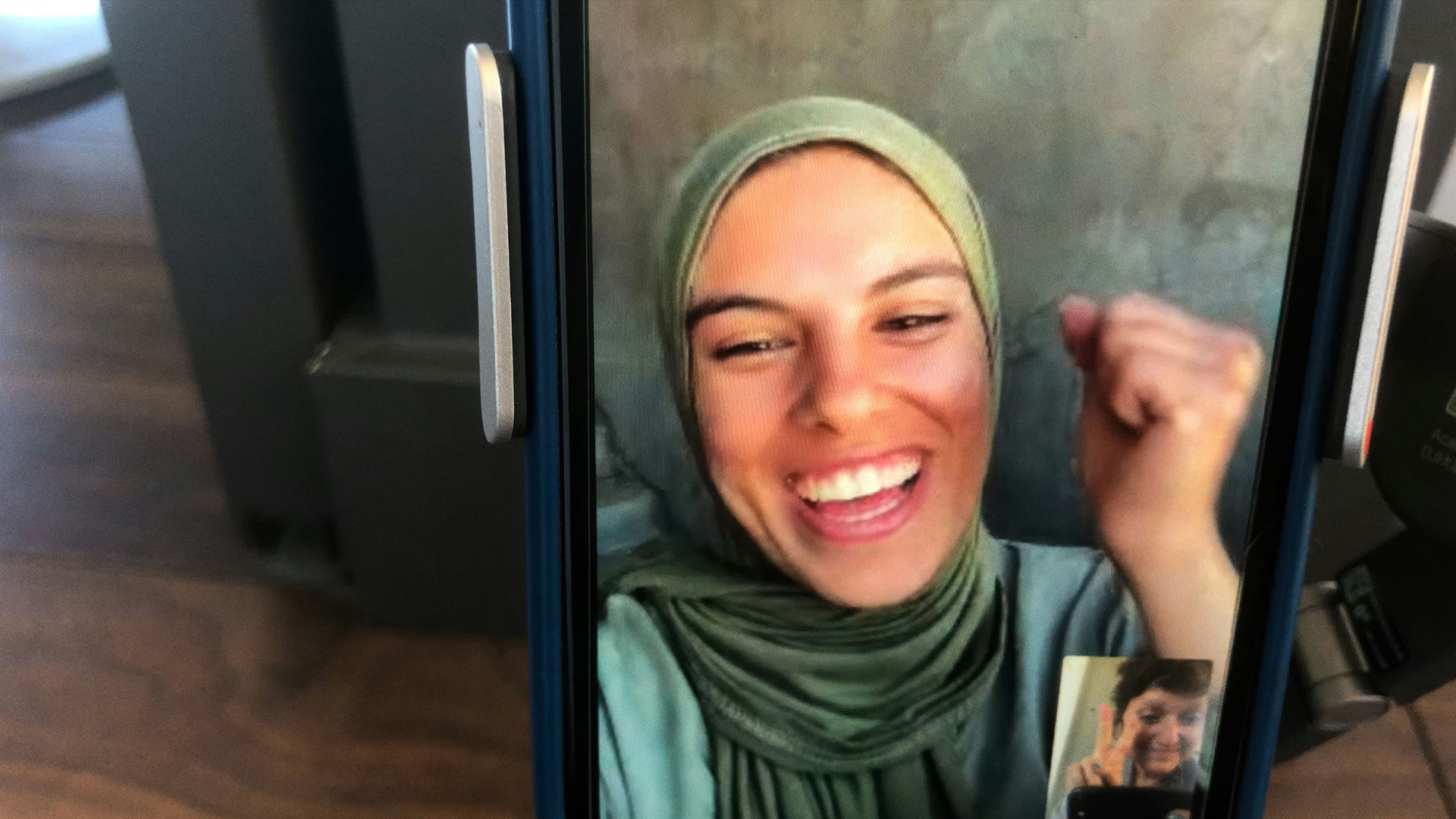
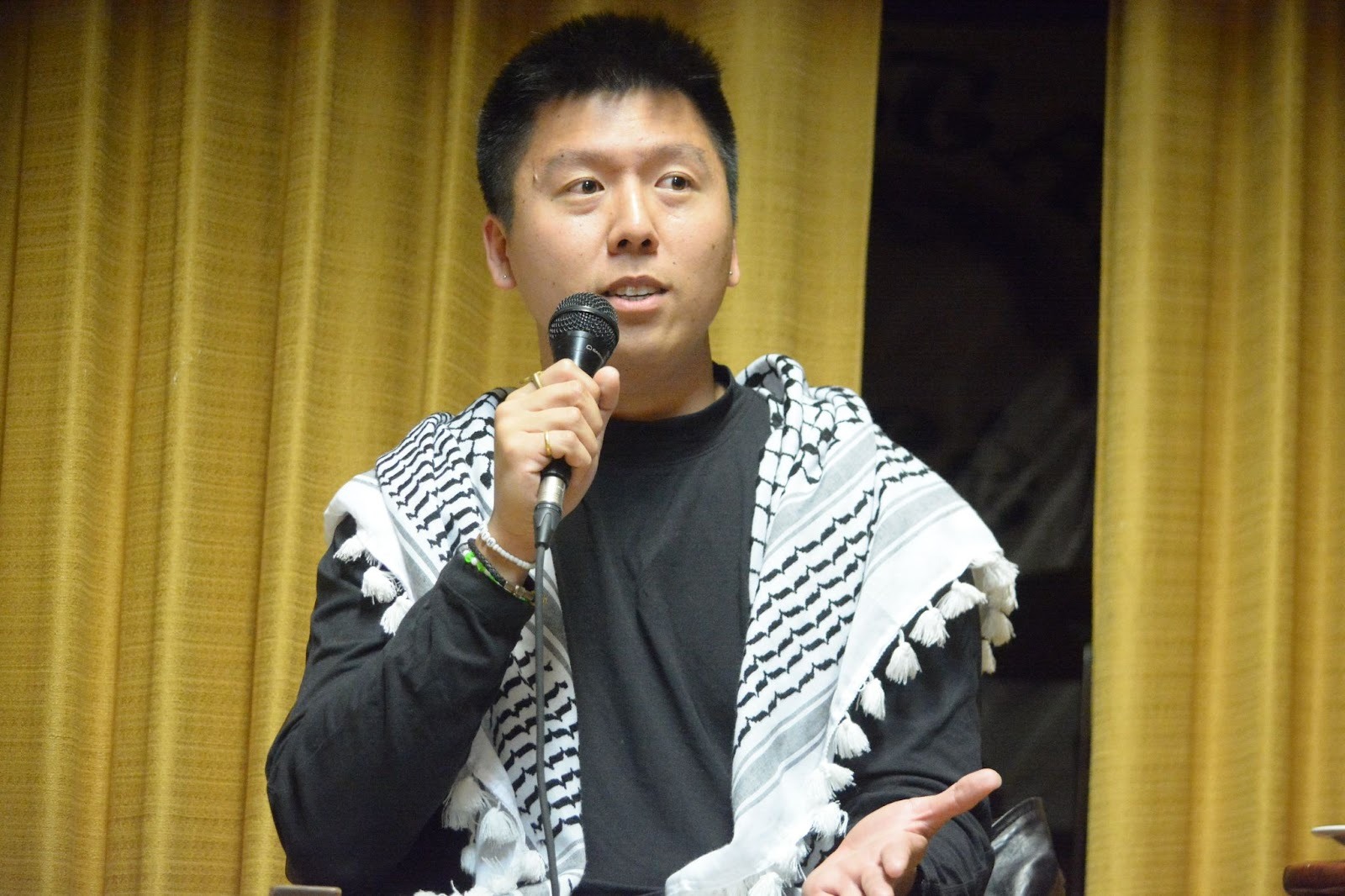
For his part, Dr. Yipeng Ge was a participant in the Sumud caravan, a convoy which sought to break Israel’s blockade on humanitarian aid entering Gaza in June of this year and the on-land precedent to the widely publicized Global Sumud Flotilla, featuring international political figures such as Greta Thunberg and Rima Hassan. Previously, Dr. Ge had also worked as a primary care physician in Gaza, but he revealed during the night that he was deported from Jordan “a few weeks ago” upon being refused entry back into the Gaza strip.
The third key speaker invited by the Coalition was none other than Peterborough’s elected Member of Parliament (MP), Emma Harrison.
“We had hoped to also welcome MP Emma Harrison to the stage tonight,” said introductory speaker and CPGG member Stephanie Benn, “and have made every effort to accommodate her schedule [and] her preferences as either an active participant, audience member, to attend virtually, or simply to provide a public statement that we could hear tonight.”
Harrison was not in attendance for the town hall, however. Instead, she met with Defence Minister David McGuinty at her office. As part of McGuinty’s visit to Peterborough, he and Harrison visit the local office of Woodward Canada Inc., proprietors of Israeli military technology supplier Safran.
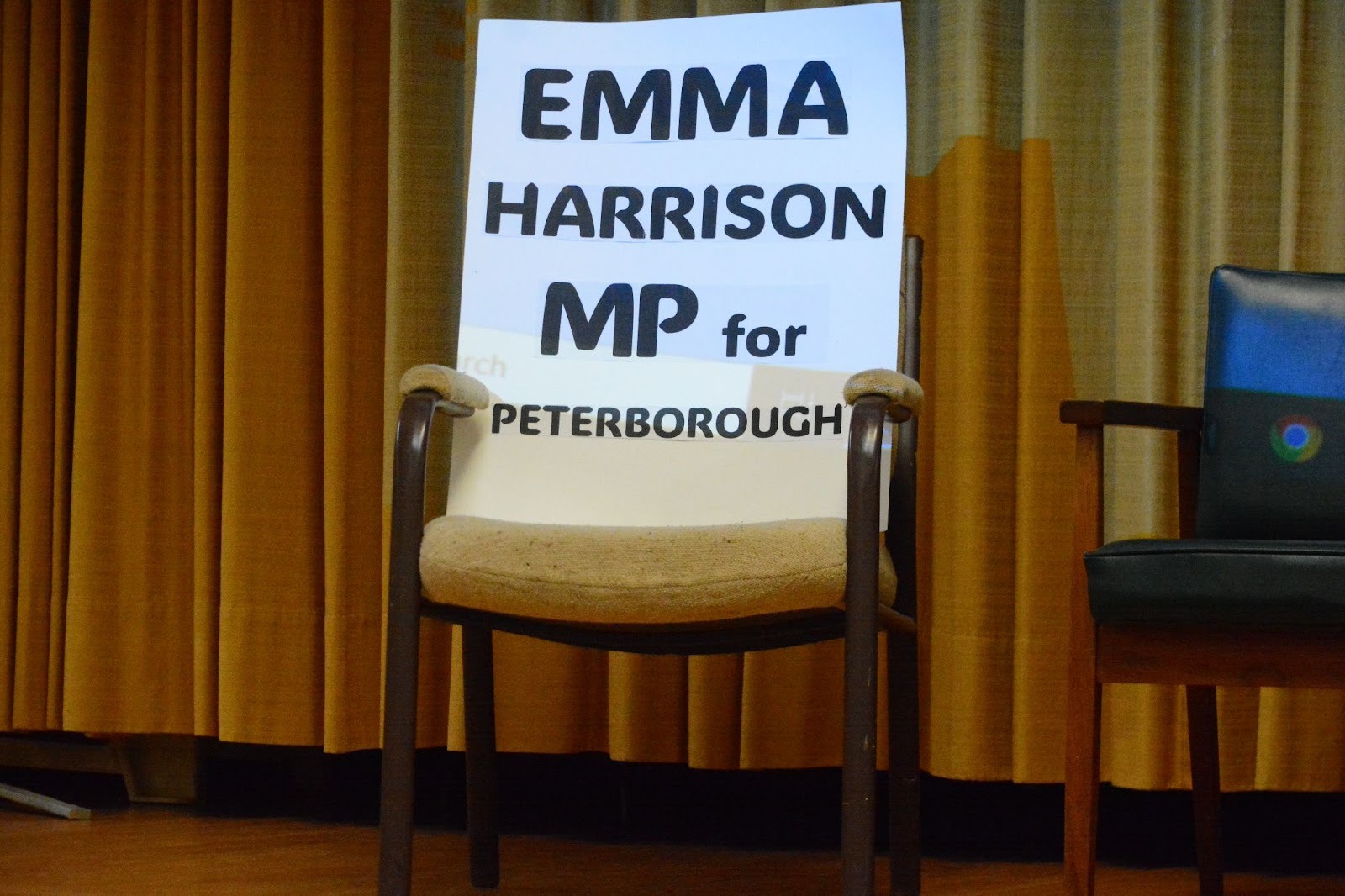
“It took months for Emma to agree to meet with us, and in that meeting, she assured us that she had a full understanding of the issues, yet was unwilling to attend this event or take any meaningful actions to pressure the government to hold Israel accountable. A week after our meeting with her, she told us she would not be attending in any capacity,” Benn continued.
“You’re not going to like this, but [former Conservative Peterborough MP] Michelle Ferreri and her office staff always made themselves available. Michelle never budged from her pro-Israel stance, but she was willing to go on public record.”
These were not the only complications faced by the CPGG in planning this event: originally, it was planned to be held at the public library on September 25th, but it had to be cancelled due to a risk assessment from Peterborough Police Services estimated that six officers would be needed to assure the safety of all attendees, for a total security cost of $1,500, which organizers were not able to pay for.
These policing costs were themselves caused by a harassment campaign against the CPGG.
According to organizers, this mainly took the form of an influx of bot-driven emails to elected officials and media coming from pro-Israel organizations foreign to Peterborough, such as billionaire-funded far-right extremist doxxing adepts The Canary Mission.
Emails sent to the Peterborough Examiner as part of this harassment campaign baselessly called Ge, Small and the CPGG “neo-nazis” and “pro-terrorists.”
These attacks went largely uncondemned by elected officials at City Hall and the MPP and MP’s offices, to much disappointment from the town hall organizers.
“I understand the desire to not comment to that type of campaign, but the reality is that where none of our elected officials and public representatives are willing to say anything, it leaves a dangerous void for this intimidation to take hold,” CPGG member Shivaan Burke told Arthur.
On the night of the 13th, however, the work of the CPGG came to a fruition in a two-hour discussion between Boullata, Ge, Small, and local community members on Canada’s relationship to the Palestinian genocide.
Dr. Ge took the lead, speaking on the recent ceasefire deal negotiated by Donald Trump with the approval of Canadian Prime Minister Mark Carney.
“Something very…sinister is happening in the West Bank,” he said. “Because I was deported, I spent time with our colleagues that were planning to enter Gaza, and some who had just come out of Gaza, and the situation has gotten (obviously) much worse throughout these past couple of months, even despite the so-called ceasefire.”
“During the ceasefire, there have been hundreds of times in which Israel has broken the ceasefire and attacked Palestinians in the Gaza Strip, and actually, they continue to steal land, attack Palestinian villages in the West Bank and the healthcare system in particular,” Ge explained.
Rachel Small followed up, praising the persistence of the Coalition in the leadup to this event.
“Obviously, it would have been better if you hadn’t had to put in all the work to reschedule this event, to deal with the attacks on it,” Small said. “But honestly, it feels very heartfelt to know all of the effort that did take for us to be here tonight in this space.”
“This is actually what democracy looks like, right? And this is what it looks like to come together as a community and to talk about hard stuff and think about how we want to move forward together. And truly, one wishes that one’s government representative was part of that conversation,” she continued.
Answering a question from Boullata, Small began explaining the makeup of Canada’s involvement in Israel’s genocide on Palestine.
“In terms of the Canadian government, the complicity around Israel’s genocide runs deep,” she said.
“That looks like the ways that our members of parliament, and more broadly, the Canadian government on the international stage, is acting. How are we voting at the UN? What are the roles that Carney is playing in glorifying or not, various peace plans? What Israeli officials are being invited to speak here or have we had meetings with?”
“There's a bucket of financial complicity,” added Small. “That can look like the Canada-Israel Free Trade Agreement—which very shamefully, has not been suspended and upended in any way—so the ongoing trade of materials or flow of wealth, but also looks like, for example, the ways that many charities in Canada have been permitted to continue to send money over, sometimes directly to the Israeli military or to other projects.”
As we approach the holiday season, Small urged attendees to avoid shopping at Indigo bookstores for this reason.
“Their CEO, Heather Reisman, takes advantage of these charitable laws that are letting her wealth…from Indigo flow directly into HESEG, which is a charity that specifically funds Canadians who serve in the Israeli military,” she noted.
Small argued the main area of complicity for Canadians to act upon remained arms trading, however.
“Israel's genocide would literally not be possible without the support of weapons from primarily the US, also Canada and Europe. It literally would not be possible. So interrupting that has, at least for me, felt like a really relevant way to materially trying to disrupt Israel's genocide,” she said.
“The Canada-Israel arms trade happens in largely three big ways. So the first is the direct export of military goods from Canada to Israel. What that means is that there’s companies in Canada, there’s factories, literally from coast to coast to coast, that make any number of types of things that then are sent straight to Israel. These require government permits to be issued, just like, to export from many other countries around the world, and through the, I would say, relentless organizing of like tens upon tens of thousands of people across the country over the past years, we have gotten many of those permits canceled.”
The involvement of the US as a less-regulated proxy in the Israel-Canada arms trade makes disruption more difficult, Small explained.
“Unfortunately, that first bucket of the Canada-Israel arms trade is the only one with some meaningful, actual passion that’s happening in government. The second bucket is that probably a majority of Canadian arms that end up in Israel go through the United States on the way there. This is very convenient, because Canadian arms export laws basically apply to every country …except the US,” Small told attendees.
“The third bucket is that Canada buys tons of weapons from Israel. This is the way in which this is one example of Canadian taxpayer dollars, Canadian public funding going directly to the Israeli supply chain,” she further explained.
“I think we often focus on the weapons we’re making that are going to Israel, but frankly, I think that it is just as important to not be spending on funding [the Israeli arms trade],” said Small.
After a brief discussion of the recent Canadian federal budget’s role in that “third bucket” through massive proposed military investments, members of the public were given the opportunity to ask Ge and Small questions.
One attendee asked Dr. Ge to elaborate on earlier comments he had made about Canadian healthcare pension funds’ financial investment in the genocide.
Ge explained he and his colleagues have studied the Ontario healthcare worker pension plan, which all healthcare workers in the province benefit from.
“[The Ontario healthcare worker pension plan has] direct investments in many different companies, including Israeli military companies. And so there’s a campaign to get the pension plan to divest, and it’s become a public campaign because closed-door meetings were unsuccessful and unsatisfactory in actually moving the dial, and such a pension plan actually divests from things like tobacco and alcohol, because these are things that are not good for people's health, and yet they continue to support war and military technology because it’s profitable.”
In 2024, this pension plan invested between $10 and $25 million in Safran Corporation (now Woodward Canada), a subsidiary of a French multinational which provides battle targetting technology among other military resources to the Israeli military and has a facility in Peterborough. This facility was previously the target of direct action from anti-genocide activists in 2024.
Small followed, speaking on her activism around similar investments as part of the province’s teachers’ pension plan.
“The Ontario teachers pension plan…[is] heavily invested in weapons companies, and it's been like a true organizing pleasure for me to get to work alongside a whole bunch of current and former Ontario teachers who’ve been pushing real hard back at that pension plan, crashing their their annual general meetings when they again tried to do meetings, tried to do letters—sent thousands of letters, did all those things, and then were eventually, in some ways, kind of blocked from attending their own pension plans annual meetings,” she recounted.
Still, she said these activists “showed up anyway, made a big fuss about it, and have had some success in getting the pension plan to drop some of the companies that it was invested in, but not fully.”
“What kind of solidarity work can we be doing here that would be felt on the ground in occupied Palestine or have an impact there?” Asked another attendee.
To this, Dr. Ge spoke of the importance of this very event.
“It’s not enough to say, ‘Oh, I'm not buying this food product at the store,’” Ge said. “What do we do with that knowledge? We actually share it, and we work with other people to keep sharing that knowledge and let it be a window of opportunity for people to learn about Palestine, but also learn about colonialism, learn about capitalism, learn about the ways in which these structures are horrible for people, horrible for the planet, horrible for life as we know it.”
“When we do these things as a collective, we make tangible wins in, for example, divestment or, for example, closing down Starbucks stores…The world is a lot smaller than you think it is—my Palestinian colleagues and friends, they’re watching us,” he added.
On the same topic, Small urged the public to get involved in fighting for the NDP’s No More Loopholes Act.
“On Wednesday, there’s the first hour of debate in the House of Commons for the No More Loopholes Act,” she said. “This is an effort to actually permanently change Canadian law so that [the] US loophole I was talking about before, where companies don't need an export permit and there's no tracking of the weapons that they sell if it's going in the US…would be gone.”
“We need to ensure that MPs all across this country know that we expect them to vote in favor of this bill.”
“Sometimes,” Small said, answering a later similar question, “these institutions feel so big that…it can sound naive or utopian to be like ‘Oh, and they can be ended,’ but we can actually take power away from them every day. And I see that happening.”
“I was living in Toronto for many years, and we've now reached over 170 people arrested and charged in the past two years for doing Palestinian solidarity work. It's been a crazy round of criminalization, but one really cool thing that's come out of it is really collective organizing, like the Toronto Community Justice Fund…who have actually been ensuring that there’s collective support,” she explained.
“So it's not like, ‘Oh, you got arrested, now you're isolated’...We’re going to collectively fundraise. Someone’s going to bring you a meal. We're going to pick you up when you get out.”
“We’re taking power away from these systems that are meant to push us down and actually building community together,” she concluded.
At the end of the night, Shivaan Burke and other CPGG members announced that any proceeds made from the side events occurring that night (including a lottery with prizes from local artists and restaurants) would be donated to the Gaza Clean Water Project fundraiser.
Among attendees were not only members of the public but also representatives from other activist groups collaborating with the Coalition on anti-genocide activism.
“When the socialists are here, when we have a number of other groups here to support tonight—we have Jews for a Free Palestine here volunteering to be marshals—these are people that understand that this is all connected and that we keep us safe,” Burke told Arthur before the event.
Also in attendance was Trent professor Aaron Kreuter, who agreed to speak to Arthur about the value of an event like this.
“This was an excellent example of the power of community organizing, right? The event was put together by the community, and even though some bad actors tried to shut it down a few weeks ago, they managed to reorganize,” he said.
“As both Yipeng and Rachel mentioned numerous times on the stage, our power comes from organizing together.”
Peter Votsch of the Peterborough-Nogojiwanong International Socialists was similarly enthusiastic about the town hall’s proceedings.
“What I didn’t get to the mic to speak about today was Labour for Palestine and organizing within our labor movement, specifically within our unions in Canada, for unions to begin to take action. Because one of the ways that we can build a movement is on the streets, as the coalition has here, and we want to build that, but also in bringing stoppages in the workplace,” he explained.
Votsch cited general strikes in Italy and massive strike movements in Greece, both in support of the Palestinian cause, as examples for labour organizers in Canada to look up to.
Dr. Ge also shared that enthusiasm about this town hall in an interview with Arthur after the fact.
“To see the community come together to still hold the event, despite the repression, and to reorganize themselves, to find a way to do a different venue, but also to see the raffle, to see the art, to see some of the food, I think all these components make it something really special. In a way we’re building collective memory together, because collective action is the only thing that will get us through bearing witness to genocide, but also ultimately ending it, and then moving towards Palestinian Liberation, but [also] collective liberation for everyone,” he told Arthur.
In her own interview with Arthur, Small lauded the work done by the CPGG, noting that Palestinian activism would need to embrace a diversity of tactics to face those who refuse to back down on their support for the Palestinian genocide.
“Our strategy there is, is not actually to grow them a heart or to convince them of the facts on the ground,” she explained.
“In many cases, it's to make it so difficult for them to continue their current course of action that it's actually easier for them to give us what we are demanding.”
Editor's Note: This article has been corrected to reflect that the federal Defence Minister's name is indeed David McGuinty and not Douglas and to remove a transcription error referring to Prime Minister Mark Carney as "Courtney."


.jpg)

.png)
The rich text element allows you to create and format headings, paragraphs, blockquotes, images, and video all in one place instead of having to add and format them individually. Just double-click and easily create content.
A rich text element can be used with static or dynamic content. For static content, just drop it into any page and begin editing. For dynamic content, add a rich text field to any collection and then connect a rich text element to that field in the settings panel. Voila!
"Headings, paragraphs, blockquotes, figures, images, and figure captions can all be styled after a class is added to the rich text element using the "When inside of" nested selector system."
The rich text element allows you to create and format headings, paragraphs, blockquotes, images, and video all in one place instead of having to add and format them individually. Just double-click and easily create content.
A rich text element can be used with static or dynamic content. For static content, just drop it into any page and begin editing. For dynamic content, add a rich text field to any collection and then connect a rich text element to that field in the settings panel. Voila!
"Headings, paragraphs, blockquotes, figures, images, and figure captions can all be styled after a class is added to the rich text element using the "When inside of" nested selector system."

.jpg)

.jpg)