.png)



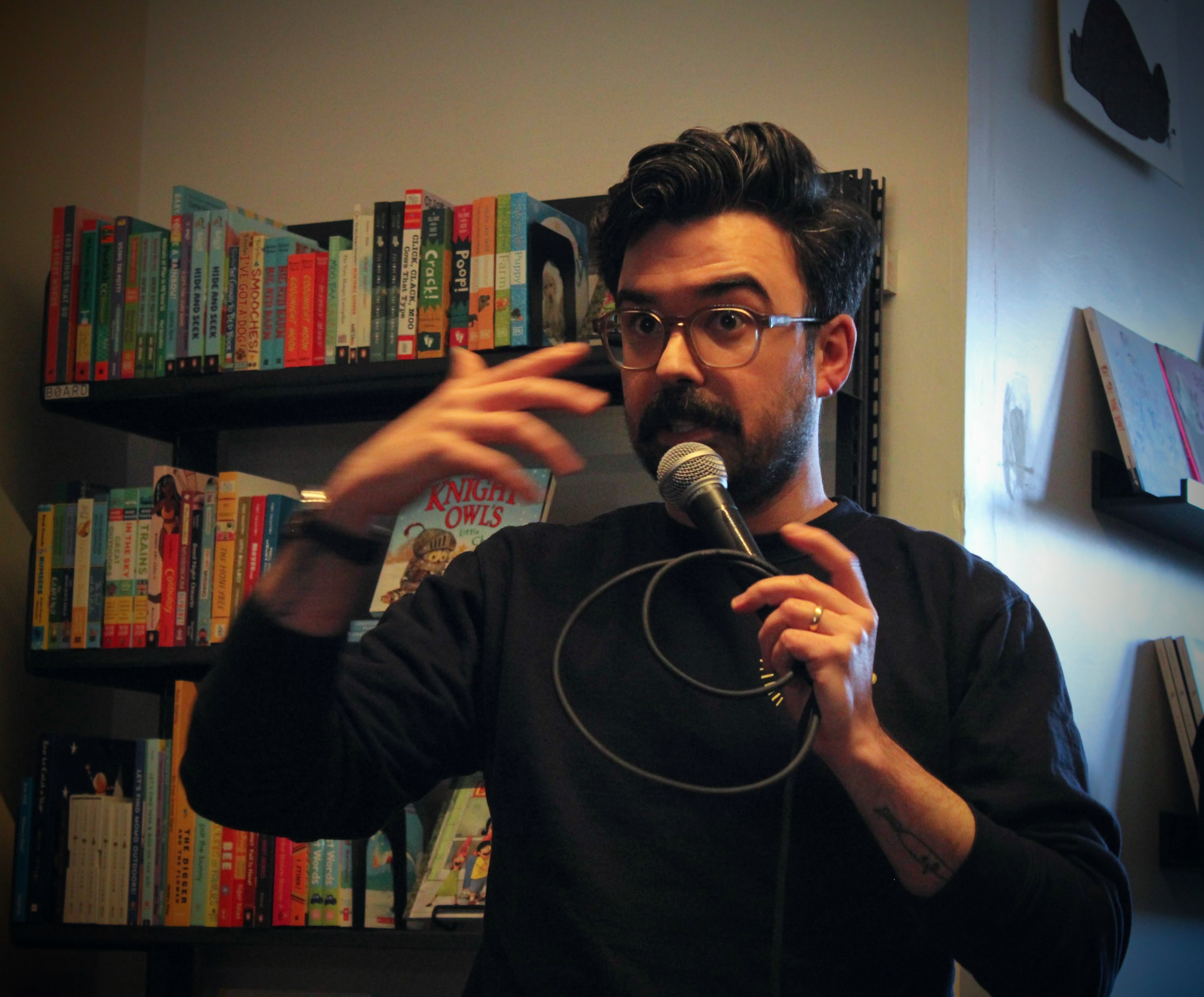
Speaking at Trent University, Saeed Teebi admits he never imagined he would write a memoir. “The last thing I wanted to do was write a memoir” he says gently, almost apologizing to the idea itself. And yet, here he is, speaking to a room full of students, writers, and readers, tracing the delicate architecture of his memory, imagination, and family history.
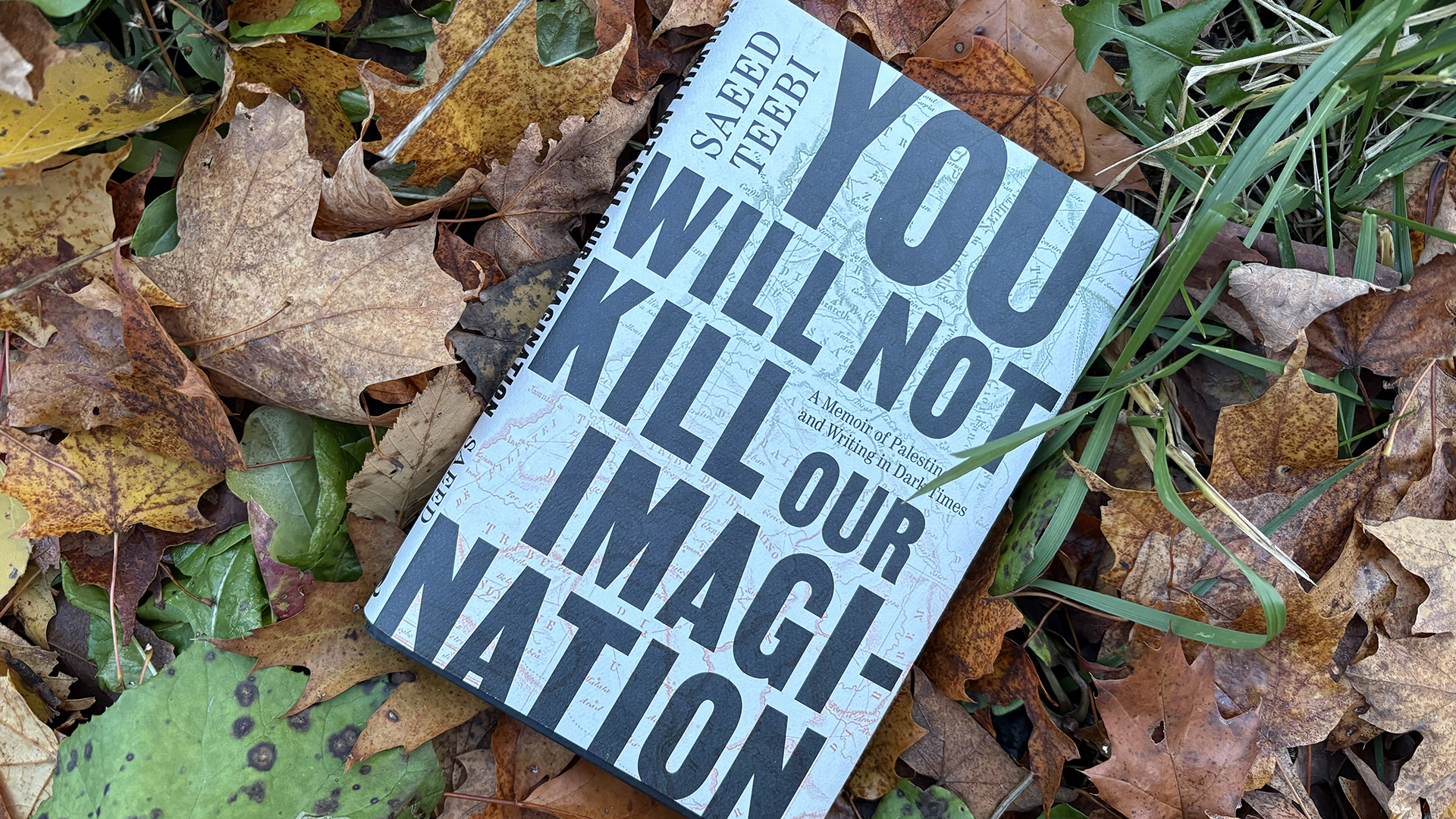
His memoir, You Will Not Kill Our Imagination: A Memoir of Palestine and Writing in Dark Times, captures the journey of tracing identity, loss, and belonging across generations. “I felt like I had something to say,” he adds, and in that simple confession lies the seed of every story he has ever told, and the urgency that compelled him to trace the fragile threads of his own family history across time, land and displacement.
Teebi’s path as a writer began in the realms of fiction, where imagination offered sanctuary and safety. “I love living in my imagination, it’s a coping mechanism,” he admits. In fiction, one may reshape reality, bend it, even escape it entirely.
The stakes are contained, the consequences imagined rather than lived. But nonfiction, memoir, demanded a confrontation with truth. To turn from the worlds he built in his mind to the stark contours of his life was daunting.
“The tool of being a writer is to reset reality,” he reflects, and it is precisely that act of resetting – of distilling fact, memory, and emotion into narrative – that both challenges and defines the art of his memoir.
The personal is inseparable from the political in Teebi’s work. As a Palestinian writer whose family has been uprooted, storytelling carries a weight that is both intimate and collective for him.
The erasure of Palestinian narratives has been methodical, systemic, and relentless. “Displacement’s primary objective is erasing stories,” Teebi says. The land itself, the olive groves, and orchards, the small villages and the paths that connect them, hold memory.
“Being on the land, you will hear its stories,” he explains. And yet, for generations of Palestinians forced from their homes, those stories risk fading into silence, fragments scattered across time, memory, and diaspora.
Teebi’s writing confronts this absence head on. He pieces together narratives from fragments: a memory from his mother, a story from an uncle, archival records, and the hushed truths that linger between them.
In doing so, he creates continuity, a bridge between generations. “Stories tie generations… Items have stories,” he observes, illustrating the ways in which objects, heirlooms, and landscapes carry the weight of memory and identity. A simple household item like an olive press or a faded photograph becomes a vessel of history, a locus of connection and a testimony to resilience and displacement.
Imagination, for Teebi, is not merely an escape. “We don’t allow ourselves to imagine… Imagination is a generative force, and we don’t utilize its power enough,” he notes, highlighting a paradox that has long shaped Palestinian life.
In the face of ongoing occupation, repeated trauma, and systemic attempts to erase memory, the capacity to imagine – new possibilities, recovered pasts, future freedoms – is a radical act for him. Through stories, Palestinians assert their existence, their humanity, and their enduring ties to the land.
“We think oppression lasts forever,” he says, yet the stories themselves resist that finality, embodying both the memory of loss and the vision of what can be reclaimed.
At Trent, Teebi speaks about writing as both preservation and defiance – a way of holding on to what history and exile try to erase. He reflects on fear, identity, and the enduring power of stories to resist disappearance. As he reads aloud, the room grows still; every word seems to carry the ache of displacement and the quiet strength of survival.
After reading, Teebi speaks about the heart of his work – the need to give voice to what endures despite fear. “I needed to establish the fear in the Palestine identity...Palestine stories exist,” he says. Within that insistence, there is rebellion. It is a rebellion not of arms but of memory – a refusal to let culture, history and human dignity be erased.
In this defiance, beauty is allowed to breathe: the luminous persistence of imagination, of memory, of a people’s heart, refusing to be extinguished even in the face of restless attempts at erasure.
Stories, Teebi observes, have the powers to teach, to shape empathy, and to expand the self. “Stories and their teaching have huge effects,” he says. When a person shares their story, it is not merely a transfer of information – it is an act of intimacy and trust.
“When people give us their stories, we become their keepers… we care more about them,” he explains. Through storytelling, we are tethered to one another, moved beyond abstraction into the immediate, visceral world of human experience. And when stories are absent, so too is our capacity for connection.
“If you resign yourself of connections, that’s the first act of leaving yourself,” he warns.
This interlacing of personal and collective memory feels especially vital in the Palestinian context. “Strangers DM’d me, and used me for a site of grief,” Teebi recalls. In that moment, the boundaries between writer and witness collaspe – his online presence becomes not just a platform, but a gathering place for communal mourning and survival.
Through each personal story, Teebi reaches into the larger current of history, carrying with him the heartbeat of a people who refuse erasure. “Living proof we are of this land,” he says – a reminder that memory is not passive recollection, but a living form of resistance. Here, he reminds us that presence itself, sustained through memory and story, is resistance.
Teebi’s reflections extend to the broader responsibility of the writer. Storytelling is not neutral; it carries moral weight. In chronicling Palestinian life, he navigates the tension between imagination and truth, resilience and testimony. “Reducing people to the drama is also colonization, keeping them small, fragmented, unseen,” he observes, articulating the ethical imperative that guides his work: to witness, to preserve, and to amplify stories, affirming humanity in the face of erasure.
“I want to make sure this generation isn't weighted down,” he says, asserting a vision of continuity and resilience. His words carry hope without diminishing the weight of memory, insisting that remembrance can empower rather than imprison.
Even objects, landscapes, and everyday acts bear stories, he explains, each one embodying the layered histories of the people who lived them. This philosophy runs through the memoir: each chapter, each anecdote, each recollection is a golden thread of enduring presence. For Teebi, storytelling is not mere reflection – it is action, a declaration of existence, truth and dignity in the face of forces that seek to erase all.
The generative power of imagination and narrative is deeply personal for him. Drawing on fiction, memory, and lived experience, he shaped stories that are at once intimate and universal. Fiction taught him empathy and craft; nonfiction demanded he wield them in the service of truth. It is in the delicate tension between invention and fidelity that the art of his memoir is found.
Teebi invites us to recognize the transformative power of storytelling -- how stories forge connections, preserve histories, and radiate our shared humanity. They call for empathy, attention, and reflection. And now, it is your turn: to listen, to imagine, to bear witness. Stories matter – not only as art, but as the lifeblood of both the past and the seed of our future.
As Teebi reminds us, “Pay attention to your particulars,” and “break away from censorship.”



.png)
The rich text element allows you to create and format headings, paragraphs, blockquotes, images, and video all in one place instead of having to add and format them individually. Just double-click and easily create content.
A rich text element can be used with static or dynamic content. For static content, just drop it into any page and begin editing. For dynamic content, add a rich text field to any collection and then connect a rich text element to that field in the settings panel. Voila!
"Headings, paragraphs, blockquotes, figures, images, and figure captions can all be styled after a class is added to the rich text element using the "When inside of" nested selector system."
The rich text element allows you to create and format headings, paragraphs, blockquotes, images, and video all in one place instead of having to add and format them individually. Just double-click and easily create content.
A rich text element can be used with static or dynamic content. For static content, just drop it into any page and begin editing. For dynamic content, add a rich text field to any collection and then connect a rich text element to that field in the settings panel. Voila!
"Headings, paragraphs, blockquotes, figures, images, and figure captions can all be styled after a class is added to the rich text element using the "When inside of" nested selector system."

.jpg)

.jpg)